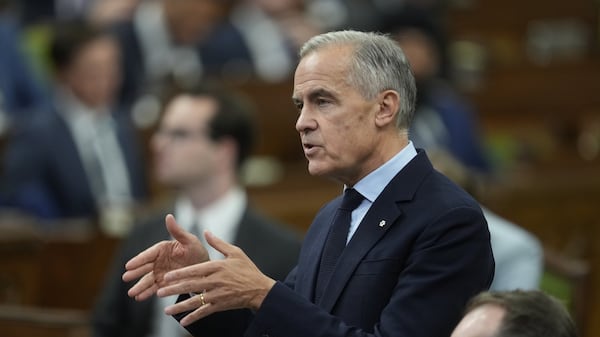
During the 2026 Prospectors & Developers Association of Canada Convention, Natural Resources Canada committed up to $40 million to create the Canadian Digital Core Library, a national platform that will allow access to digitized drill core data from across the country. Sudbury MP Viviane Lapointe said there is a huge inventory of drill core samples across the country “just sitting there.” “We don’t know what we don’t know,” Lapointe said. “And so what the Government of Canada is doing is we’re going to take those drill core samples, and using AI technology … you can scan the drill core samples and it tells you all the minerals that are contained in there.” “We’re going to be able to do that and take all that information and have it on a digital platform,” she added. Ontario Energy Minister Tim Hodgson unveiled a non-binding declaration of intent between the Government of Canada, Creative Destruction Lab, Laurentian University and mining companies Agnico Eagle, Anglo American, BHP, Hudbay, Teck and Vale. Gisele Roberts, LU’s director of research and innovation, said the school is the only post-secondary institution named in the project. “This is an excellent opportunity for students -- they’re going to have access to data from cores across Canada,” Roberts said. Co-ops, internships “They don’t actually physically have to be there to examine the core. It’ll be available through a digital platform … They could be doing co-ops and internships with some of the six companies that are involved in this project and potentially more and, you know, helps them be better prepared for the workforce.” Lapointe said the digital library will be a “huge boost for mining activity across Canada.” A similar project in Australia about 12 years ago boosted their mining industry and Australia’s GDP, she said. There are so many drill core samples, Lapointe said, they would stretch from Vancouver to Halifax if they were lined up together. “That’s how many drill core samples we’re dealing with,” she said. “We’ve identified the key partners to get us started, and then we’ll need to negotiate (with) the provinces because there’s territorial jurisdiction here between where the drill core samples are stored and who provides oversight over those.”