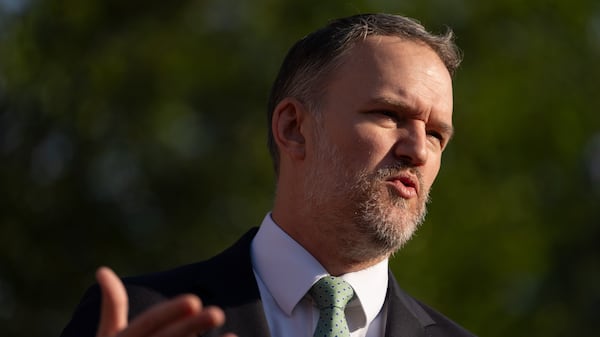
Quebec Premier François Legault, who is threatening to use special legislation to break the deadlock with doctors, is now promising to take measures to prevent them from leaving for other provinces. “There will be measures,” the premier said during a brief press scrum on Thursday morning. “To curb the exodus, will there be measures in the legislation?” a reporter asked for clarification. “Yes,” he replied. Liberal health spokesperson Marc Tanguay had just stated at a press briefing that a special law would demobilize doctors, who are at risk of walking out, which would have repercussions for patients, he said. Tanguay argued that a special law would only worsen the situation in the fragile health care system. “Every woman and man in Quebec is free to say, ‘Well, you know what? I’m retiring. You know what? I’m moving to Ontario.’ (...) In the days to come, things will not get better in the system; they will get worse,” he insisted. “It’s always better to have a bad negotiated agreement than a special law imposed on you. That’s a pretty basic rule in the field of labor negotiations,” added his counterpart at Québec solidaire, Vincent Marissal. The framework agreement with the Fédération des médecins spécialistes du Québec (FMSQ) and the Fédération des médecins omnipraticiens du Québec (FMOQ) expired two years ago. Negotiations have been difficult, especially in the context of the government’s introduction of Bill 106, which aims to link part of doctors’ remuneration to performance indicators. The medical federations, which are demanding resources to perform more procedures, have taken pressure tactics. Both sides recently announced that mediation had failed. Tensions reached a new peak on Wednesday evening when Legault took to social media to announce that he would introduce special legislation to end the impasse with the doctors. The bill will be introduced on Friday if no agreement is reached by then, he said. The FMSQ immediately responded by calling it a “vast masquerade.” “The government never had any intention of listening or truly negotiating, either with the FMSQ or with any of the other stakeholders involved,” said its president, Dr. Vincent Oliva. For its part, the FMOQ announced Thursday morning that it was suspending its boycott of teaching medical students in order to pursue “intensive negotiations” with the government. Health Minister Christian Dubé invited the two federations to “take advantage of this last chance” to propose “significant progress.” He told reporters on Thursday that he found it “normal” for “change management” to cause ‘resistance’ among doctors. However, he argued that there was an “urgency to act.” This report by The Canadian Press was first published in French on Oct. 23, 2025.