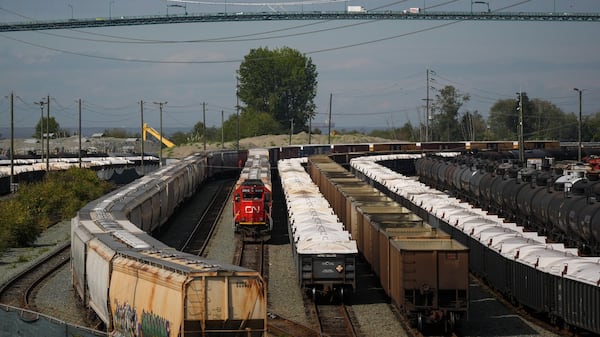
A major train derailment earlier this summer was the focus of a meeting in Repentigny on Monday night, with homeowners pressing officials on concerns about public safety and their property values. No one was injured in the July 5 derailment, but the train cars came within just metres of hitting people’s homes. Residents met with CN Rail and city officials behind closed doors. Patrick Bonin, the MP for Repentigny who attended the meeting, says residents are having trouble sleeping at night. “I want to hear what are the clear additional measures that they have put in place since the accident and I want to know why they cannot commit at the moment to reduce, in a permanent way, the speed of trains that are near homes. That’s an ask that we have, that’s an ask the city has, that’s also an ask that the citizens are wanting,” said Bonin in an interview before the meeting started. Speed is another major concern for residents. The trains are currently rolling at a lowered maximum speed of 20 km/h through the town. In a statement to CTV News, Repentigny Mayor Nicolas Dufour said the main message that emerged from residents is that they want the lower speeds maintained permanently. “This request was strongly voiced last night, and we will bring it to the attention of CN, Transport Canada, and the federal Minister of Transport,” he said. “There are still concerns and follow-up actions to be addressed. The City of Repentigny will continue to be involved, monitor the situation closely, and to raise the community’s concerns to the relevant authorities. We are also committed to ensuring that the residents affected by this incident are not forgotten and that their concerns continue to be heard.” The federal Transportation Safety Board (TSB) found several track deficiencies at the site of the 49-car train derailment. Vincenzo De Angelis, the TSB’s director of rail and pipeline investigations, wrote in a letter that rail anchors were missing or had been displaced in a few areas and that several ties were skewed. The rail showed signs of friction from the spikes against the ties, and in some spots, the rails had shifted by as much as almost nine centimetres.