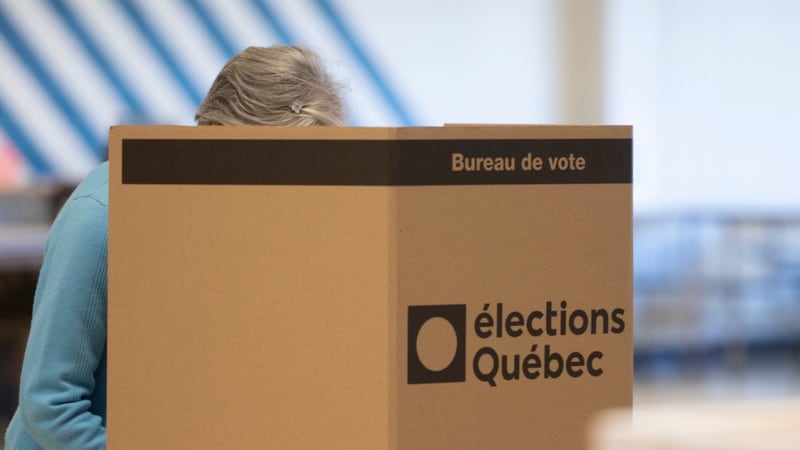
Premier François Legault is not ruling out following Ontario’s lead and imposing a tax on electricity exported by Hydro-Québec to the United States in response to U.S. tariffs. However, Legault points out that Quebec’s energy situation is very different from that of its neighbour, Ontario. “In Ontario, they have electricity sales that are not covered by contracts, so they can tax as they like. We do not currently sell electricity outside of contracts,” the Quebec premier said at a press scrum in Terrebonne, on Montreal’s North Shore, late Monday afternoon. Quebec currently has a contract with Vermont for the export of electricity, “which must be respected,” Legault said. Other, much larger contracts with Massachusetts and New York have yet to come into force, however, and “I’m not ruling out anything, even the possibility of increasing the price in these contracts,” the premier said. A few hours earlier, his Ontario counterpart, Doug Ford, announced a 25 per cent tax on electricity exported to three neighbouring American states in response to President Donald Trump’s tariff threats. Canada’s Minister of Foreign Affairs, Mélanie Joly, was delighted by this news, pointing out that “the premiers are using levers that are to our advantage.” Asked what Quebec should do, she said that “the leadership shown by the province of Ontario should inspire many others.” Legault floats idea of counter-tariffs on aluminum Rather than electricity, Legault once again raised the possibility of imposing “counter-tariffs” on aluminum exports to the United States, even though Quebec supplies nearly 60 per cent of it to its neighbour to the south. “It’s impossible for the United States to replace us, so we could actually hurt Mr. Trump,” he said. The U.S. president plans to impose tariffs of 25% on all steel and aluminum imports into the United States, including Canadian products, starting on Wednesday. Legault pointed out that the federal government and the provinces still have the possibility of implementing a second retaliation targeting $125 billion worth of American products on April 2 — the date when Trump’s pause on some tariffs on Canadian exports could come to an end. “After that, we’re not ruling out the possibility of adding tariffs, including on aluminum exports,” Legault said. Asked about the election of Mark Carney as leader of the Liberal Party of Canada, Legault hoped that the future prime minister would opt for a response just as strong as that of his predecessor, Justin Trudeau. He said he had the same expectation of Conservative leader Pierre Poilievre. “I will work with the prime minister chosen by Canadians. But I expect them to be my allies in the fight against Donald Trump,” he said. In view of a future federal election call, Legault also plans to reiterate his request to the Liberal and Conservative leaders to reduce the number of temporary immigrants to Quebec. Byelection in Terrebonne Legault was in Terrebonne on Monday to support Alex Gagné, his candidate in the byelection called following the departure of former minister Pierre Fitzgibbon. The leader of the Coalition avenir Québec (CAQ) and Gagné visited a steel structures plant in the region. “We saw the kind of concerns that are felt throughout Quebec and even Canada,” Legault said in a speech to supporters gathered at the CAQ candidate’s election office. According to Legault, the voters of Terrebonne “need a representative in government who is capable of defending its businesses.” He called on people to “vote to bring Quebecers together,” because “this is not the time to be divided,” he said. Advance polling took place over the last two days. Voting day will be next Monday. - With information from Audrey Sanikopoulos This report by The Canadian Press was first published in French on March 10, 2025. Frédéric Lacroix-Couture, The Canadian Press