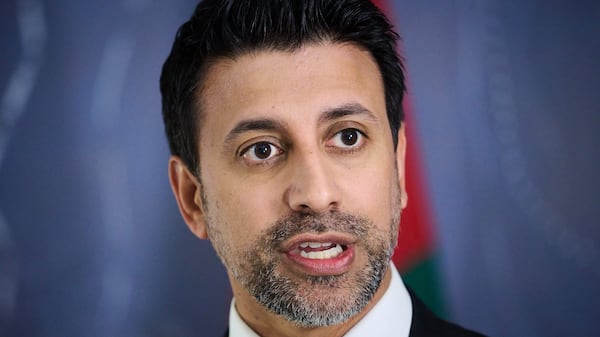
Montreal Mayor Soraya Martinez Ferrada announced Friday that the mixed metropolis bylaw known as the 20-20-20 rule will be abolished and replaced. Martinez Ferrada campaigned on the promise last fall. The bylaw originally forced new large housing projects to include 20 per cent social housing, 20 per cent affordable housing, and 20 per cent family units. Those who did not include social and affordable housing had to pay a fine, which almost every developer chose to do. The bylaw has been revised by the previous administration, Projet Montréal, to increase penalties for developers. While campaigning, former Projet Montréal leader Luc Rabouin promised to further revise the bylaw. Martinez Ferrada’s Ensemble Montréal insists the 20-20-20 rule backfired and hindered the construction of affordable housing. She says the rules were “over-complicated” and that its definition of affordability “is hard to apply.” Instead, the administration is replacing the bylaw in two phases. The new approach includes further collaboration between the city, private developers and non-profit organizations. Martinez Ferrada says the new rules will help break silos between the city, private and non-profit sectors to work more efficiently. “We don’t want to lose any more people,” she told journalists, adding that some 300,000 people left Montreal in recent years. Outremont Mayor Caroline Braun, responsible for urbanism at the city, added it’s “not normal for families not to be able to find housing in Montreal” and that it’s “not acceptable that there are people in the street because they can’t afford rent.” The best way to do that is to reduce construction costs, says Martinez Ferrada. According to the Montreal Economic Institute, a conservative-leaning think tank, the 20-20-20 bylaw added costs of up to $10,500 per unit on Montreal real estate developers. What’s included in the new rules? During the first phase, the 20-20-20 rules will be relaxed: developers will be required to include 20 per cent “off-market” housing per project, starting at 18,000 square metres. This includes social housing, affordable housing, rent-controlled housing and cooperatives. Financial contributions required of developers under the mixed metropolis bylaw will be frozen at 2025 levels. In its second phase, the city will create a working group with representatives from the private and non-profit sectors to analyze all possible incentives for developers. These could include financial support, tax breaks, permits, zoning, rules around occupying public land and more. The city also says it wants to put the land it already owns to better use. It says it identified 80 lots available for off-market and mixed-use projects, about half of which are ready for construction. The city adds that these plots will be made available to non-profit organizations “to enable the construction of several thousand units.” The city set aside $30 million to make land available at lower costs. Loans up to $3 million will be granted in partnership with the Centre de transformation du logement communautaire’s Plancher fund. Another $50 million is dedicated to preparing city land, including studies, decontamination and demolition, to accelerate development. Martinez Ferrada specified that the money is not contingent on subsidies from Ottawa or Quebec City. Will it work? Martinez Ferrada stresses that despite lowering targets, the new rules will increase the number of affordable housing units in the city by giving promoters more incentive to build rather than opt out. Affordable housing is tied to market value, unlike social housing, which is state-subsidized. She says many developers have shied away from building in Montreal because of restrictive rules. She adds that the administration also got the green light from non-profits. “I am confident our approach is the right one,” said Martinez Ferrada. Housing advocacy group FRAPRU is alarmed by the prospect of public land being used by private developers and says there is “no guarantee that it will be immediately affordable for the thousands of low- and moderate-income Montrealers who are hardest hit by the affordability crisis.” Richard Shearmur, a professor at McGill University’s School of Urban Planning, says he is cautiously optimistic. “I don’t think that any simple answer to building new houses, but I think it’s definitely going to improve the situation,” he told CTV News. According to Shearmur, the revised rules are more aligned with similar policies seen across North America. By taking the onus off smaller developments, he believes fewer developers may opt out and pay the fine which is “ridiculously low compared to the value and the complexity of building social housing.” He adds that by making land available to non-profit organizations faster, affordable units will be able to get off the ground for cheaper. “I just think it makes sense. It just means that the builders can go ahead and build,” he says. “If you make the conditions too onerous, you just get no social housing, because no building goes on. So you have to find the right balance.” Still, he says, only time will tell if the new rules will deliver on affordability without Quebec and Canada committing to funding more social housing.