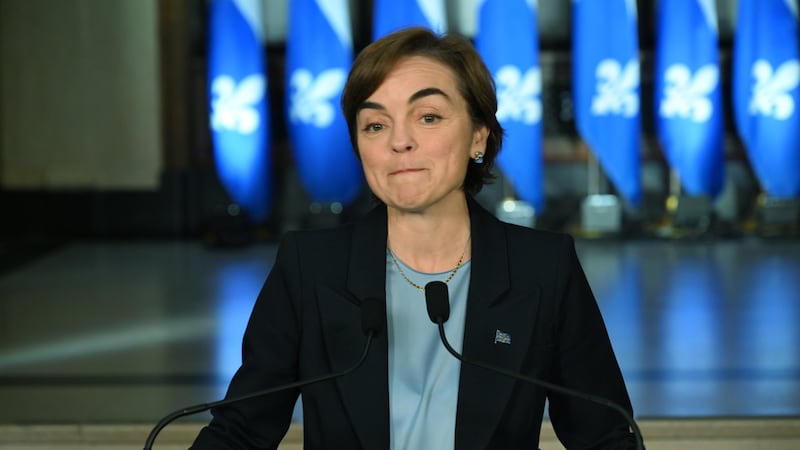
More than 11,000 complaints were filed last fiscal year in Quebec about non-compliance with the Charter of the French Language, setting another record for the Office québécois de la langue française (OQLF). The province’s language watchdog received 11,125 complaints from April 1, 2025 to March 31, 2026 — a 7 per cent increase from the previous year (10,371 complaints), according to new figures released Thursday. This means complaints have nearly doubled since 2021-2022. “The steady increase in the number of complaints over recent years reflects the growing concern among Quebecers regarding their right to work, to be informed and to receive services in French,” the OQLF said in a news release. The majority of complaints once again centres on language of service, accounting for 35 per cent. However, those types of complaints decreased five per cent from the previous year. Language of public and commercial signage also decreased two per cent, to 16 per cent, as did complaints about product packaging (7 per cent to 6 per cent). Complaints about websites, social media rise Increases were recorded in language of marketing materials, rising to 33 per cent, compared to 24 per cent in the previous year. In that category, complaints about websites jumped from 14 per cent to 19 per cent. Meanwhile, complaints about social media posts more than doubled last year, rising to 9 per cent, up from 4 per cent. The release of the new data comes one week after the Quebec language watchdog came under fire for targeting a Jewish deli in Montreal’s Saint-Henri neighbourhood for the use of the “Nosh” on its signage. The restaurant, Arthur’s Nosh Bar, was told it doesn’t comply with Quebec’s language law. Co-owner Raegan Steinberg told CTV News that “nosh” is a Yiddish word that means to nibble or to snack. She resented the warning from the OQLF and said, “there has to be a better way to encompass both preserving the French language and celebrating other cultures.” Other Montreal businesses showed their solidarity with Arthur’s in recent days by adding the word nosh on their signage. In an interview on Monday, Quebec Premier Christine Fréchette told CJAD 800 Radio that the OQLF should learn from lessons like the “Go Habs Go” controversy last year. “Maybe we can improve the tone used by the OQLF,” the premier said. Complaints in Montreal stand out According to the new data, more than half (51 per cent) of complaints targeting businesses were in the Montreal area. Other complaints were filed in the Montérégie region (10 per cent), the Outaouais (9 per cent), and the Quebec City region (6) per cent. “Beyond the figures, each complaint represents a citizen who feels that their language rights have not been respected,” the OQLF said in the release Thursday. “When a complaint is deemed admissible and well-founded, the Office works with the business concerned to implement concrete solutions.” There was a slight increase in the number of complaints that were unfounded (24 per cent). Meanwhile, 34 per cent of cases resulted in a corrected situation. Just over 20 per cent of cases required an “incentive intervention,” in which the OQLF offers solutions to conform to the French-language charter. A francization process was started in 3 per cent of cases and a warning was issued in 14 per cent of complaints.