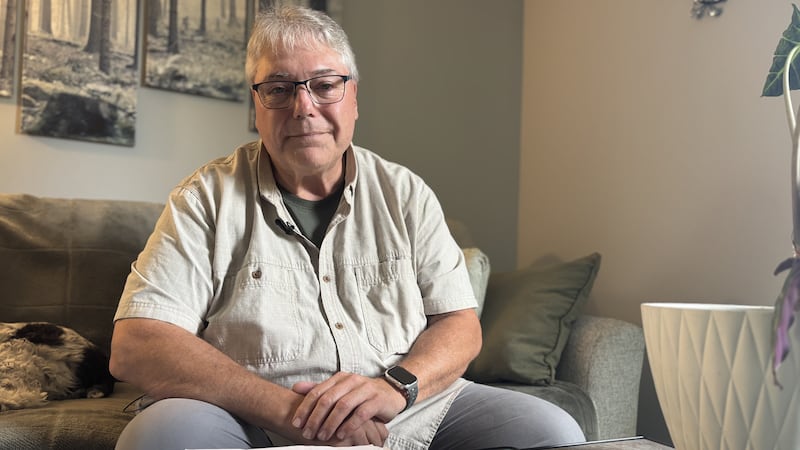
Some residents in Montreal’s east end say they were caught off guard after Canadian National (CN) Railway sprayed a herbicide near their homes this week. Ronald Daigneault, who has lived in Mercier-Est since 1984, said he only received notice the day before glyphosate was applied along the CN tracks running near his home. “When you come within 20 metres from a house, five metres from a bike path, the concerns should be different,” he said. “The first priority should be people’s health.” Glyphosate is a powerful weedkiller banned in Montreal since 2021, as part of the city’s precautionary approach to protecting human health and the environment. But CN operates under federal jurisdiction, which means it isn’t subject to municipal rules. In a statement to CTV News, the company said it’s required by the Railway Safety Act to manage vegetation on its property, which includes maintaining the rock section under its tracks free of all growth. “This area supports the track infrastructure used for both freight and passenger traffic [...] it must always be kept entirely free of vegetation,” a spokesperson wrote. CN said it mows vegetation wherever possible, but that only chemical products like glyphosate can fully clear the track bed. The spraying in Montreal’s Mercier–Hochelaga-Maisonneuve borough was part of its annual vegetation management plan. Expert says it’s cheap, effective, but not risk-free David Wees, a faculty lecturer in plant science, and the associate director of the Farm Management and Technology program at McGill University, said glyphosate is widely used because of its ability to kill a broad spectrum of weeds at a relatively low cost. “But there is slight health risk if you absorb glyphosate or breathe it in,” he said. “It may cause some skin irritations, irritation to the nose, throat, lungs, eyes and so on.” While glyphosate is approved for use by federal regulators, it remains the subject of debate over potential health and environmental impacts. The World Health Organization’s cancer research agency classified it as “probably carcinogenic to humans,” but other authorities have disagreed. Environmental group’s post draws backlash Daigneault is a member of Collectif en environnement Mercier-Est, a community environmental group that publicly flagged the spraying on social media. The group’s post was met with a wave of concern, including from several residents who said they hadn’t been informed. The borough of Mercier–Hochelaga-Maisonneuve confirmed it was aware of the planned spraying and that notices were distributed to nearby homes advising residents to stay inside and keep pets indoors. It also said that three inspections were carried out during the operation that took place Tuesday and Wednesday. “Specifically to ensure compliance with weather conditions to limit the scope of the spraying, as well as the compliance of the permits and certifications of the applicator responsible for using the products chosen by [CN],” reads a statement from borough spokesperson Vincent Fortin. Meanwhile, Daigneault said flyers were delivered to homes on both sides of the tracks — Souligny and Dubuisson avenues — but he said that many residents potentially impacted still didn’t know glyphosate was being used. “That includes people that cross the street here who were not made aware,” he said. “There’s no visual markings informing people that the area was treated with this chemical.” Daigneault added that residents regularly let their cats roam the area near the tracks, where there’s tall grass, weeds and lush wild plants. “Someone walking their dog here also wouldn’t know not to let them wander around where the chemical was directly sprayed,” he said. “These pets could easily bring traces of glyphosate back into their homes.” Spraying halted elsewhere In another sector of the city, plans to spray glyphosate were cancelled after a talk between the borough and CN officials, said the Mercier–Hochelaga-Maisonneuve spokesperson. The operation was set to take place along the north-south axis running alongside the wooded area of boisé Vimont and the Ray-Mont Logistiques site on the north side of Notre-Dame Street East. But Daigneault said he and others want a full stop to the practice, especially near homes. “The federal legislation allowing this should be amended to reflect the concerns of citizens,” he said. “There should be limits for where glyphosate may be used and to impose the use of other methods in residential areas.”