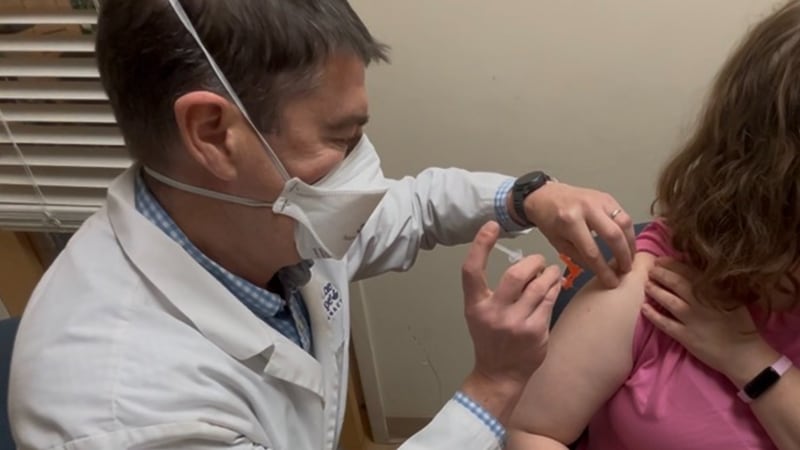
A London toddler born with a rare and life-threatening genetic disorder is now reaching milestones his family once feared he might never see. Sixteen-month-old Kaiden was diagnosed with infantile Pompe disease shortly after birth. The condition, a rare genetic disorder, can weaken the heart and skeletal muscles. His mother, Rachel Babcock, says the early days were filled with uncertainty. “It’s been a lot of ups and downs, at one point, we weren’t sure if it was ever going to leave the hospital. And now we have so much hope for the future,” she said. Kayden received specialized care at Children’s Hospital at London Health Sciences Centre and is now responding well to treatment. “He’s got an amazing treatment. If that treatment stops working, there’s another one that we can move on to next,” Babcock added. Kayden was one of six children invited to attend a Rare Disease Day celebration organized by the Children’s Health Foundation. The annual event, recognized in more than 100 countries, raises awareness and supports research into rare conditions. Tim Tribe, vice-president of philanthropy at Children’s Health Foundation, says rare diseases are more common than many realize. “One in 12 people in this country have a rare disease and they’re often diagnosed in early childhood,” he said, adding specialized care can help children “actually live the life that we hope children will grow up and live.” Clinicians in London say research and innovation are key to improving outcomes for families. Dr. Sunita Venkateswaran, a pediatric neurologist at Children’s Hospital, says funding was recently secured for a new patient-centered app. “We’ve just received funding for a new app called My Rare Care Bridge, and this is going to be a one stop shop. It’s going to be patient owned,” she said, adding it will help improve communication between patients and health-care providers. For families, even getting a diagnosis can be life-changing, said Dr. Tugce Balci, a medical geneticist at London Health Sciences Centre. “It doesn’t matter how the prognosis is, having an answer, finally, after so many years, is so strong for these families,” she said. There are also plans to develop Canada’s first regional pediatric rare disease registry through the Southwestern Ontario Rare Disease Program, an initiative created through Children’s Hospital. Clinicians say the registry will help researchers better understand the regional health-care landscape and improve access to targeted treatments.