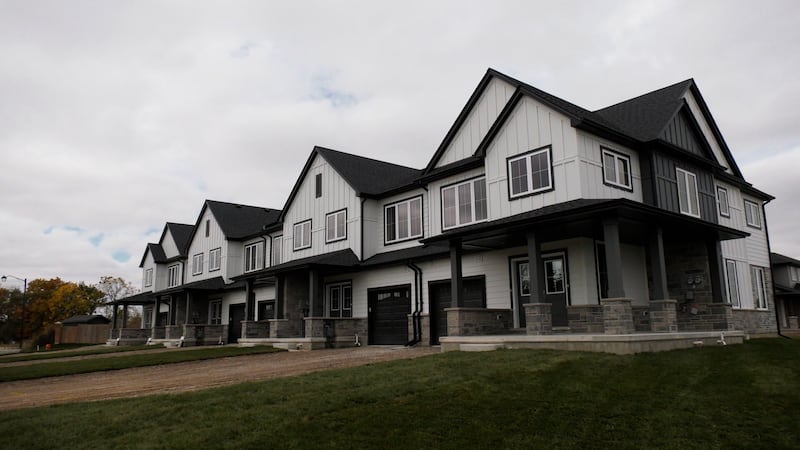
“This program in some way puts certain groups of people coming into the city ahead of the line. I’m trying to wrap my head around that,” Coun. Corrine Rahman told colleagues during a meeting of the Community and Protective Services Committee. A staff report asks council to ratify an agreement with the federal government that would provide London with $7,345,000 from the Interim Housing Assistance Program (IHAP) to cover costs stemming from the increasing number of asylum claimants accessing local support agencies, including homeless shelters. The funding would provide asylum claimants with supports such as housing navigation, orientation and basic needs assistance until March 31, 2027. In addition, 11 apartments will be dedicated specifically for asylum claimants in a building at 763-773 Dundas Street led by the London Cross Cultural Learner Centre (CCLC). The yet-to-be constructed building is anticipated to begin occupancy in 2026. However, Rahman pointed to the long waitlists faced by many Londoners in need of public housing. “There are people that have been struggling a long time in our community trying to get housing, and these new units that are being created would be life changing for them as well,” Rahman said. As of June 30, there were 7,628 active applications on the waitlist for rent-geared-to-income housing. “When we are advantaging (a) particular portion of our population over others, it gets to be a difficult conversation,” said Coun. Susan Stevenson. Stevenson wanted to make sure that the city’s financial contribution to the agreement wouldn’t result in another program being de-funded. “Yes we’re getting $7.3 million, but we’re also committing to using $3.3 million of our own money at a time when we’ve had difficulty the last two years finding enough money for indoor shelter during the winter,” she added. Civic administration stood behind their recommendation to access the federal funds, suggesting that the proposal will free up spaces within the local shelter system currently occupied by asylum seekers. “Individuals and families that are asylum claimants and are currently staying in family shelters, or staying in a hotel space, or using our shelter system could be transitioned out of those spaces and into the housing opportunity,” explained Kevin Dickins, Deputy City Manager Social and Health Development. “Which would free up space in those systems for folks that are experiencing unsheltered homelessness or are waiting to get into shelter now.” According to the most recent municipal data, there were 678 emergency shelter bed nights used by asylum claimants between April and June, 2.6 per cent of the total occupancy. “We have been seeing a fairly steady number of asylum claimants over the last couple of years, just around 1,000 total in our community based on our social assistance numbers,” said Craig Cooper, Director of Housing Stability Services. “Obviously, some of those folks don’t ever touch our homelessness system, they’re not staying in shelter. They’re able to get their social assistance and move forward - but many of them do come into contact with these programs.” The CAPS Committee recommended Council ratify the agreement to access the federal funding. Rahman acknowledged that the federal government has different programs to meet different needs in the community, but added, “I guess my question for our MPs at a later date will be, whether or not there’s flexibility on who gets these opportunities and these spaces.”