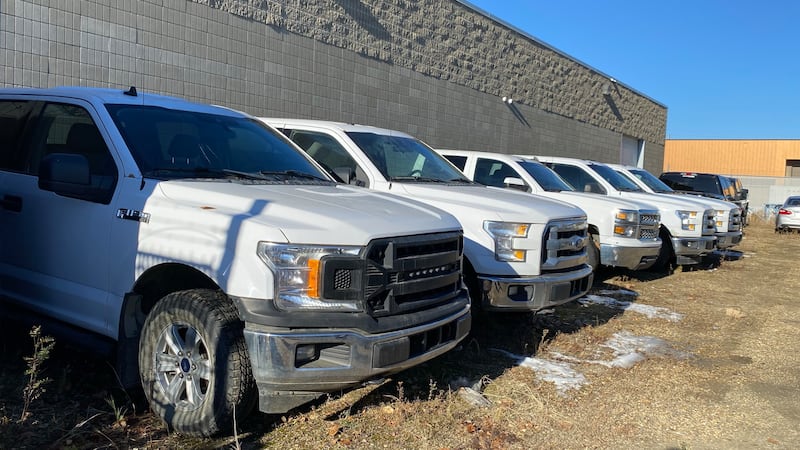
Ottawa may be experiencing unusually warm November weather but rising diesel prices are already putting financial pressure on local snow removal companies, with some of those costs now being passed along to customers. Allan Singer, president of Kodiak Snow Removal, says diesel prices have climbed dramatically compared to this time last year, making it increasingly expensive to operate the company’s fleet of approximately 80 tractors. “Last year, this time for November was $1.45 for fuel for diesel and now it’s $2.60, which is an 80 per cent increase,” Singer said. He says it costs thousands of dollars to fill the company’s tractors, an expense that continues to eat into its operating budget. To help offset those costs, Kodiak has increased its seasonal snow removal price by $20, or approximately 3.8 per cent. The company is also introducing a $2 fuel surcharge per snow event once diesel reaches $2.85 per litre. “So, I can visit the house three, four times that snowfall, but the client will be charged $2 for that full snow event. Up to a maximum of $40.” Singer said. “It’s not to make more profit, it’s just to cover our costs.” The financial pressure is not limited to snow removal companies. Economist and assistant professor at McMaster University, Colin Mang, says rising diesel prices are increasing transportation costs across the country, potentially leading to higher prices for everyday goods and services. “Prices for everyday goods at the grocery store, at retail stores around the country, are going to start increasing because of the increase in transportation costs,” Mang said. He says many businesses have managed to absorb those additional expenses so far but warns that may not be sustainable much longer. According to Mang, the ongoing conflict in the Middle East has disrupted oil shipments and damaged refineries, contributing to a global shortage of diesel fuel. “As a result, it’s driven up the price of diesel substantially over the summer,” he said. “The longer this goes on, the more of that cost increase will be passed through to consumers.” Mang expects the inflationary pressure to continue into 2027, warning that even an end to the conflict would not immediately restore damaged infrastructure or disrupted fuel supplies. He says Canadians could continue feeling the financial impact for at least another six months, potentially longer. “Unfortunately, this is just not a situation that’s going to go anytime soon,” he said. Back at Kodiak Snow Removal, diesel isn’t the only expense putting pressure on the business. Singer says tariffs on steel are also contributing to higher equipment costs. “All the equipment is metal and these blowers that we use to clean the residential homes alone in the past three years went up like over $3,000, so that’s a big impact,” he said. And while Ottawa’s first major snowfall may still be weeks away, the cost of clearing it is already piling up.