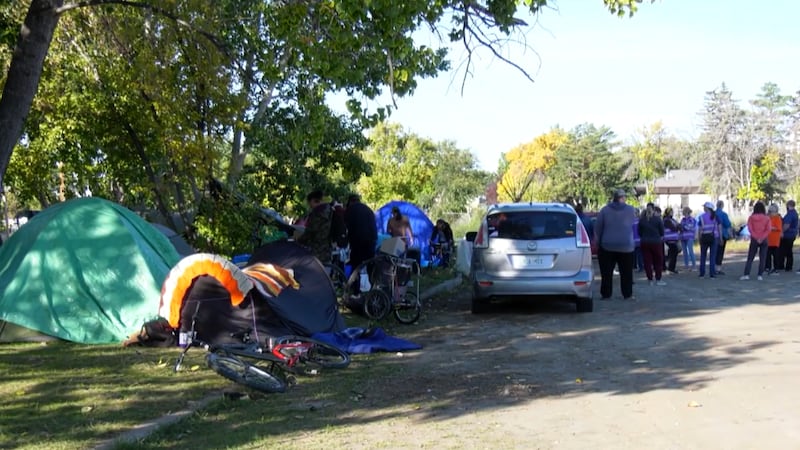
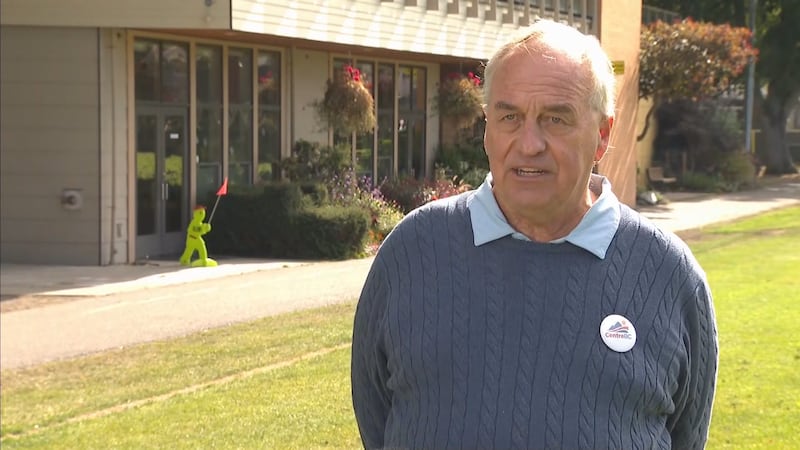
Father who killed one-year-old son with an axe could soon return to Mennonite community An Ontario man who killed his infant son nearly five years ago may soon be able to return and live in his Mennonite community. Isaac Martin’s progress and compliance to a mental health care plan was outlined at a recent Ontario Review Board hearing. The panel heard he is stable, taking medication and has attended counselling and therapy sessions. “His Mennonite community has accepted him,” the board said in the written decision. “Everything appears to be moving in the right direction.” The board also outlined Martin’s possible return to the Township of Wellesley sometime over the next year. Whether he will reside with his father or wife has yet to be determined. On Sept. 18, 2021, Martin killed his one-year-old child by hitting him multiple times with an axe. The attack happened in the basement of the family’s home on Powell Road and partially witnessed by Martin’s wife. Martin, who was 31 years old at the time, was arrested within minutes of police’s arrival and charged with first-degree murder. He said God told him to murder his son. Later, Martin admitted he regretted killing his child and didn’t know what came across him. The court found Martin not criminally responsible for the infant’s murder, on account of mental disorder, in January 2024. Martin is now detained at the Southwest Centre for Forensic Mental Health Care in St. Thomas, Ont. At his latest hearing, in April 2026, the board heard that Martin was diagnosed with bipolar disorder with psychotic features. After reviewing the evidence presented at the hearing, the board found that Martin has made great progress but continues to represent “a significant threat to the safety of the public” and will remain under a detention order as some of the details surrounding his return to the Mennonite community are sorted out. A return to the Mennonite community will be “therapeutic,” the panel was told. “Reintegration with his Mennonite community is key for both management of risk and Mr. Martin’s long-term stability,” the board’s decision read. According to the Ontario Review Board, Martin’s community is accepting of his return and expects him to live with his wife. The board noted that, over the last year, Martin had adhered to his medications, and the treatment team was working with him to improve his understanding as to why he needs to continue to take them over the long term. Martin will remain under the hospital’s care. The board said a determination about his return to the community will come after he spends time on longer passes, in addition to feedback from Martin’s wife, father, community members and Martin himself. Driver arrested for allegedly speeding at 260 km/h A driver from Mississauga has been charged for speeding at 260 km/h. The Ontario Provincial Police said the driver was spotted travelling in the eastbound lanes of Highway 401 in Oxford County and Highway 403 in Brant County. They are both 100 km/h areas. Police said they were tipped off by a concerned citizen who filed an online complaint. An investigation led police to the front door of the 20-year-old driver’s home on May 22, where they were arrested and charged with dangerous driving. Region of Waterloo loses legal bid to clear Kitchener encampment The Region of Waterloo has failed in its latest legal attempt to evict people living at the Victoria Street encampment in downtown Kitchener, Ont. Waterloo Region Community Legal Services, the group representing encampment residents in the matter, shared with CTV News the 88-page decision from Ontario’s Superior Court of Justice. Regional council passed an encampment bylaw in April 2025 with the goal of clearing 100 Victoria Street North so they could turn it into a staging area for crews working on the Kitchener Central Transit Hub, followed by remediation efforts which are expected to take at least three months. Once that is done, Metrolinx will begin construction at the site. The region’s bylaw forbade anyone new from moving into the encampment. At the time, approximately 40 people were living on the property. The region maintained that all of them had been moved into a shelter, were given other housing options or left the site of their own accord. They felt that anyone who moved into the encampment after the bylaw was issued would no longer meet the definition of an encampment “resident.” Lawyers with Waterloo Region Community Legal Services disagreed. They said the bylaw infringed on the Charter rights of the unhoused. In their view, the region’s efforts to limit who qualified as a resident ignored the reality of the homelessness issue. They also urged the region to find an “alternative protected encampment.” The court heard those arguments at a hearing held over three days in April 2026. Justice Michael Gibson delivered his written decision on May 21, ruling the bylaw unconstitutional. Justice Gibson recommended the region create an accommodation plan that includes an alternative location for encampment residents, or develop a tenting protocol. Justice Gibson ended by encouraging the region to return to court once a safe tenting protocol was in place, or an alternative location “somewhere reasonably proximate to 100 Victoria,” to request a review or seek further direction from the court. Kitchener Mayor Berry Vrbanovic said he was disappointed by the decision. “Regretfully, the court’s decision doesn’t appear to acknowledge those efforts nor the disproportionate negative impacts on residents and businesses both in the surrounding area, and our broader community,” Vrbanovic said, in part, in an emailed statement. “I have been in touch with the Premier and have dialogued with other local leaders and mayors from other Ontario jurisdictions, and will continue to do so as we work with the Region locally to deal with a complex issue affecting their lands in Kitchener and lands in other cities and communities in Ontario and across Canada.” Premier Doug Ford was asked about the court’s ruling at a press conference in Sault Ste. Marie. “It’s the most ridiculous ruling I’ve ever seen,” Ford answered angrily. “Don’t get me wrong. I have a great deal of respect for our judges [on the] supreme court. But he comes out with this cockamamie idea that they’re going to hold up an encampment – hold up transit – for, what? Thirty people? They’re going to hold up millions and millions of riders, communities and everything, saying you can’t go in there. You can’t touch them. So, guess what folks? Anyone can show up in your backyard – I wish they would show up in this judge’s backyard – and set up camp. It’s the craziest thing I’ve ever heard.” Waterloo Region Chair Karen Redman spoke with Ford and municipal leaders on May 21 regarding the court decision and broader challenges municipalities face when it comes to encampments and homelessness. Ashley Schuitema, from Waterloo Region Community Legal Services (WRCLS), was pleased with the court’s ruling. “To see this result is amazing for our clients,” she told CTV News. “And it’s amazing for people that are experiencing homelessness in our community.” In response to Ford’s comments, Schuitema shared the following statement: “WRCLS is hopeful that the premier will work with the region towards meaningful solutions to homelessness and respect the court’s ruling.” ‘We still have no solid answers’: Family still searching for missing man with Down syndrome The family of Nathan Wise, who disappeared without a trace three years ago, is hoping renewed attention will bring closure to his case. The 37-year-old was last seen in Toronto on May 12, 2023, near Jane Street and Sheppard Avenue West in North York. Where he went next remains a mystery. “It’s a difficult time for us,” his cousin Jason Babcock said in May 2026. “We just want some answers so we can bring him home.” The disappearance triggered an immediate response. Nathan, who has Down syndrome, functioned at the level of a seven-year-old and needed additional supports. As a result, a Level Three search was launched in the North York neighbourhood where he was last seen. That is the highest level for any missing person. Days later, searches were also conducted in Guelph after the Guelph Police Service also received a tip from Toronto police that Nathan was seen in The Ward neighbourhood. In the end, there was no sign of Nathan or where he might have gone. Nathan moved to Toronto to live with his sister following the death of his father. However, he still maintained a close connection to his cousins Jason and Alison Babcock in Kitchener. They hope that someone, somewhere, has information that can help bring closure. “He just disappeared without a trace,” Jason said. “There’s something out there. Somebody knows something.” The Toronto Police Service said it is still actively investigating Nathan’s disappearance. “The family continue to be in communication with police and have been co-operative with this investigation,” a statement to CTV News read, in part. “We would like to acknowledge and sincerely thank the community for their continued support. The hundreds of tips received to date reflect a strong collective commitment to missing person investigations.” Please Bring Me Home Canada, a volunteer-run organization dedicated to missing persons and cold cases, has worked with the family to organize private searches for Nathan. The focus now is on examining all possible movements in the hours and days after Nathan was last seen. “We have established a very strong timeline up to a certain point, but there is a critical window we are still working to fully illuminate,” explained Jim Barry, a member of the investigative team. “We know Nathan was last seen on March 11, 2023, and last communicated via text on March 29, 2023. We are looking for any information regarding his activities or any potential sightings in the period immediately following that March 29th communication. Even a single confirmed sighting during that window could change the entire trajectory of this investigation.” A Better Tent City organization to dissolve, site management will transition The volunteer-led organization behind Waterloo Region’s tiny home community has announced plans to dissolve. A Better Tent City, located on Ardelt Avenue in Kitchener, opened in April 2020. The cabins were meant to provide a safe space for those struggling with chronic homelessness. “After six years of working together to provide shelter and community for people who were experiencing homelessness, A Better Tent City has realized that we can no longer continue as a volunteer-led organization,” an email from Jeff Willmer, board chair for A Better Tent City, read. He said changes over the past year, including the loss of several volunteers on the operational leadership team, made the initiative unsustainable in its current form. He also said significant health and safety challenges have been identified that have grown beyond their ability to manage. Willmer did not go into detail about what the challenges have been. “Rather than the site shutting down, The Working Centre (TWC) has agreed to step in to provide operational support at the site, starting Monday, July 20, 2026, pending a period of transition and assessments,” the region said in a media release. “Over the next two months, [A Better Tent City] and TWC will work closely together on transition planning while the region supports with a full assessment of site needs and conditions.” Joe Mancini, TWC’s director, said it is too early to discuss specifics about what changes will be made to the site’s operation, but he has a general idea of what it could look like. He hopes to use what TWC has learned from operating an emergency shelter on Erbs Road in Waterloo. Those living at the tiny home community hoped there wouldn’t be too much change. “I think they should come and see how this place runs and try to keep it as close as possible,” said resident Mari Aurbrigg. “We help a lot more people than just the residents here. And that need to continue somewhere.” Nadine Green is the site coordinator and has been with A Better Tent City since its inception. “I was sort of blindsided. I didn’t expect it,” she said. Green lives at the site and said she doesn’t know what’s next for her. She said if she is asked to leave she will do so but she is taking her tiny home with her along with the plaque on in, commemorating the founder and first landlord of A Better Tent City, Ron Doyle.