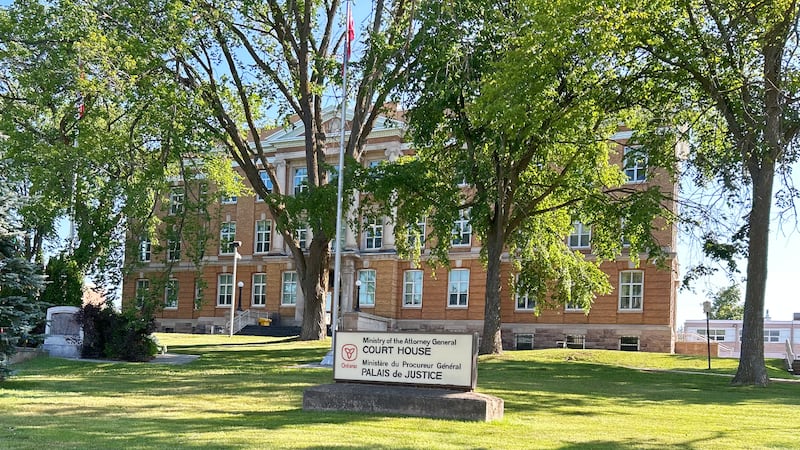
New details are emerging about the Region of Waterloo’s appeal of a court decision regarding a large encampment in Kitchener. In June, the region and the province announced plans to appeal the May 22 ruling by the Ontario Superior Court. Justice Michael Gibson deemed a site-specific bylaw unconstitutional. The bylaw was meant to clear the property at 100 Victoria Street North so crews could prepare for construction of the Kitchener Central Transit Hub. The court filing, obtained by CTV News on Wednesday, accused the judge of exceeding the court’s constitutional role and making “multiple errors of law.” The documents noted that the judge believed he was bound by the precedent established in a 2023 case involving the encampment. That decision was made by Justice Michael Valente, who said people living at 100 Victoria Street North were not breaching a regional bylaw. Valente stated the bylaw “deprives the homeless residents of the encampment of life, liberty and security of the person in a manner not in accordance with the principles of fundamental justice and is not saved by section 1 of the Charter.” The region’s appeal argues the previous decision should not set the precedent for this case because “the Site Specific and Amended Bylaws had a different scope, purpose and effects than the general bylaw.” The court filing also said the judge should not have ruled that the encampment residents’ constitutional rights protect their choice to live on a specific property they do not own and where they are not tenants. The region also claimed there is no protected right to adequate housing based on the Universal Declaration of Human Rights and the International Covenant on Economic, Social and Cultural Rights. During the three-day hearing on the site-specific bylaw, lawyers representing encampment residents argued the bylaw discriminated against specific groups of people, including women and Indigenous people. In his ruling, Justice Gibson agreed some protected groups would be impacted by the site-specific bylaw. The appeal filing said the judge incorrectly conflated overrepresentation of protected groups within the homeless population as grounds to deny the bylaw. The documents also said the judge made an error by “failing to consider the region’s evidence regarding the harms that members of affected groups experience when residing in encampments.” The filing concluded by saying the judge went beyond the role of the court when giving an assessment of the policy options the region should consider, and characterizing the benefits of the upcoming transit hub as “speculative.” The Ford government, meanwhile, has announced their support of the region’s appeal. “Our government is appealing this decision in order to provide the certainty and stability needed to advance critical infrastructure projects here in Waterloo Region and across Ontario,” Attorney General Doug Downey previously said in a media release. The province also hinted they would consider invoking the notwithstanding clause. When specifically asked if that option was still on the table, the Minister for Municipal Affairs and Housing, Rob Flack, said, “I can say we have a great respect for the judiciary. We will follow the steps of the judicial process. We’re confident that by using the appeal mechanism, we will win the day.”