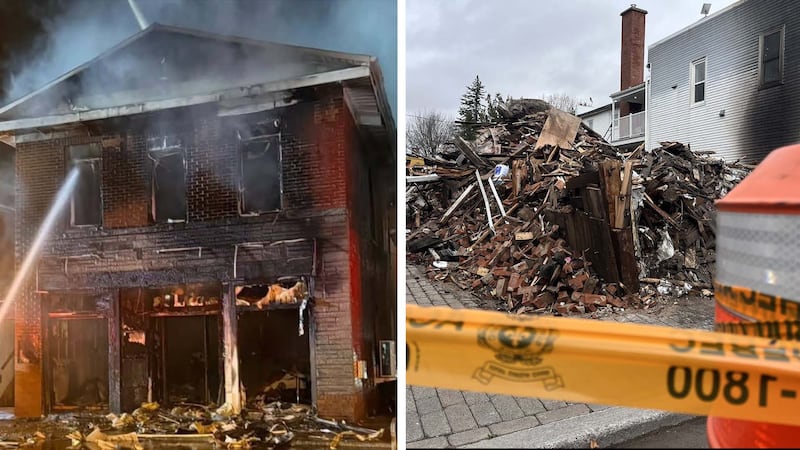
The future of a historic Brantford railway station remains uncertain after a second fire damaged the vacant building in less than a year and a half. The former Toronto, Hamilton and Buffalo Railway station, located at 60 Market St. S., was damaged by fire on Oct. 22, affecting its roof and interior. The cause of the fire remains undetermined, according to fire officials. The total property risk estimate is between $1 million and $1.9 million. Chris Gagen, president of the Brant Railway Heritage Society, said the extent of the damage, including the effects of smoke, fire and water, raises questions about whether the building can be preserved. “It leaves a lot of the future certainly unknown because of the significant impact to the roof and the smoke and fire damage on the inside,” Gagen said. ”Then the structural impact that it’s going to have, even from this significant amount of water.” Gagen said the station was also damaged in a fire in June 2025, which affected the same areas of the building. Originally built in 1896, the station was expanded in 1906. It played a role in connecting Brantford to other communities, including Hamilton and Toronto, and was part of the railway network that helped support the city’s industrial growth. “For many people, this is how we got around,” Gagen said. “This would have been your connection before we had the 403 or any highways like that. It was how you got to and from cities like Hamilton and Toronto and beyond.” The City of Brantford said staff assessed the structure following last month’s fire and determined it did not appear to pose an immediate risk to public safety, such as collapsing onto nearby sidewalks or properties. The city said an Unsafe Building Order would not be issued at this time. “Due to the nature and extent of the damage, the building needs fire-related repairs, including a report from a structural engineer,” an email statement from the city read in part. The station remains protected under the Ontario Heritage Act following a notice of intent to designate issued by city council in May 2019. Under Section 30 of the act, the property cannot be altered or demolished without council approval. Gagen said the building’s limestone foundation and brickwork are among the features protected by the designation. “The limestone at the bottom, especially around the front side and the brickwork, are all protected,” he said. The city said the property was registered as vacant and secured under its Vacant Building Registry Bylaw. “When boarding measures did not prevent unauthorized entry, additional security measures, including steel coverings on doors and windows, were installed,” the city stated. “The property owner complied with all requests under the bylaw. The building is checked regularly by city staff, and no signs of unauthorized entry were observed during the most recent inspection before the fire.” The fire could also have implications for future development on the property. Plans for the property include an eight-storey mixed-use building with more than 160 residential units. The city said the approved first phase of development, located east of the former station, is not likely to be affected. However, the fire may affect proposals for the remainder of the site, including the station. Gagen said the building represents more than its physical structure, noting its role in the lives of generations of residents. “Once a building like this has gone, it’s gone forever,” he said. “But especially for heritage buildings, they still have stories to tell... especially in this time, as we’re getting close to Remembrance Day, that many loved ones might have seen their family member for the last time at stations like this.” The heritage society is waiting for more information about the cause of the fire and the extent of the damage before determining what preservation options may remain. As stated on their website, the heritage society is in the process of preserving the station with future plans to relocate and reopen it as a railway museum. “Hopefully it can still continue some type of legacy, depending on what the developer decides to end up doing with it, what their plans end up still, how they can incorporate it in its future,” Gagen said.