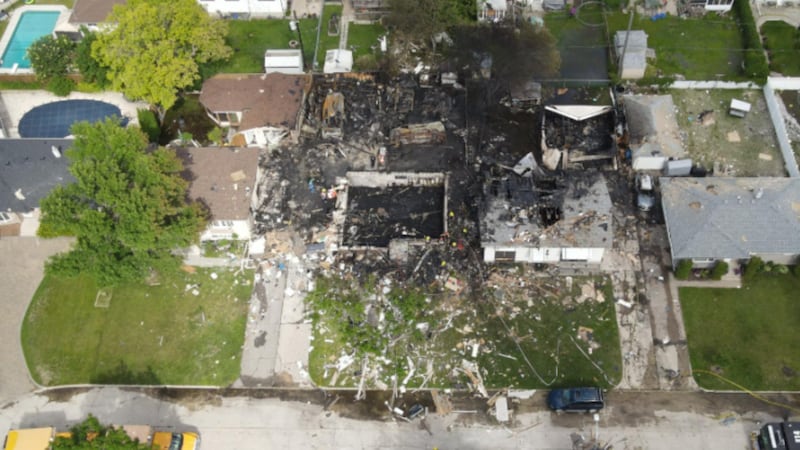
An Ontario man who killed his infant son nearly five years ago may soon be able to return and live in his Mennonite community. Isaac Martin’s progress and compliance to a mental health care plan was outlined at a recent Ontario Review Board hearing. The panel heard he is stable, taking medication and has attended counselling and therapy sessions. “His Mennonite community has accepted him,” the board said in the written decision. “Everything appears to be moving in the right direction.” The board also outlined Martin’s possible return to the Township of Wellesley sometime over the next year. Whether he will reside with his father or wife has yet to be determined. On Sept. 18, 2021, Martin killed his one-year-old child by hitting him multiple times with an axe. The attack happened in the basement of the family’s home on Powell Road and partially witnessed by Martin’s wife. Martin, who was 31 years old at the time, was arrested within minutes of police’s arrival and charged with first-degree murder. He said God told him to murder his son. Later, Martin admitted he regretted killing his child and didn’t know what came across him. The court found Martin not criminally responsible for the infant’s murder, on account of mental disorder, in January 2024. Martin is now detained at the Southwest Centre for Forensic Mental Health Care in St. Thomas, Ont. Hearings are held every year to evaluate his status and lay out the next steps needed to reintegrate Martin into society, while ensuring the public remains protected. At his latest hearing, in April 2026, the board heard that Martin was diagnosed with bipolar disorder with psychotic features. After reviewing the evidence presented at the hearing, the board found that Martin has made great progress but continues to represent “a significant threat to the safety of the public” and will remain under a detention order as some of the details surrounding his return to the Mennonite community are sorted out. A return to the Mennonite community will be “therapeutic,” the panel was told. “Reintegration with his Mennonite community is key for both management of risk and Mr. Martin’s long-term stability,” the board’s decision read. The decision also laid out two possible options if Martin is to return to the community. He would have to live with his father, who is already considered an approved person, or his wife, who is in the process of becoming approved. The board’s decision noted, however, that Martin’s wife needed to improve her insight by reaching out to the community and/or treatment team if Martin showed signs of decompensation. According to the Ontario Review Board, Martin’s community is accepting of his return and expects him to live with his wife. The document also outlined how Martin and his wife started communicating again, starting with letters and progressing to phone calls and visits to the hospital. He then received passes to spend time with her in the community. Martin’s mental health difficulties began in 2010. He was prescribed medications, though the dosages were reduced several times because of the side-effects, according to the board’s report. Martin was also taken to the hospital a few times due to mental health concerns, including twice for insomnia in the days prior to his son’s death. The board noted that, over the last year, Martin had adhered to his medications, and the treatment team was working with him to improve his understanding as to why he needs to continue to take them over the long term. It also stated Martin was able to easily identify symptoms of decompensation, including sleep issues and mood fluctuations. The board said, if Martin’s wife gets approval, he can start spending longer periods of time with her. “The treatment team is mindful of respecting the culture of Mr. Martin’s community while managing the potential risk (both physical and psychological) to Mr. Martin’s wife. It is important that, if Mr. Martin is to return to living with his wife, it is with her clear consent. It is also important that the members of the community clearly understand the risk factors and when to reach out to the treatment team,” the decision stated. Martin will remain under the hospital’s care. The board said a determination about his return to the community will come after he spends time on longer passes, in addition to feedback from Martin’s wife, father, community members and Martin himself. “Mr. Martin has had a year of great progress and has demonstrated resilience with the help of his community and the treatment team,” the decision read. It also noted that a number of Mennonite community members attended Martin’s hearing.