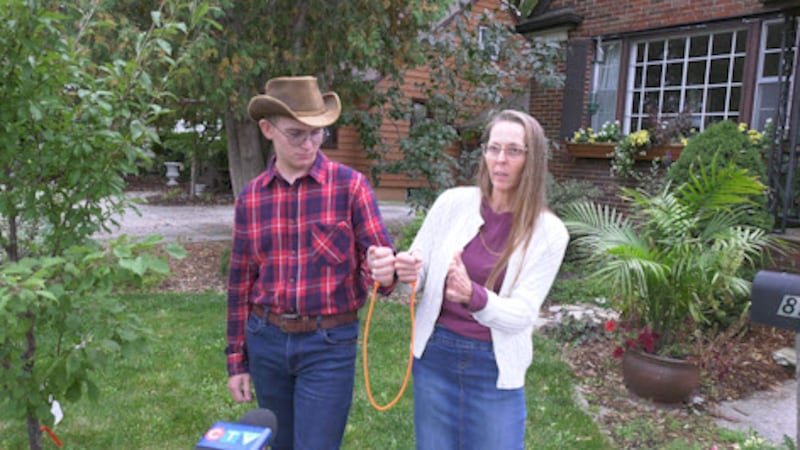
Two sisters were hoping to come together to mourn the death of their other sister, but they ran into a big roadblock as they started planning her funeral. “This is undoubtedly one of the hardest experiences I’ve ever had in my entire life,” Raven Morand told CTV News. She learned on Thursday her younger sister, Brianna, had died from a drug overdose. “My parents and I, we got on a plane right away the next day,” Raven said. She currently lives in Kitchener-Waterloo, but her family is part the Anishinaabe community at Eagle Lake First Nation near Dryden, Ont., where she grew up. Raven’s other sister, Harmony, is currently serving time on drug-related charges at the Grand Valley Institution for Women in Kitchener. Raven hoped Harmony would be by her side at Brianna’s funeral, so they began the formal process of requesting leave from the facility. “We had put forth a pretty solid, what I felt like was a pretty solid logistics plan that contained various flight options for both [Harmony] and her escort, as well as accommodations for both her and her escort,” Raven said. Correctional Service Canada (CSC) denied that request. “From what my sister told me, it was on the basis of financial burden and logistical burdens as well,” said Raven. The sisters were confused by the denial, as CSC had previously approved Harmony’s other leave requests. “She just attended the University of Waterloo Pow Wow. She’s been going to full moon ceremonies with Healing of the Seven Generations,” Raven explained. In a statement to CTV News, Correctional Service Canada said it couldn’t comment on specific situations. “[Escorted Temporary Absence] requests are assessed on a case-by-case basis and must meet legislative, public safety, security and operational requirements,” it said. “This includes ensuring that appropriate escort, transportation and supervision arrangements can be safely implemented. The timing of a request may affect CSC’s ability to put those measures in place, particularly where complex travel and escort arrangements are required.” “When an application for an ETA to attend a funeral is denied, every reasonable effort is made to inform the inmate before the funeral and to clearly communicate the reasons for the decision,” the statement continued. “When attendance cannot be accommodated, CSC policy provides for reasonable efforts to support family contact and participation in mourning and remembrance activities through alternative means, where appropriate.” Harmony could still watch the funeral virtually through Zoom, but that was also less than ideal. “We are not supposed to film our dead, our loved ones who have passed away,” Raven explained. “That’s not something we do in out culture as Anishinaabe people.” The Canadian Association of Elizabeth Fry Societies, which provides support for incarcerated women, said inmates should have the right to attend their loved one’s funerals. “We have such a problem right now with over or mass incarceration of Indigenous people in our federal system,” Emilie Coyle, the organization’s co-executive director, explained. “This is particularly acute for Indigenous folks who are incarcerated who may have particular cultural needs when it comes to burying their loved ones.” The Grand Valley Institution for Women has offered to organize a ceremony, giving Harmony an opportunity to grieve, but Raven said it is not the same. “I gave my sister Brianna a cedar bath yesterday, and that was really hard to do without [Harmony] there,” Raven said. “That’s a ceremony that she’ll never, ever, ever get a chance to do. And to see my sister off tomorrow is something that she’ll never, ever, ever get to do in there.” Raven told CTV News that she has seen how far Harmony has come in the three years since she was first incarcerated. She worries that the separation from the family, during this painful time, could setback that progress. “I’ve already lost one sister. I would hate for this to impact her in a negative way and for me to lose another one.” Raven also said their chief and council members will be meeting with the Minister of Crown-Indigenous Relations and Northern Affairs Canada. While she knows it will be too late for her family, she hopes it clarifies the decision-making process for other requests in the future.