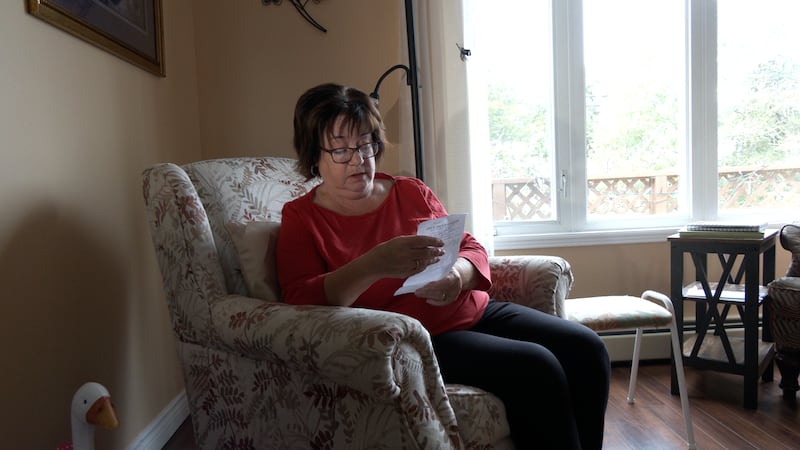
Amanda De Luca struggled in the months after her now 10-year-old daughter was born. A once competitive CrossFit athlete, she says she found herself unable to perform a half-push-up on her knees. She also had difficulty getting back to everyday tasks like cooking and cleaning the house. “I was just so depleted I wasn’t able to do it,” said De Luca. “And the doctor just said that I was a new mom. It was dismissed.” Her feelings of isolation prompted her to start fitness and well-being classes for new moms. Over the years, she has listened to the stories of several women trying to cope with postpartum depression. “They have a range of symptoms,” she said. “Some have mild anxiety, but there are more extreme cases, of course.” One-in-five women experiences symptoms that can include extreme anxiety and an inability to bond with their baby. “I think the longer you wait to accept it or treat it, the more you miss out on this precious time,” said De Luca. “A lot of that time is blocked for me because I have denied it for so long.” Health Canada has now approved Zuranolone which is sold under the name Zurzuvae. It is the first drug specifically aimed at treating postpartum depression. A study in the American Journal of Psychiatry found 27 per cent of women no longer reported any depressive symptoms after a 15-day course of the drug. Dr. Martin St-Andre is a psychiatrist specializing in perinatal mental health at Montreal’s Ste-Justine hospital. He says news of more options to treat postpartum symptoms is welcome, but adds that there are also other treatment options available. “For instance, psychotherapy can have a very positive and quite rapid impact when it is well designed and when it is well targeted,” said St-Andre. “The same goes for antidepressants.” He also says lifestyle changes can help cope with the massive changes that come with parenting. But for a subset of patients, a drug like Zuranolone could bring added benefits. De Luca now calls her programs “Evolving with Mandy,” and says the goal of her plans is to try to let women know they don’t have to navigate postpartum symptoms alone, as well as other health issues that arise in the different stages of a woman’s life. “It’s mindset work and definitely some movement and health,” she says. “The whole connection is what can help get through it, whether you decide the medication is right for you or not.”