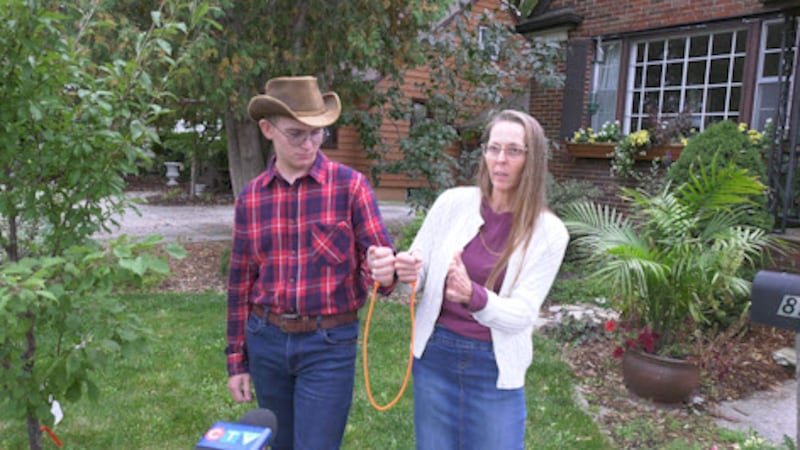
Some residents in a west-central Edmonton neighbourhood are concerned about the city’s plans to redevelop its streets to make them more bicycle-friendly, saying the planned changes will make it less navigable by vehicle and make parking on the street more difficult. Preliminary work to construct local street bikeways in Grovenor is scheduled to begin this spring. When completed, the work changing 104 Avenue from 142 Street to 149 Street, 144 Street from Stony Plain Road to 107 Avenue and 148 Street from Stony Plain Road to 104 Avenue is slated to devote a portion of the roads earmarked for bicycles. The changes would also see the removal of some parking on the roads, restricting vehicle travel to one way on some roads, the addition of speed bumps and lowering the speed limit to 30 kilometres per hour. Anna Hayes, who is one of several Grovenor residents circulating a petition to ask the city to stop the work and reconsider it, says the planned changes don’t support the number of cyclists using the neighbourhood’s streets, and that the removal of parking would lead to limited parking options given how much infill housing is there and being built. “There’s going to be no parking here, and you’re going to have 18 new housing units,” Hayes told CTV News Edmonton on Tuesday. “Assuming none of them are going to have a car is ridiculous.” Ben Cabush, another neighbourhood resident, said a lot of the planned changes to restrict traffic to certain directions “are severe and unnecessary.” “For example, the school in the neighbourhood ... you will not be able to get to that from both the north and east directions,” he said. Grovenor residents last week received flyers from the city informing them of the changes and the spring start time of the work. Cabush said neighbourhood residents feel they haven’t been properly consulted about the plan. “Mostly, we just feel like we don’t have any input into the changes that are incoming to our community, and just a lack of transparency as well,” he said. “Basically, we’ve received a notice with very, very little time to even act on it or state our opinions on it.” Mayor Andrew Knack, speaking in general terms, said Tuesday at city hall that “a variety of opinions” are expected when it comes to changes to a neighbourhood’s roads, parking and traffic patterns. “All of those things need to be considered when you’re developing out these plans, and at the same time, certain plans require a lot of consultation, because there’s a high level of work,” he said. “For neighbourhood renewal, they spend two years doing consultation before construction occurs, whereas something that’s smaller scale might be more of a sharing of information than it is a shaping of the project itself.” Devin Dreeshen, the province’s minister of transportation, said Tuesday at the Alberta legislature that, when asked about work to develop legislation on bike lanes, “it is a huge problem” when existing roads are redeveloped and end up restricting traffic flow. “It’s not that bike paths are somehow inherently evil, but it is a huge problem of having roadways that are designed for vehicles being ripped up, torn up, replaced and eliminated, and putting a bike lane on top of them,” he said, claiming Alberta has added 400,000 more drivers to the province’s roads over the last six years. “To take away the lanes that those drivers need to drive on is asinine.” With files from CTV News Edmonton’s Connor Hogg