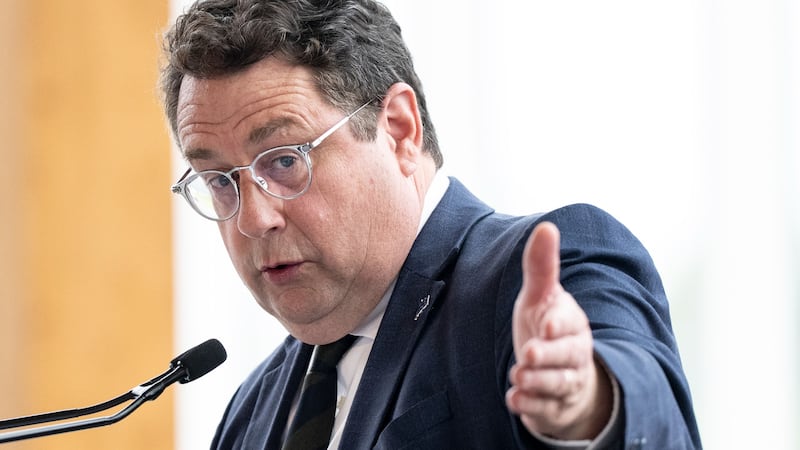
Rob Huebert, the director of the Centre for Military, Security and Strategies Studies at the University of Calgary, joins Alberta Primetime host Michael Higgins to discuss recent geopolitical developments and how they could impact Canadian sovereignty. This interview has been edited for clarity and length. Michael Higgins: What is the U.S. president looking to do in his dogged pursuit of claiming Greenland? Do the words match the motivations? Robert Huebert: Unfortunately, we’re starting to see that they do. Remember, Trump is always being seemingly better with our enemies than he is with his allies, and we seem to be seeing this playing out. The critical point, though, is the Americans have come out with their security doctrine, and their most recent policy statement is that they are moving to control the hemisphere. They talk about how they are the major player within the Western Hemisphere. We see this playing out in Venezuela, but we also see this playing out with his claims to Greenland. The bizarre thing with the Greenland claim is the Americans already have everything they could possibly have. They have a military base, they have the right to expand it if they want. So you sit there and wonder why he would risk the relationship with the rest of the [NATO] alliance, be it with Denmark, Canada and so forth. That’s the part that just does not add up. This is going to hurt American security, not help it. MH: How far do you see the U.S. administration and Donald Trump going with this situation? RH: I think he has to be taken very much at his word. We might say all he’s done is Venezuela. Obama went after Bin Laden and Bush went after Noriega, so it’s happened before, let’s not get too upset with it, but remember, Trump has shown that he is very willing to use force. Look at the creation of ICE and the way he is using it only against Democratic states, which demonstrates that there’s a political intent to how he uses force. Given the fact that he has constantly talked about the need to be in control of the Western Hemisphere, (following) the Monroe Doctrine, that means we’ve got to take him very seriously in this context. He doesn’t seem to care about how much he’s hurting American collective security with the NATO alliance. That tells us we’ve got to take him at his word. MH: To what degree does the Trump dialogue serve to weaken NATO? RH: Totally. When you start hearing Canada talking about invoking Article 5, which says if we are attacked we expect other NATO countries to come to our assistance, and the attacker is the United States – that’s got to be a serious discussion amongst NATO members. We’ve heard [French President] Macron and [U.K. Prime Minister] Starmer talk about the fact that they are willing to go to the assistance of Greenland. This is one of the biggest threats the NATO alliance has faced. Now, NATO countries have gone to war with each other. The Turks and the Greeks did it over Cypress, but they were not the major power – the United States is – and it’s not a question of a direct invasion of another country. [The Canadian military] is, in fact, preparing for the possibility of an invasion. Very difficult, very problematic for the NATO alliance. MH: In defending our own sovereignty, where do you stand on Canada developing contingency plans? RH: We should have been doing this a long time ago, because there’s been the ongoing recognition that the Russians are a threat within the Arctic context. We should have been all along much more serious about following through on Arctic security for ourselves. Now we’ve got the problem. We’ve talked big about Arctic sovereignty, but we haven’t done anything. We don’t have the replacement for the fighters, we don’t have the submarines, we don’t have the updated surveillance systems. At this point, we can try to start moving on those as fast as possible and hope Trump is basically yanking our chain on that, but there’s a saying: If you base a policy on hope, you are going to be inviting disaster. Ultimately, we can try to get common cause with our allies. We can try to make it as clear as possible it is against American interests to act in this way, and that we will be willing to take the steps necessary to make it as painful as possible for the Americans. But that’s about it. MH: The group behind a petition for a referendum on Alberta sovereignty confirmed to us they have gone to Washington on more than one occasion to meet with American government officials. What degree of concern is that? RH: Very concerning. First and foremost, we’ve already identified countries have tried to interfere with Canada through misinformation, political interference. We identified the Chinese, Russians, Iranians, Pakistanis and India. It was in the Hogue report. We have no doubt the Americans have equal capability if they so choose to direct it. We know separatist groups are always within a geopolitical context. They are always utilized as, basically, division elements to divide a society. Let’s face it, if we are facing an American threat, if Trump is serious, one of the most strategic moves the Americans can do is try to divide us. If we take this back to World War Two, think in terms of the fact that the Nazis were able to make common cause with individuals within Norwegian society. The term “Quisling” now means the individual that’s basically a traitor within a society. But [Vidkun] Quisling at the time was part of the Norwegian government and was able to say to Germany, we actually believe in your Aryan devices. Then he becomes the pretend leader of Norway during the occupation. I’m not saying that there are projections from the American government. The American government will move to utilize them as a divide issue to weaken Canada. Even if they turn around and say we have nothing to do with that planning, we’re not connecting in this type of environment. That type of activity is very dangerous for the country.