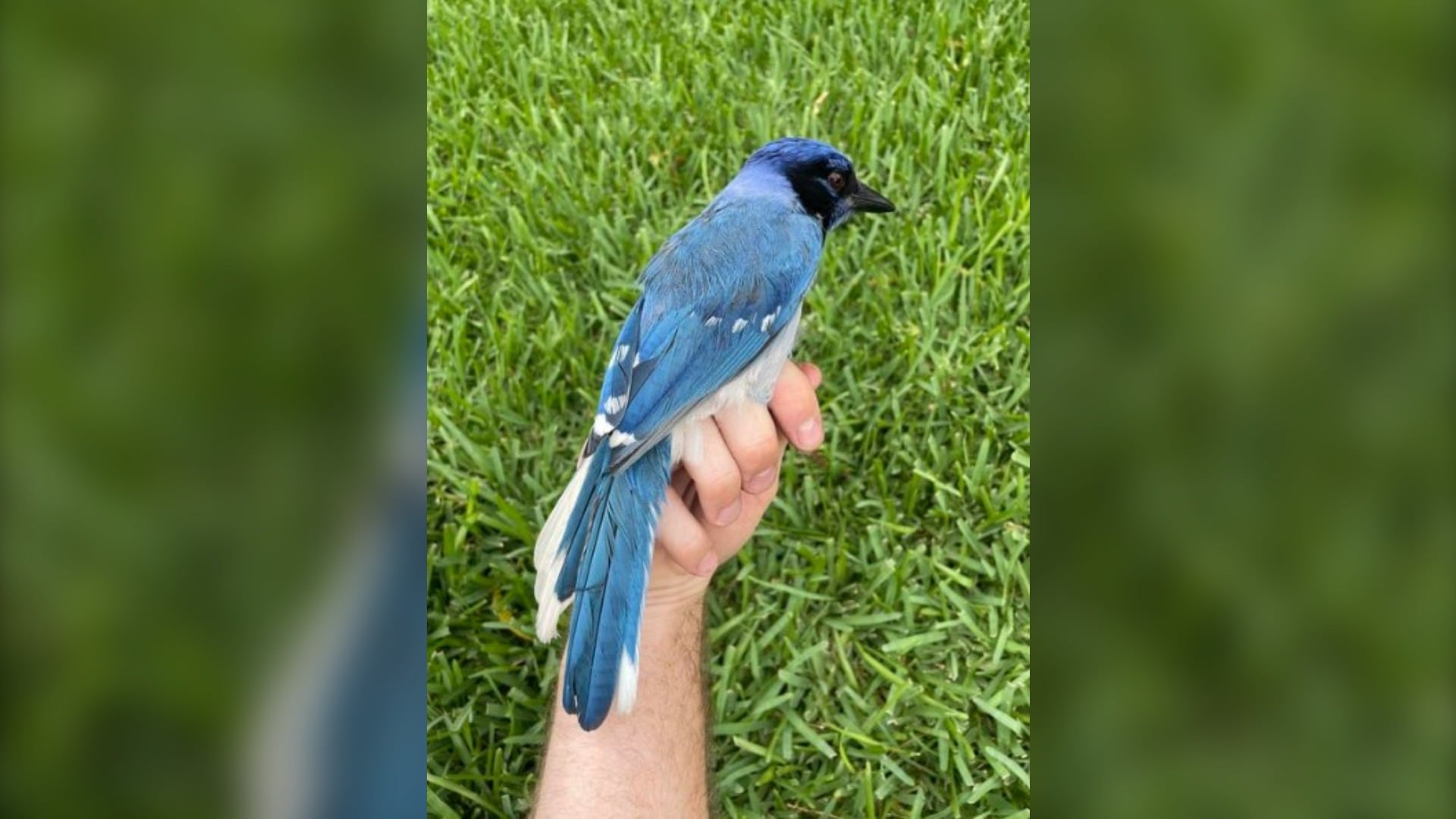
A new hybrid bird has been found in Texas: a cross of a blue and a green jay. University of Texas scientists report finding a bird that they say is the natural result of interbreeding between the two bird species. Canadians are sure to know the blue jay, the mascot for Toronto’s Major League Baseball team. However, they might not know about the green jay. The green jay is the blue jay’s southern cousin. A map issued as part of a news release outlining the research shows green jay territory that reaches north across the U.S.-Mexican border into the southern Texas region, around the Rio Grande River. The blue jay range intersects with the green jay’s around Austin and, evidently in one case, in the romantic San Antonio region. Brian Stokes reports finding the result of a special night shared by a male blue jay and a female green jay in a San Antonio suburb. “We think it’s the first observed vertebrate that’s hybridized as a result of two species both expanding their ranges due, at least in part, to climate change,” said Stokes, a graduate student in ecology, evolution and behaviour, in a news release. In a study Stokes and his supervisor released on the cross-species bird, it was suggested that a “lack of prolonged periods of freezing winter temperatures” might be opening up the green jay’s range north, beyond south Texas. The blue jay has begun moving south and west across Texas, but the study authors suggest that might have more to do with expanding human settlements and the use of suburban bird feeders. Scientists had previously cross-bred the two species, which diverged seven million years ago, and produced a blue-green jay in the 1970s. “Hybridization is probably way more common in the natural world than researchers know about because there’s just so much inability to report these things happening,” Stokes said. Some documented examples include interbreeding between polar and grizzly bears, coyotes and wolves, and belugas and narwhales. “And it’s probably possible in a lot of species that we just don’t see because they’re physically separated from one another and so they don’t get the chance to try to mate,” Stokes said. But he said he thinks climate change might be pushing different species together. “As species continue to shift their ranges in response to climate change, habitat shifts, and other ecological pressures, encounters among historically (geographically separated but genetically related species) may become increasingly common,” wrote study author Stokes and his supervisor Timothy Keitt.