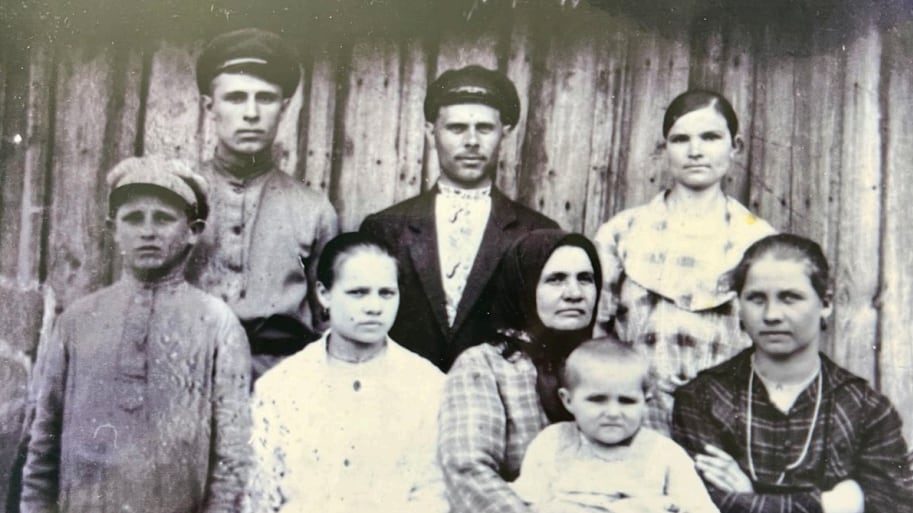
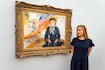
The fourth Saturday in November marks Holodomor Memorial Day. The Holodomor was a man-made famine and genocide, that occurred in Ukraine between 1932 and 1933, resulting in the deaths of millions. The Soviet Regime, under the direction of Joseph Stalin, ordered food seizures in the early 30s. For decades, the Holodomor was not widely known or discussed due to suppression and denial by the Soviet Union. 92 years after the Holodomor, very few survivors still remain. Sonia Lebedin’s parents were survivors, both having since passed away. “My father wanted to tell the whole world. He always wanted to talk about it,” she said. “My mother on the other hand was always telling him ‘be quiet, don’t talk about it. We have family back in Ukraine and you could hurt them.’ My mother was very quiet about it.” Lebedin’s mother, Anna was a teenager when the genocide occurred. She was fortunate enough to get a job in a large state farm during that period. “She had to lie. She had to say that she was an orphan. She didn’t know where she came from and didn’t know who her family was,” she said. “The food there was sometimes miserable, but every day they got a piece of black bread and it was because she worked there, that she survived the famine.” Lebedin shares the story of how her mom acquired a coverlet in the spring of 1933. “She went outside with her daily portion of bread for lunch and someone approached her,” she said. “She asked my mother (if) she would she trade her bread for a blanket. And my mother said, ‘Keep your blanket, you can have my bread.’ But this person grabbed the bread and threw the blanket down and ran away.” 92 years later, Lebedin still has the coverlet in her home. Since her mom passed away 12 years ago, it’s become one of the last connections to her mother’s heartbreaking past. It serves as a constant reminder about the horrors both her parents went through. “It’s very emotional,” she said. “We have to keep it alive. We have to remember what happened because if we forget what happened, history will repeat itself.” Valentina Noseworthy’s parents are also survivors – and both have since died. “My mother was only seven years old, and my father was 17 years old during the Holodomor,” she said. “I grew up knowing the story of their life through the Holodomor.” Noseworthy remembers her parents’ sharing stories with her when she was a young girl and says she had and continues to have a hard time understanding why this genocide happened. “Even though what she described was so terrible, I wanted to listen and learn,” she said. “As I got older, I understood that it was my responsibility to tell others about what my parents had gone through and so many other millions of survivors and victims had gone through.” Noseworthy has worked tirelessly to keep the memory of her parents alive. “My mom’s wish, before she died, was that such a terrible thing as the Holodomor would never happen to anyone else in any other place and in any other time.” ‘The context of the history that we’ve come from’ Ihor Michalchyshyn, who is the CEO of the Ukrainian Canadian Congress, says Russia continues to wage its war on Ukraine in 2025, a similar situation to what Ukrainians faced in the early 30s. “Every day that Ukraine is attacked, Ukrainian Canadians think about that in the context of the history that we’ve come from,” he said. “We’re not powerless to act as individuals, or as a community, or as Canadians. We use this as motivation to redouble our efforts to remember, but also to take action.” ‘Still fighting for their own freedom’ Every November, Lebedin lights a candle in her home to honour the victims of the Holodomor. Lebedin is worried about what is happening in Ukraine, and to Ukrainians today. “There was a genocide then, and there is genocide going on now,” she said. “Ukrainians are still fighting for their own freedom, for democracy, just like they did in the times of the Soviet Regime under Stalin.” Canada officially recognized the Holodomor as an act of genocide on May 29, 2008, when the federal government enacted the Ukrainian Famine and Genocide Memorial Day Act.