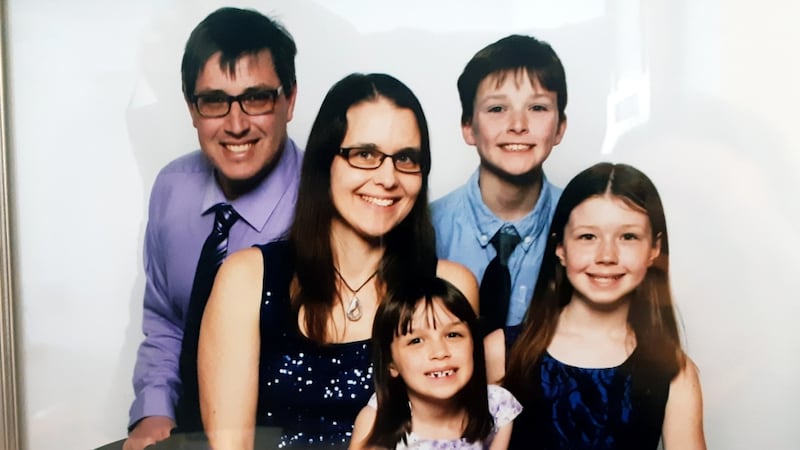
A string of recent pedestrian collisions — including three fatalities in a single 24-hour period earlier this month — has pushed Calgary to a grim milestone, with 30 traffic deaths so far this year, 11 of them pedestrians. The total marks the highest number of fatal collisions in the city in more than a decade, according to Calgary Police Service (CPS) data. In the past week alone, emergency crews have responded to multiple pedestrian incidents across the city. Most recently, a pedestrian was involved in a hit-and-run late Wednesday evening at 68th Street and 43 Avenue N.E. where they sustained minor injuries. Another incident around 12:40 p.m. Thursday occurred on the 1300 block of Hastings Crescent S.E. where a man was struck by a truck and taken to hospital in life-threatening condition. Since 2017, Calgary’s traffic fatality count has more than doubled, rising from 11 that year to now 30 in 2025. The number of pedestrian deaths has followed a similarly troubling trend: just two in 2017, compared to 11 so far this year and 13 in 2024. Police say the latest figures underscore the urgency of changing how Calgarians move through the city — and how they look out for one another. “These tragedies are not statistics. They represent lives lost, families shattered and communities grieving,” said Chief Katie McLellan of the Calgary Police Service. McLellan said her team of officers is working closely with city officials through the Safer Mobility Plan, which focuses on “engineering, education and enforcement.” Drive to Zero Among the police service’s newest initiatives is the Drive to Zero campaign — a citywide push to reduce traffic-related injuries and deaths to zero through public awareness, stricter enforcement and behaviour change. “However, enforcement alone is not enough,” McLellan said. “We need a cultural shift in how we approach road safety. That means slowing down, staying alert and respecting all road users — especially our most vulnerable pedestrians, cyclists and children.” She noted that with shorter daylight hours, police are rolling out a winter phase of the campaign, with new ads highlighting both driver and pedestrian responsibilities in darker, icy conditions. ‘Shared responsibility’ Sgt. Nick Wilsher, with the crime prevention unit, said while officers will increase patrols around residential areas and busy crossings during upcoming Halloween festivities, lasting change depends on everyone making safer choices. “Everybody needs to play their part,” Wilsher said. “Pedestrians, be aware that when you step onto a road, it’s still a road — vehicles move quickly. Give yourself time, wait until you can see cars slowing, and make sure you’re visible.” He encouraged people to wear reflective clothing at night, carry a flashlight and avoid distractions. “Drivers also need to slow down and expect the unexpected,” Wilsher added. “At this time of year, pedestrians can appear suddenly from behind parked cars or in dim lighting. A few seconds of caution can prevent tragedy.” Wilsher said many of this year’s collisions share a common thread: distraction, speed and lack of attention. “It’s very worrying, and it’s something we constantly message about — reduce your speed, be conscious of one another and give driving your full attention,” he said. “When you’re behind the wheel, you’re in charge of that machine and you need to be responsible.” AI and data-driven safety As the city grapples with how to prevent more deaths, Calgary’s mobility team is increasingly turning to artificial intelligence for answers. A report presented to council earlier outlines how the city’s AI traffic safety platform uses predictive modelling to identify high-risk intersections before collisions occur. The city says the tool can already analyze more than 17,000 intersections and has achieved about 90 per cent accuracy in predicting where pedestrian collisions are most likely. The AI platform draws from decades of collision data, traffic counts, road geometry and control measures such as signage and speed limits. Future versions will integrate population density, transit routes and 311 service requests. The technology complements other digital tools now being deployed in Calgary’s traffic management centre — including drones and 360-degree cameras to monitor congestion, as well as AI systems that automatically detect potholes, missing signs and near-miss incidents. The city’s Safer Mobility Plan currently budgets $5 million a year for safety improvements, but council could be asked to boost that funding by another $6.5 million in 2026, when the AI platform is expected to be fully operational. The Alberta Motor Association (AMA) has been studying the same type of technology to understand near-misses — incidents that almost become serious collisions — and how artificial intelligence can help prevent them. In a seven-month study ending in February 2025, the AMA used AI to review thousands of hours of footage from municipal traffic cameras across Canada, including several intersections in Calgary. The analysis found that, on average, there’s at least one serious near-miss on Canadian roads every day — situations that could have caused severe injury or death. Over the study period, one in every 770 pedestrians and one in every 500 cyclists were involved in near-misses serious enough to have potentially led to a fatal outcome. “These studies are incredibly helpful because they let us look at the close calls before they become collisions,” said Dominic Schamuhn, AMA’s manager of government relations. “That helps traffic safety engineers and other stakeholders address issues proactively — before someone is seriously hurt.” Schamuhn said the AI model pinpoints exactly where and why near-misses occur, whether it’s sightline obstructions, poor lighting, signal timing or road design. “When we look at these intersections, we can ask what’s happening here — is there something about the geometry or timing we can fix?” he said. “Then we look for other intersections with similar characteristics, so cities can prioritize improvements before tragedy strikes.” A community still grieving For residents near Elbow Drive and 61 Avenue S.W., the numbers behind Calgary’s pedestrian statistics are deeply personal. It’s where 56-year-old Ralph Lindenblatt was killed last November after being struck by two vehicles while crossing in a marked crosswalk. His wife, Stina, said her family has been left heartbroken — and frustrated by how long it’s taken to see change. The tragedy galvanized the Meadowlark Park Community Association, which launched a petition demanding flashing lights at the intersection. “This intersection is a nightmare for Meadowlark Park residents,” said Amanda Lovig Hagg, the community association’s director of engagement. “It’s extremely busy and unsafe. We’ve had multiple near-misses and a few big catastrophes. Everyone in the neighbourhood is worried about it.” Lovig Hagg said residents have been pleading with the city for years to install lights, lower the speed limit or add barriers — with little response. “We’ve had many calls and emails, and even a petition with over 100 signatures, but all we got were auto-replies,” she said. “It’s baffling to me that this isn’t being worked on, because these are preventable deaths. There are so many dangers we can’t control, but this is one we can.” Lovig Hagg said the issue hits close to home — her own children cross that intersection every morning to get to school. “They’re capable teenagers, but I still make them double-check every time,” she said. “It’s a stress I could do without.” New councillor pledges to act Newly-elected Coun. Rob Ward, who represents Ward 11, said the Elbow Drive intersection will be one of his top priorities. “The intersection at Elbow Drive and 61 Avenue has been a long-standing concern for residents,” Ward said. “It’s unacceptable that a fatality occurred here. Our goal is to prevent future tragedies by working together with residents, the city and first responders.” Ward said pedestrian safety was one of the most common issues raised during his campaign, and he’s committed to advancing improvements that make streets safer for all users. “Safety is a top priority for me and for the thousands of residents I spoke with,” he said. Former councillor Kourtney Penner previously confirmed the city conducted a mobility study in 2018 and again after Lindenblatt’s death last year, but said the intersection’s pedestrian volumes didn’t meet the threshold for full traffic lights. Flashing beacons can cost around $80,000, while full signals can exceed $300,000. Lovig Hagg says those numbers shouldn’t outweigh safety. “The main thing we need is for council to actually respond to our concerns and talk to us about the solutions and do something,” she said.