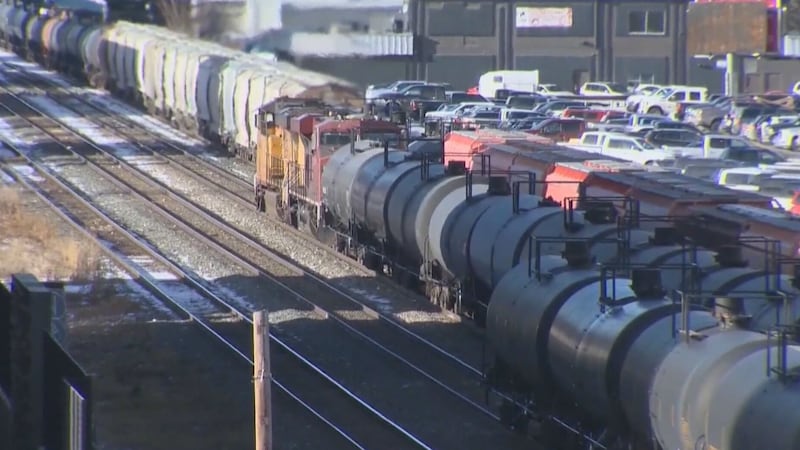
Calgary-based Strathcona Resources Ltd. is hoping Prime Minister Mark Carney sees their proposed crude-by-rail project as one that is in the national interest. Executive chairman Adam Waterous says he believes the project could be complete in less than two years. “The attractiveness of having a northern route remains,” he said. “The only infrastructure that needs to be built is an oil terminal off-take at Prince Rupert.” That is because the company plans to use existing CN Rail lines from Hardisty, Alta., to the west coast. The company currently ships 80,000 barrels per day. “We want to have the federal government refer this to the Major Projects Office as a project of national interest,” said Waterous. Waterous says he plans to meet with Carney in the next week or so and lobby him to make amendments to the tanker ban moratorium. “The MOU for a pipeline to the west coast contemplated an exemption for that,” he said. Last year, Mark Carney said if necessary, he would make adjustments to the tanker ban before he struck a deal with B.C. this year, saying he would maintain it. The project would be entirely private-sector-funded. A total cost is not known at this stage. Waterous does say he will meet with various stakeholders and consult with community members along the line. “We think they’d also be interested in having Indigenous participation as part of the project. And that’s all something that we realize is kind of what we describe as table stakes, to be able to advance a project like this,” said Waterous. “What’s exciting about this project is that we think that we can have crude-by-rail operational in under two years.” Waterous believes the project is in the national interest. “This project ticks all the federal government’s and Mark Carney’s objectives,” he said. “No. 1, they’re looking for diversification. No. 2, they’re looking for speed. And No. 3, they’re looking for private sector participation. It checks every box.” CTV News contacted Carney’s office but did not receive a response. Richard Masson, an executive fellow at the University of Calgary’s School of Public Policy, says there are some logistical hurdles crude-by-rail brings. “Moving crude by rail or diluted bitumen by rail, which is practically what a bunch of this could be, will meet some challenges because there is no port on the west coast that’s able to take that product and put it on a ship,” said Masson. “And if you’re trying to do that in the Prince Rupert area, it’s subject to the tanker ban. And removing the tanker ban would result in a whole bunch of anger, I would say, from Indigenous groups along that route and at the west coast and probably court cases.” Masson points to the rail line along the Skeena River, through the Bulkley Valley, that could see tankers potentially spill into the water if there was a derailment. “We need to continue to look for the best ideas on how to move to Asian markets. And I think there’s going to be a lot of new ideas that come up between where we are today and when that Pacific pipeline starts up years from now,” said Masson. The Pacific Link pipeline could be operational by the mid-2030s. Pembina Institute believes Canada needs to be firm on climate initiatives surrounding the oil sands before committing to shipping more crude oil. “There’s been a lot of backsliding on the emissions commitments. If production is going to increase, this is something that will have to be addressed,” said Ian Sanderson, senior analyst in the oil and gas program. “And I think we haven’t seen the efforts that have been pledged or promised previously not followed through on.”