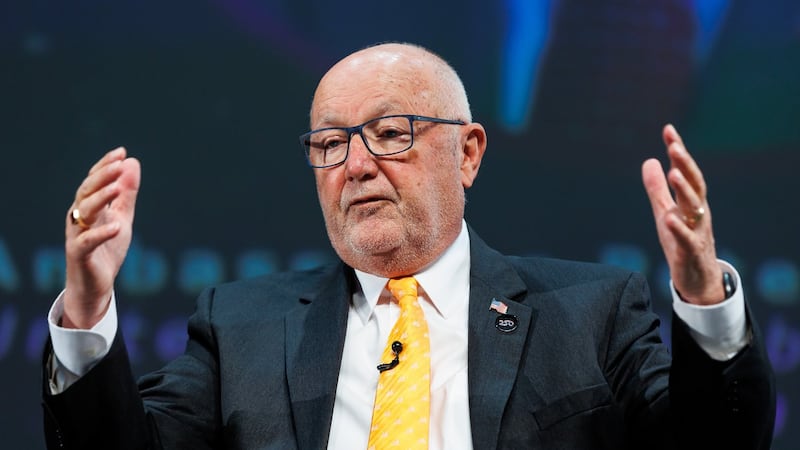
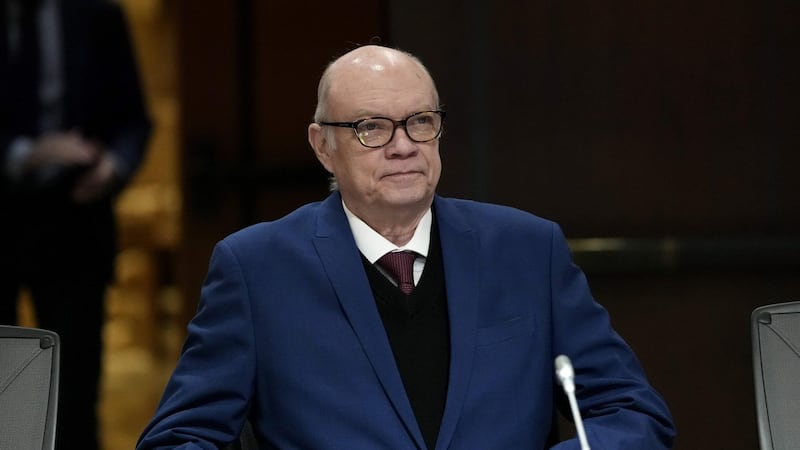
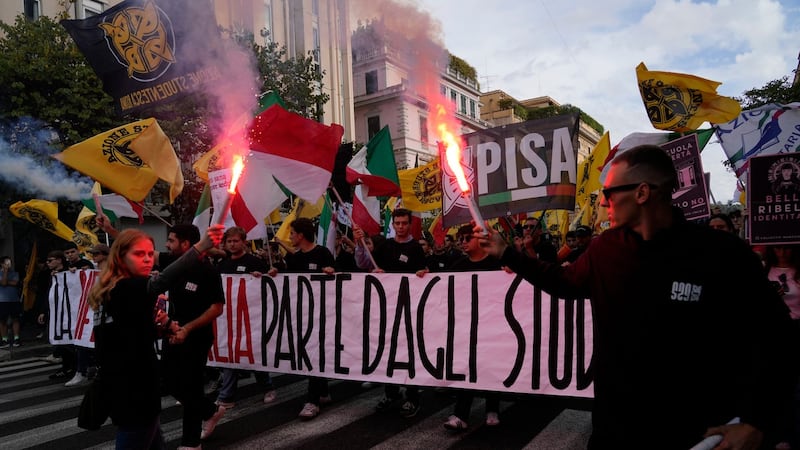
Capital Dispatch is a weekly newsletter, sent when Parliament is in session every Friday. To stay on top of what’s happening on the Hill, you can sign up to receive the latest political news and insights directly in your inbox, here. Albertans voted to stay but want more say, Americans accuse Canadians of election interference, scientists sound C-39 alarms The Alberta referendum is over, resulting in a decisive victory for the federation. But that hasn’t dissuaded separatists who have now set their sights on Premier Danielle Smith’s leadership. Amid will-they-won’t-they fervor over the prospect of a Canada-U.S. trade pact prior to the looming midterms, new allegations of meddling emerge. Plus, the resistance to Prime Minister Mark Carney’s major projects acceleration legislation keeps stacking up, but the likelihood of those opposed being able to actually make changes is looking slim. Oh, and before we get into it, a programming note: Next week’s newsletter will be the last edition of Capital Dispatch for around a year. Yours truly will be on maternity leave as of the end of October. While I am very much looking forward to this next chapter, I will miss showing up in your inboxes every week that Parliament is in session to break down the biggest developments. Speaking of… The week that was The week started with the much-anticipated Alberta referendum. It didn’t take long after the results started to be reported to see that the majority of those who cast their ballots voted to stay in Canada rather than pursue separation. “It’s a great result for Canada,” Carney said on his way into a cabinet meeting on Parliament Hill Tuesday morning, adding he was “thrilled that Albertans have chosen unity.” Smith also expressed satisfaction with the outcome. Though, the top pro-separation figures behind the Alberta independence campaign say they haven’t been deterred, and appear to now be angling to challenge the premier. More on that here. And while the answer to the main question around Alberta’s future within Canada was extremely clear, voters were much more split on the nine other ballot questions that could also have consequential impacts on the future of the federal-provincial relationship, particularly when it comes to immigration. Meanwhile, Canadian officials haven’t ruled out the possibility of a snap trade deal with the United States ahead of next month’s midterm elections, according to sources with direct knowledge of the talks. Though they cautioned that the hope remains faint. Canada-U.S. Trade Minister Dominic LeBlanc and Canadian Ambassador to the U.S. Mark Wiseman briefed Carney’s Advisory Committee on Canada-U.S. Economic Relations on the state of play in a Thursday morning meeting, according to four sources with knowledge of the call. As colleagues Marieke Walsh, Vassy Kapelos, and Graham Richardson report, the briefing comes a day after Carney said he spoke with U.S. President Donald Trump “for quite some time.” Carney said the two leaders discussed trade, the Iran war and the Middle East, though his office issued no formal readout of the call. At Thursday’s meeting with the advisory committee, the four sources said Wiseman told the 24-member group that the public opinion tide in the U.S. was finally turning in Canada’s favour and that the federal government is seeing support grow across the U.S. LeBlanc’s message to the advisory committee was that anything could happen before the midterms, the sources said. The latest on this came right from the prime minister, during a press conference that took place in Istanbul while this country was asleep. “We could sign it [a deal] this afternoon if the U.S. were there. If it has to be months from now or longer than that, or another administration before a proper deal comes into place, we would do that,” he said. Pressed on how much the timing matters, Carney said Canada would “drop everything” if the Americans were ready to negotiate in good faith, but the chance of that happening before the midterms is “up to the United States, they’re a little hard to predict.” Potentially challenging an imminent deal though, the Americans have also spent a considerable amount of energy this week casting Canada as a country that meddles in its elections. After the prospect was floated directly by U.S. Ambassador to Canada Pete Hoekstra during a recent podcast appearance, his office issued a detailed “fact sheet” saying the U.S. government is monitoring Canadian activities in American politics. The sheet points to documents, comments, and appearances by Canadian officials, claiming them as examples of interference. “There is no merit to these claims, so I’ll call it out that way. I’m disappointed that their envoy sees that it’s his role to make these suggestions,” Carney said during his overnight press conference. He also confirmed that Canadian officials working in the U.S. have been cautioned to ensure they stay away from current American candidates as to not give the White House any more fodder. And, while this trade drama and continues to play out, and the midterms near, this week the prime minister hosted Ontario Premier Doug Ford to unveil nearly $9 billion in supports for the province’s tariff-hit auto and steel sectors. As CTV Toronto colleagues Joshua Freeman and Bryann Aguilar report, the commitments under the “new action plan” include $5 billion to help upgrade Ontario steel mills and $2.5 billion to help the province’s ailing auto industry pivot to electric vehicle production. “As we stand here today, it’s clear that Canada’s relationship with the United States has changed permanently,” Ford said. “No matter what happens in the midterms, no matter who sits in the White House, we’re not going back to the way things were, and we need to plan accordingly.” Lastly, as Bill C-39, Carney’s Building Canada Strong Act continued its accelerated path through Parliament this week – seeing a panel of ministers face a compacted grilling session – the pushback to the proposal is heating up. More than 50 of Canada’s top scientists and scholars are warning that the legislation aimed at fast-tracking regulatory approvals for major projects needs to be amended, or the federal government is risking “costly and potentially irreversible harm,” to the environment. In an open letter published Thursday, 56 fellows from the Royal Society of Canada outline six specific amendments they say need to be made. They say the changes are needed for the government to keep its promise to protect species at risk, delicate ecosystems, natural resources and human well-being. “Bill C-39, as drafted, really puts aside a lot of the environmental regulations and laws that we have in place in Canada to protect nature and protect our waters, protect our air,” said Dr. Sarah Otto in an interview with CTV News. Otto, one of the signatories and a zoology professor at the University of British Columbia, said the speed at which the bill is moving was a key motivator for the coalition to come together over the past week and produce the letter. It has since been submitted as a brief to key parliamentarians. The experts behind the letter have requested to appear as witnesses before the special committee studying Bill C-39, but they haven’t been invited, yet. This push for changes, and a so far limited number of critical voices heard by MPs, has cast new light on the makeup of the committee itself. Of the 12 members tasked with studying the legislation, 11 of them have already voted in favour of it, the standout being the sole Bloc Quebecois MP at the table. Neither Green Party MP Elizabeth May nor any NDP MPs were invited to join the committee, after both sought an exception to participate without official party status. “The only vehicle open to us as parliamentarians is to amend the bill, but that process is severely limited,” said NDP Parliamentary Leader Don Davies in an interview with CTV News. The Liberals have restricted the amount of time to hear from witnesses they haven’t hand-selected, to eight hours, Davies said, adding the “inescapable” conclusion from the decision is that Carney isn’t interested in hearing opposition, which he said could open up a huge political risk of project delays due to court challenges or protests. Per the workplan MPs agreed to, any proposed amendments to Bill C-39 are due to the committee clerk by 5 p.m. ET on Nov. 4, with clause-by-clause consideration taking place mid-month. CTV News asked Minister of the Environment, Climate Change and Nature Julie Dabrusin’s office for comment on both the specific scientific concerns and the reservations about the committee process. In an emailed response, Dabrusin’s office reasserted that Bill C-39 will not compromise on environmental standards, and said the government remains open to receiving public feedback but wouldn’t commit to considering any amendments. Not to be missed Canada launches ‘strategic partnership’ with Turkiye Carney called Türkiye an “exceptional partner” during joint statements with Turkish President Recep Tayyip Erdogan Thursday, the latest move in a warming of relations between the two NATO allies. “We had some kind of disconnect for a period, but today we put an end to it,” Erdogan said via English translation. That remark came at the very end of the leaders’ joint statements, before announcing he would be accepting the invitation to visit Canada at some point. As colleague Abigail Bimman – who is covering the prime minister’s trip – reports, Canada and Turkiye have had a few irritants over the years. Carney and Erdogan also announced the Canada-Türkiye Strategic Partnership, which the prime minister said involves a three-year action plan and is focused on the goals his office laid out for the trip: trade and investment, defence and security, energy and people-to-people ties. Carney said both countries’ foreign ministers will meet on an annual basis for a dialogue to “keep this partnership on track.” The governments also finalized a previously announced air transport agreement, allowing weekly passenger flights between the two countries to increase from 12 to 21, with no limit on cargo-only flights. Stelco given 15 days to reverse layoffs or face legal action Industry Minister Melanie Joly has given Stelco’s U.S. owner 15 days to make good on commitments it made when purchasing the plant or face legal action. Joly made the demand in a letter to Stelco’s general counsel on Thursday. In an accompanying statement on X, she wrote that Cleveland-Cliffs, the American company that acquired the steel producer in 2024, made legally binding agreements that were key to allowing the transaction to move forward. “As we stand right now, the business is still taking steps to lay off 500 workers. Despite being given multiple opportunities, Cleveland-Cliffs has repeatedly failed to demonstrate that they are compliant with their undertakings. That is unacceptable.” As colleague Luca Caruso-Moro reports, CTV News reached out to Cleveland-Cliffs, which opted not to comment. Meet the first ever Parliamentary Visual Artist Laureate And, for the first time in Canadian history, there’s an artist appointed by Parliament to promote the arts in this country and the man chosen says he feels as if he’s been handed a blank roll of film. “The fact that this is the first time for this role, it’s a great opportunity to explore what this can or cannot be,” said Paul Wong, the first ever Parliamentary Visual Artist Laureate, in an interview with CTV News. “As artists, we use our imaginations to think outside the box, out of practical kinds of things, to tell stories and to engage audiences in all kinds of ways. So, it really is about letting our imaginations go and inviting other people’s imaginations to embrace the visions of art and artists.” After years of advocacy from the Canadian arts community and a lengthy legislative push to create the position, Wong – considered a pioneer of Canadian visual, multimedia, and large-scale public art installations – says he’s very grateful and feeling lucky to get to chart new territory. Check out my piece from last weekend for more on Wong’s new role, and the winding push to create it. “I believe the vast majority of our UCP membership will rally to this mission, regardless of how they may have voted in the recent referendum. And there may be some individuals that would rather spend the next 12 months sowing division to circumvent the will of Albertans by trying to turn our party into something it is not. The United Conservative Party is not an independence party, and for those few who cannot reconcile this fact, and remain intent on dividing and turning our party into a vehicle for the independence movement, I would respectfully invite them to join a different party. I’m simply not prepared to watch a few individuals tear apart the incredible conservative movement we’ve built together.” - Alberta Premier Danielle Smith, in a post-referendum video message to United Conservative Party members. The week ahead MPs are back at it in the House again next week, but there’s also a busy off-the-Hill agenda. Here are the highlights. On Sunday and Monday in Ottawa, there will be a major meeting between First Nations and Canada’s first ministers – a.k.a. all of the premiers and the prime minister. According to the Assembly of First Nations, the first day will be a day of ceremony, with the main meeting happening Monday. Then, at the end of the week is the much-anticipated Canada-EU Summit. Taking place in Montreal Thursday and Friday, expect this to be where the trans-Atlantic debate over what shape this promised new pact will take, continues. Will officials get any closer to pinning down if they’re going with “associate membership,” or Carney’s preferred “alliance for the future” phrasing. President of the European Commission Ursula von der Leyen will be attending, as will other European officials, with the stated aim being to make progress on the core tenants of what this new relationship will entail, from defence and digital security, to critical minerals and business investment. Legislatively speaking, on Monday MPs will debate Bill C-40, aimed at strengthening Canada’s defence sector. Tuesday will be an opposition day. On Wednesday and Thursday next week the House will call Bill C-34, the Digital Safety Act for second reading debate. Looking a bit further ahead, it was announced this week that the federal budget will be tabled on Thursday, Nov. 5. “This plan will unlock investment, create high-paying jobs across our nation, and strengthen our economy and our country for generations to come,” Finance Minister François-Philippe Champagne declared Tuesday, unveiling the date. The fall budget, which provides Canadians with the federal government’s economic blueprint, will be the second under Carney. As colleague Stephanie Ha reports, this week a Parliamentary Budget Office (PBO) report projected larger deficits compared to the federal government’s spring economic update in April. On this, Conservative Leader Pierre Poilievre pounced. “We’ve had all of the drama, the promises, the international travel, the signing ceremonies. But all that matters is you. The real people in the real world. Whether you’re saving money. Whether your job is saved,” Poilievre said. Covering the latest political news from CTV’s parliamentary bureau in Ottawa, Rachel Aiello offers exclusive analysis on political developments straight from Ottawa.