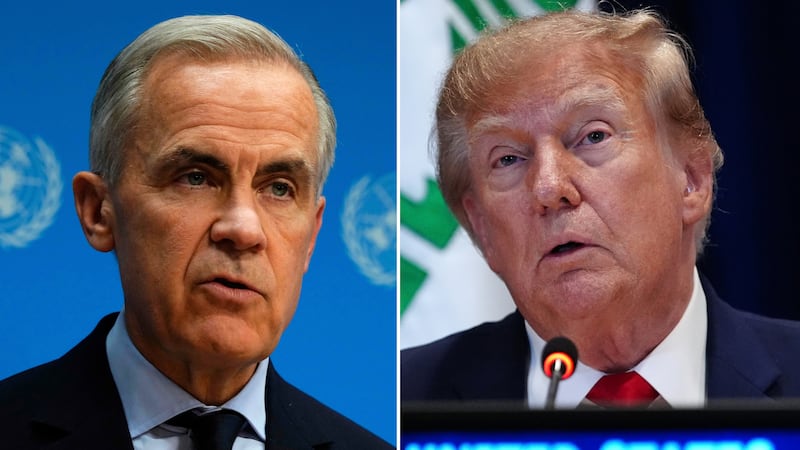
Key questions remain and very little is known about a major agreement between the United States and Venezuela over oil reserves, but energy experts here say it isn’t likely to have a major impact on Alberta for several years. On Friday, President Donald Trump announced on social media “the biggest oil deal in world history,” speaking of a deal that would see the U.S. take control of billions of barrels of Venezuela’s oil reserves. Trump said it included a partnership with an unnamed private business to secure 65 billion barrels of oil from Venezuela’s untapped oil fields. The private partner has not been publicly named by American officials. “If the U.S. is able to revive production in Venezuela, it could compete directly with (Canada’s) production. That could mean lower prices for heavy oil in North America, which would reduce industry revenues, investment and taxes and royalties,” said Richard Masson, the former CEO of the Alberta Petroleum Marketing Commission. But Masson said ramping up Venezuelan production will take “at least five years” and billions of dollars of investment to restore that country’s dilapidated oil infrastructure. “What they’re talking about right now is increasing production by maybe 2-400,000 barrels a day by the end of 2027,” Masson told CTV News Calgary. “So this is a drop in the bucket compared to what’s really needed. But it is something that could prove to be a medium- to long-term threat to Alberta’s market.” Canada is currently the biggest supplier of energy to the U.S., with about four million barrels of oil per day heading south from Alberta. Venezuela is presently producing about a million barrels per day, far below what it has produced in the past. If and when production recovers in Venezuela, it will create significant competition for Canada’s energy. “I think what this tells us is that Canadian oil always has to be competitive. We can’t rest on our laurels,” said Heather Exner-Pirot, director of natural resources, energy and environment at the Macdonald-Laurier Institute. Masson said it’ll be years before the deal with Venezuela significantly cuts into the supply of Canadian energy needed by the U.S., but he said Canada should be exploring new markets regardless. “The growing markets of the world are in Asia, China, Japan, Korea, the Philippines. Those are the places that really need our oil. Particularly after the war in the Middle East,” Masson said.