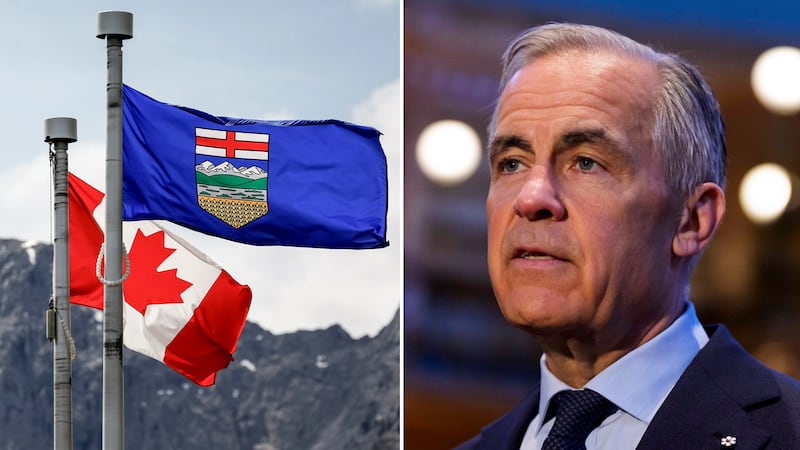
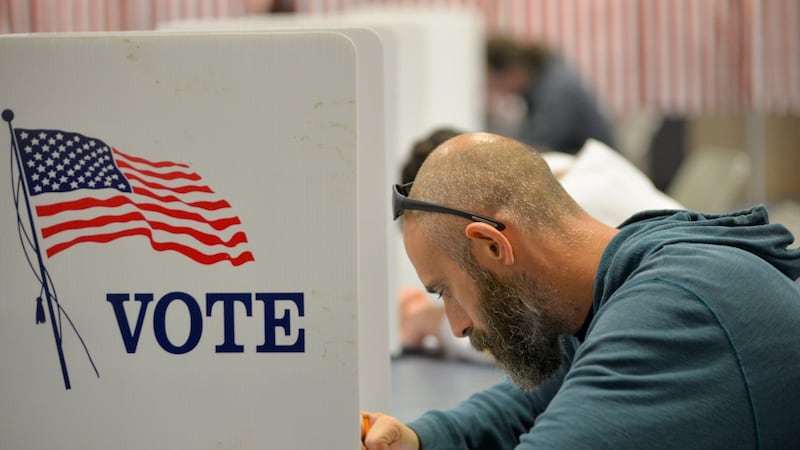
Support for Alberta remaining in Canada has increased in the final days before Monday’s referendum, while support for beginning the process toward a future vote on separation has remained unchanged, according to a new Abacus Data poll. The survey of 1,021 eligible Alberta voters, conducted between Oct. 7 and 13, found 68 per cent would vote for Alberta to remain a province of Canada — up from 64 per cent in September. Meanwhile, 24 per cent said they would vote for the provincial government to begin the legal process required to hold a later, binding referendum on separation, unchanged from the previous survey. Seven per cent were undecided, while one per cent said they would skip the referendum question. Among respondents who had decided how they would vote, 74 per cent favoured remaining in Canada, compared with 26 per cent who supported beginning the separation process. The findings suggest support for remaining in Canada has strengthened as the number of undecided voters has declined. “This is much more of a movement from people who were undecided in September to having made up their mind in October. And those people who were previously undecided are breaking significantly towards the remain in Canada side,” said Robson Fletcher, a data and storytelling strategist with Abacus Data. “We haven’t seen a big shift in the number of people who plan to vote for option two,” Fletcher said. “Those undecided or would-skip people from September have largely moved into the voting for the Remain in Canada option in October.” The Oct. 19 referendum doesn’t ask Albertans to vote directly on independence. Instead, the second option on the tenth question would authorize the provincial government to begin the legal process toward a future, binding referendum on separation. Remain side now leads in every region The survey found a majority of respondents in every region of Alberta would vote to remain in Canada, including rural areas where support for beginning the separation process has been strongest. In Edmonton, 77 per cent would vote to remain in Canada, compared with 75 per cent in Calgary. In small cities and bedroom communities, 62 per cent supported remaining in Canada. In rural Alberta, 57 per cent said they would vote to remain, compared with 35 per cent who supported beginning the separation process. In September, rural Alberta was the only region where remaining in Canada didn’t command majority support. “Just over half of even rural voters now say they plan to vote to remain in Canada,” Fletcher said. “Still, rural Alberta remains an area where the desire and the plan to vote to begin the separation process remains relatively strong.” The latest findings suggest the remain position has broadened geographically, although the report doesn’t establish which individual voters may have changed their minds. UCP supporters divided over referendum The survey also reveals a significant division among supporters of Premier Danielle Smith’s United Conservative Party. Among current UCP supporters, 52 per cent said they would vote to begin the legal process toward a future separation referendum, while 44 per cent would vote to remain in Canada. By comparison, 93 per cent of provincial NDP supporters said they would vote to remain. The survey found 77 per cent of respondents supporting the option to begin the separation process currently support the UCP. Support for starting separation process does not necessarily mean support for independence. One of the survey’s findings is that many Albertans who support beginning the legal process toward a future separation referendum don’t necessarily want Alberta to become an independent country. Among respondents planning to vote for the second option, 63 per cent said they would vote for Alberta to separate from Canada in a future, binding referendum. Another 11 per cent said they would vote to remain in Canada, while 22 per cent said their decision would depend on the circumstances. Four per cent were unsure. Abacus Data estimates that 18 per cent of Alberta voters would support independence if asked directly, unchanged from September. The survey also asked supporters of the second option to identify their main reason for voting that way. Only 32 per cent identified independence as their primary motivation. Another 23 per cent said they wanted Alberta to negotiate a better deal within Canada, while 22 per cent believed Albertans deserved a direct say on separation. Nineteen per cent said they wanted to send Ottawa a message without necessarily leaving Canada. “There are a variety of different motivations that they identify as to why they want to vote to commence the legal process,” Fletcher said. “Some of it is to send a message, some of it is a purely democratic desire that Albertans ought to have the option to have this vote, and some just have a sense of frustration as well, and this is a way to express that frustration.” Remain voters more certain of their decision The survey found most respondents who had chosen a side were unlikely to change their minds before referendum day. Among decided voters, 76 per cent said they were completely certain of their choice. That certainty was particularly strong among those planning to vote to remain in Canada. Eighty-four per cent of remain supporters said they were completely certain of their decision, compared with 61 per cent of those supporting the second option. The survey also found 11 per cent of respondents reported they had already voted by mail. Of those respondents, 93 per cent said they voted to remain in Canada. Another 49 per cent of respondents said they definitely intended to vote on or before Oct. 19. Among those who reported already voting or definitely intending to vote, 75 per cent supported remaining in Canada, compared with 24 per cent who favoured beginning the separation process. “What we’ve seen in this October poll is that enthusiasm gap has shrunk,” Fletcher said. He added that makes it less likely that higher turnout among option two supporters would produce a closer result than the polling suggests. “That is looking less likely now because that enthusiasm gap appears to be narrowing, and the remain in Canada voters are more fired up than ever,” he said. The survey also found a substantial age difference in reported turnout intentions. Among Albertans aged 60 and older, 85 per cent said they had already voted or definitely intended to vote. That compared with 38 per cent of respondents under 30. Option two supporters expect a much closer result Despite the survey showing 24 per cent support for beginning the separation process, Albertans expect a much closer result when ballots are counted. Asked what percentage of the vote they believe the second option will receive, respondents gave an average estimate of 40 per cent. Among those supporting the second option, the average expectation was 57 per cent — enough for a majority. Respondents planning to vote to remain in Canada estimated the second option would receive an average of 33 per cent. The difference between voting intentions and expectations raises questions about how Albertans perceive the level of public support for the separation movement. It also suggests some voters, particularly those supporting the second option, could be surprised if the referendum result resembles the survey’s findings. “I think that has a lot to do with the information ecosystems that we all live in right now,” Fletcher said, adding people in rural communities whose social circles and social media feeds are dominated by UCP supporters may see more support for option two around them. Different views of Alberta and Canadian identity The survey also explored how strongly Albertans identify with their province and their country. Among respondents planning to vote to remain in Canada, 76 per cent said they felt strongly attached to Canada, while 51 per cent expressed strong attachment to Alberta. Among those supporting the second option, the pattern was reversed. Sixty-eight per cent said they felt strongly attached to Alberta, compared with 21 per cent who felt strongly attached to Canada. The divide was also apparent along provincial party lines. Among UCP supporters, 68 per cent reported strong attachment to Alberta, compared with 39 per cent who expressed strong attachment to Canada. Among NDP supporters, 84 per cent felt strongly attached to Canada, compared with 42 per cent who expressed strong attachment to Alberta. The findings suggest differing views of identity and belonging are an important part of the debate over Alberta’s relationship with Canada. Separatist-leaning voters optimistic about Alberta’s future Despite divisions over the province’s relationship with Canada, many Albertans remain optimistic about its future. The survey found 47 per cent believe Alberta’s best days are still ahead, compared with 30 per cent who believe they are behind it. Another 23 per cent were unsure. Optimism was particularly strong among respondents supporting the option to begin the separation process. Fifty-nine per cent of those voters believe Alberta’s best days are ahead, compared with 44 per cent of those planning to vote to remain in Canada. Both groups were equally likely, at 31 per cent, to believe Alberta’s best days were behind it. The findings suggest support for changing Alberta’s relationship with Canada is not necessarily driven by pessimism about the province’s future. About the survey The Abacus Data survey was conducted online between Oct. 7 and 13, 2026, among 1,021 eligible Alberta voters. Participants were recruited through partner online panels, and results were weighted using census data to reflect Alberta’s population. Because the survey used a non-probability online panel, a conventional probability-based margin of error cannot be assigned to its findings. The survey was paid for by Abacus Data.