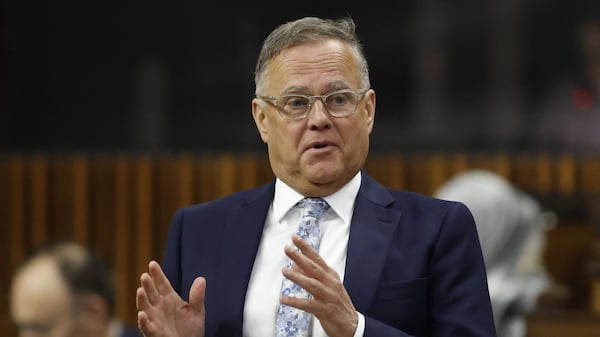
With ongoing tensions in the Middle East, the cost of oil is soaring to its highest peak in more than three years. West Texas Intermediate is around US$91 per barrel as of Friday afternoon, which is a double-edged sword for Albertans, according to economists. “If this holds up, we could easily get closer to a $100 range from $90 today,” said ATB chief economist Mark Parsons. “A lot of people are going to be feeling the pressure. And this is after a period of high inflation. “The cost of living is already a big issue here in Alberta and across Canada. So, I don’t think many people are going to be celebrating these higher oil prices. It’s just not something even in Alberta you’re going to be feeling positive about, at least in the short term.” The provincial budget released last week forecasted a $9.4-billion deficit if oil prices remain around $60 a barrel. However, over the last week with war in Iran, those prices have surged. “Prices can wildly fluctuate, so that volatility is obviously tough to budget,” said Alberta Infrastructure Minister Devin Dreeshen. Parsons says the price surge will be both beneficial and a crutch for Albertans. “Oil and gas companies are going to be making more money from these prices,” he said. “Government is going to generate more revenue. So, that’s an income effect that’s very positive. But also, it’s going to cost more to fill up your tank.” Gas prices in Calgary were sitting around $1.52/L on Friday. One Calgary company is also testing the waters on a new Alberta-U.S. pipeline project, pitching it to top oilsands producers. South Bow Corp. held its Q4 annual earnings conference call Friday morning. The company began gauging customer interest in its Prairie Connector proposal, which would start in Hardisty, Alta., and carry oilsands crude to various U.S. destinations. The existing Keystone system starts in the same eastern Alberta town and currently delivers crude to refineries in the U.S. Midwest and Gulf Coast. “We have a stranded asset if we can’t get it to global markets with our oil and gas,” said Dreeshen. “So, we want to make sure that we can build pipelines (and) get them to as many markets as possible. So, obviously, in investor confidence, we’ve seen that shaken over the years.” With files from the Canadian Press