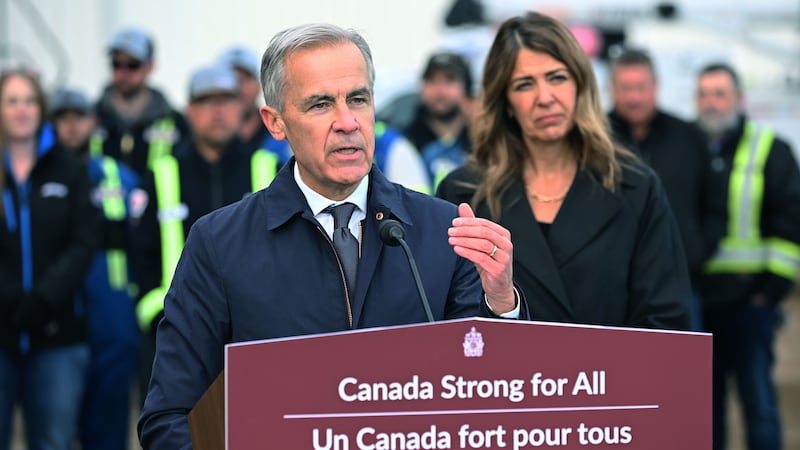
Calgary’s mayor is at odds with the Alberta government over incoming legislation that would give the province authority over where Alberta cities can build bike lanes. Transportation Minister Devin Dreeshen says the legislation, which is expected to be tabled this fall, will require cities to study traffic impacts and estimate how many people use a bike lane before a new one can be built. The law could also lead to existing bike lanes getting torn out. Calgary Mayor Jeromy Farkas told reporters at city hall on Tuesday that although he’s a “practical person” who doesn’t think bike lanes belong everywhere, the legislation “bothers him.” He alleged the province’s law could impact bike routes children take to ride to school. “If he’s going after our bike lanes that our kids use to go to school, that’s going to be a very big problem,” Farkas said. “Pedestrian safety is our No. 1 priority.” In December, the province asked Calgary for specific data on traffic volumes and travel times on the city’s extensive bike network. Calgary’s bike lane usage data shows hundreds of cyclists use the city’s downtown bike network daily — even in the colder months. In his data request, Dreeshen said there would be continued conversations with Farkas about data needed to “understand how lane removals impact emergency access, commute times for families and goods movement for local businesses.” But on Tuesday, Farkas said a meeting he was meant to have with Dreeshen was cancelled and hasn’t been rescheduled. In a statement to CTV News, Dreeshen said that while the province supports “active transportation,” it is “concerned when municipalities use taxpayer dollars to reduce road capacity at a time when our province is investing billions to expand it.” “While we fund major infrastructure projects, like the Deerfoot, to improve traffic flow and reduce congestion, some local decisions are moving in the opposite direction, removing driving lanes,” Dreeshen wrote. “Our priority is building a safe, efficient road network that meets the needs of Alberta’s growing population and economy.” Dreeshen did not answer a question asking whether the province had plans to remove bike lanes in Calgary, or make changes to the city’s bike lane system. Critical for reducing congestion Farkas isn’t the only person speaking out against the incoming legislation. Doug Clark, president of the non-profit group Bike Calgary, said he was “dismayed” about the new laws being proposed. “We view this clearly as provincial overreach,” Clark said in an interview with CTV News. While Dreeshen has said the new laws would help the province ensure city roads maintain driving lanes and help them stay free of congestion, Clark said bike lanes are critical in helping growing cities keep commuters — whether on a bike or in a vehicle — moving. “There’s very little basis to conclude that bike lanes are a significant contributor to congestion,” Clark said. “In fact, they are demonstrably part of the solution, part of the overall transportation network system that a growing city needs to consider.” Cyclists are coming to him with their own concerns about the new bike lane law, Clark said. People are angry the future of biking infrastructure could be threatened, especially as many Calgarians transition to cycling as part of a “car-free or car-light” lifestyle. Keeping eyes on Ontario Alberta isn’t the only province considering the removal of bike lanes. Last year, Ontario’s Progressive Conservative government was ordered to stand down from a bill that would rip out 19 kilometres of protected bike lanes on major Toronto thoroughfares by the province’s Court of Appeal. The court found removing bike lanes or reconfiguring them so they were no longer separated from roadways would lead to more accidents, injuries and deaths. Clark said his group is keeping a close eye on that appeal. He said should Alberta’s potential law result in the removal of bike lanes, it would be “perfectly in order” for his group and other cycling groups to make a similar court challenge. Dreeshen said his office is also monitoring that case. “Ontario’s appeal process will help Alberta evaluate what may have worked and what may not have,” he said. — with files from CTV News’ Jordan Kanygin