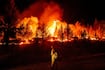
A Calgary judge has denied a homeowner’s plea for the court to force his insurance company to cover a liability claim for a house fire he caused by making drugs in his garage. On Oct. 6, 2017, a detached garage at a home on Pinemill Road N.E. exploded and caught fire, damaging the structure and injuring one of the homeowners, Clifford McGregor, along with two visitors. At a court hearing on March 6, more than seven years after the incident, McGregor sought a court order to have his insurance company, Wawanesa Mutual, indemnify him for an injury claim made against him by one of the victims hurt in the explosion. According to the Alberta Court of King’s Bench decision, McGregor was producing cannabis oil, an illegal substance at the time, inside the garage. It was “the sole and direct cause of the fire” and led to criminal charges against McGregor, including causing a fire leading to bodily harm and the possession of a controlled substance. An investigation into the incident by the Calgary Fire Department found the area “littered” with canisters of butane (used in the production of cannabis oil) as well as a Tupperware bin containing multiple bags of marijuana worth approximately $3,000. The plaintiff pleaded guilty to both counts and was sentenced to 24 months in jail, followed by eight months house arrest and eight months in the community under a curfew. McGregor was later sued by one of the visitors, Christopher Coffin, who was injured in the incident. According to court documents, Coffin suffered burns to his face, back, arms and hands. He and the accused were hospitalized for four weeks. After the Coffin Action was filed, McGregor filed a lawsuit against his insurance company, seeking coverage to pay for Coffin’s claims. Wawanesa Mutual told the court McGregor was not entitled to liability coverage due to the nature of the fire. “The plaintiffs alleged, amongst other things, that the defendant breached their duty to indemnify and defend the plaintiffs for the Coffin Action under the terms of the policy,” the decision reads. Justice B.B. Johnston, who heard the case in March, agreed with the company, saying “that the acts in question were criminal acts.” “While the insured need not intend to cause the injury for the exclusion to apply, the criminal act must still nevertheless be the cause of the injury for the exclusion to relieve the defendant from its obligation to indemnify the insured. On this issue, one need only look at the charges to which the insured pled guilty,” Johnston wrote. “Mr. McGregor admitted that he ‘did cause a fire or explosion in the said property that caused bodily harm to Clifford McGregor, Christopher Coffin and Bryan McIntosh, contrary to section 436(1) of the Criminal Code.’ “In light of this admission, the essential facts necessary to trigger the exclusion exist and relieve the defendant of its obligations to indemnify the plaintiffs.”