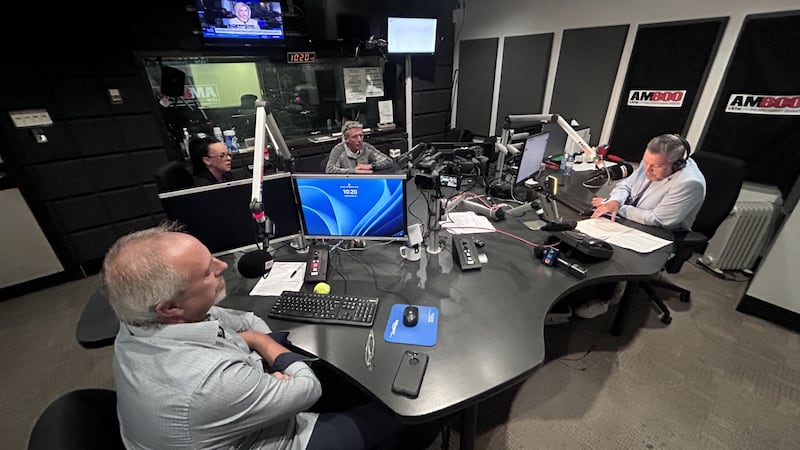
Danielle Smith defended her government’s decision to charge many Albertans for COVID-19 vaccinations, which the province announced late Friday afternoon in a media release. On her Saturday radio show Your Province, Your Premier, Smith said there’s too many wasted and unused vaccines due to low demand. “The sad part was that we threw away over one million doses (in 2023-24) because people just don’t want to get the vaccine in the same rates as others (vaccines),” she said. Just under 14 per cent of Alberta’s 4.8 million residents got vaccinated for the virus last season. Smith said the delivery system that was used for COVID vaccines at pharmacies created too many wasted doses. “They were putting it in packs of 10, so if you opened it up and gave one shot, you had to throw the rest out after 12 hours because it would expire so that’s why we ended up with so much wastage,” Smith said. “And it’s not (an) insignificant (amount of money),” she added. “It was over $100 million – I think $135 million (worth) of wasted products." When one caller chided her for spending money on other things rather than on the health of Albertans, she pushed back. “I can tell you we could probably end up eliminating the knee and hip-replacement surgical waitlist with (the) $135 million that got flushed down the drain last year (with unused or spoiled COVID vaccines). “We’re watching what Albertans are doing and what we’re seeing is that Albertans increasingly are choosing not to take this vaccine,” she added. The move could set a precedent across the country after the federal government put provinces in charge of buying COVID shots earlier this year. Four phases The new vaccine program will roll out in four phases. During the first, only residents in seniors supportive living and home care will be able to get a vaccine for free. The second phase will open provincially-funded COVID-19 vaccines to people with underlying medical conditions or compromised immune systems, people living in congregate living accommodations, people on social programs like AISH or income support or people experiencing homelessness. In the third and fourth phases, all other Albertans starting with those 65 years old or older will be able to purchase a vaccine. It’s all part of an effort to get more bang for the taxpayer’s buck, Smith said. “We believe in vaccine choice, but we don’t pay for everything,” she said. She pointed to higher influenza vaccination rates, pegged at 21 per cent last year, suggesting that COVID vaccines don’t match the effectiveness of others, including for the measles. Alberta, which is grappling with a spike in measles cases not seen for almost 40 years, is falling well short of the 95 per cent immunization rate experts say is needed to protect the population. ‘Cruel’ Sarah Hoffman, Alberta NDP shadow minister for health, released a statement calling the decision “callous” and “anti-science.” “It’s cruel for the UCP government to put further financial burdens on Albertans who want to protect their health and their loved ones and not get COVID,” Hoffman said in the release. “If the UCP government was really interested in eliminating waste and protecting the health of Albertans it would be promoting vaccines. That way the supply would get used and we would keep ourselves and our loved ones safe.” Wrong message Lorian Hardcastle, an associate professor at the University of Calgary’s Faculty of Law and Cummings School of Medicine, said charging for COVID vaccines sends the wrong message to the public. “It’s problematic that we’re switching to a model whereby most Albertans are going to have to pay for the vaccine rather than having it publicly funded,” Hardcastle said. “When we’re talking about something that not only has ramifications for an individual, but for the community at large, COVID can affect the immunocompromised, the vulnerable,” she said. “Of course, people who get COVID end up putting pressure on hospitals and so where individuals are getting vaccinated, not only for their own benefit, but for this public benefit, I think it’s particularly imperative that the government pays for that.” She said the government’s focus on the cost of wasted vaccines only tells half the story of what COVID can cost a provincial health care system. “The Alberta government, in talking about the cost of the vaccine, needs to consider not only what they’re spending on vaccinating people, but what they then save on the other end, in terms of avoidable hospitalizations, lost productivity -- all of these things, because the vaccine does also have financial benefits because it is preventative.” On the show, Smith said COVID vaccine “doesn’t work particularly well.” “A vaccine is one where you get an injection once or twice and then you never develop the underlying condition. You have to judge a vaccine on that basis,” Smith said. “With influenza, you have to get a new strain each year, and so it’s reasonably effective—probably about 55, 65 per cent effectiveness most years. COVID, it ends up mutating very quickly. ... That’s why it’s very difficult to develop an effective vaccine for it. “It’s not a vaccine like measles.” Hardcastle said it’s a stance that “lacks nuance.” “Compared to some viruses, COVID does tend to mutate quickly, which is a challenge,” Hardcastle said. “But that doesn’t render them ineffective. “She also doesn’t distinguish between when we say ‘effective,’ do we mean at (preventing) transmission? Do we mean at preventing hospitalization? Avoiding more serious cases? It is effective at some of those things.” Cost: TBD Smith said the cost of a COVID vaccine hasn’t been determined yet, but won’t be as much as the RSV vaccine, which costs $300. One way to reduce costs, she said, will be to administer COVID vaccines at health clinics and not pharmacies. “We want to make sure that those who want it can get it,” she said, “but the best way to do it – and limit the cost (to taxpayers) – is to administer it through our public health centres, because we already have the staff there, so we don’t have to pay a dispensing fee -- and we can negotiate as low a price as possible, which is what we’re going to aim to do." She said the new COVID policy will reflect the province’s approach to offering the RSV vaccine but at a lower cost. “We only make the RSV vaccine available free to those most at risk – so we’re taking the same kind of policy approach that we are for RSV and we’ll gauge how many people sign up for it and then we’ll make a decision if we have to change course in future years. “But what we can’t continue doing,” she added, “is ordering an excessive number of doses that people don’t want and then having them damaged, destroyed, spoiled and then going down the drain – and flushing that money. “There’s too many things we have to pay for in the health-care system and we’ve got to minimize the amount of wastage that we’ve got.” With files from CTV’s Brittany Ekelund and The Canadian Press