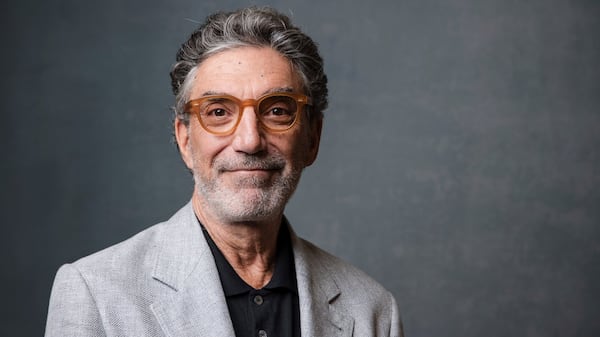
As artificial intelligence rises in popularity, one Halifax professor says he’s noticed an unsettling trend over the last two years – students are using it to cheat on assignments. “Having one student doing it is serious, but it’s increasing,” said Ed McHugh, a business and marketing professor at Dalhousie, Saint Mary’s and Mount Saint Vincent universities. “I don’t know the percentage, but it’s more than one per cent.” McHugh recently posted about the issue on social media after he noticed a number of students cheated on an assignment. He could tell they had used AI to do the work for them. “I was marking an assignment. They had to watch a video about a guy named Adam Smith and asked why he was treated the way he was. Unfortunately for them there was also an economist from the 18th century named Adam Smith and the answer that came back from a number of students was a history lesson on Adam Smith the economist from over 200 years ago,” explained McHugh. “They didn’t bother to watch the video. They just saw the words Adam Smith, did AI on Adam Smith, and gave me back a paragraph about Adam Smith the economist, which had nothing to do with the assignment.” Several commenters shared similar frustrations on McHugh’s post. He says he’s not alone in this and many other educators feel the same way. “I feel disappointed any time a student cheats. As an educator you feel some sense of sadness and anger because you feel betrayed and you feel that they think you mustn’t be that bright to catch some of this stuff,” said McHugh. Signs of AI use by students However, McHugh says there are ways for educators to detect the use of this software, and some uses of AI are obvious. Another thing he’s noticed as a professor is the decline of grammar skills over the last 30 years, which he says can actually be useful when trying to determine if someone used AI. If a student who struggles with grammar hands in a perfectly-worded assignment, McHugh says they likely used AI. “When you have an email that is not written very well grammar-wise, but the attached assignment is in perfect English,” adds McHugh. McHugh also says the AI software he’s noticed students using follows a certain format in its answers, so when someone copies the responses from it, it’s noticeable. “But then after that it gets really tricky and it comes down to your word versus the student’s word,” he says. AI as an educational tool But there are ethical ways to use the software in schools. Some students like Juliette Savard use AI to enhance their writing and fact check. “I think AI, when it is used the right way, is actually a really great tool,” said Savard. “I use it all the time as a Google replacement because sometimes Google, it just links you to articles and it doesn’t find you what you actually are looking for. And ChatGPT is really great for that because it will find you what you are actually looking for.” But when it comes to using AI to write her assignments, Savard says she would never take that chance. “I would never use it to do my actual work because it’s really stupid, if I can be honest. Give it a math equation, it doesn’t know how to solve it,” she says. Her brother Gabriel Savard, who is in his third year at Dalhousie University, says English is not his first language, so for him, AI helps him better understand assignments. “Usually when I see it, it’s to get a better understanding of what the question is asking and put them in my words,” he says. “English is not my first language so it helps to get that understanding of what is being asked of me.” Serena Dasilva is a third-year psychology student at Dalhousie University. She feels AI is useful for certain programs, but not all. “For the arts specifically, I feel like it hinders your learning because you are relying a lot on social views, specifically how people interact with other people, and I feel like relying on AI kind of takes away from that,” says Dasilva. Stronger AI policies needed: McHugh As for the rules of using the software in schools, they vary from classroom to classroom, and across different education levels. McHugh says, in post-secondary schools, professors should highlight their AI policies in their course outlines. “So far, all of the policies I have read are not strong. The policies need to be stronger and a lot of them are discouraging the use of other softwares to detect whether AI has been used because those softwares aren’t perfect either,” says McHugh. In general, one rule across the board is no plagiarism or cheating on work, whether using AI or not. If those rules aren’t followed, there are serious consequences for students. “On your first assignment, if you are caught and it’s proven, you get zero for the assignment,” explains McHugh. “If you’re caught again in the course, you get zero for the course.” At the end of the day, McHugh says AI can be a great tool when used appropriately, but students who rely completely on AI are hindering their own learning. “People go to school to become critical thinkers and that’s why we teach because we want the generations behind us to be better thinkers and to make the world a better place,” he says. “In some ways this helps, but in some ways this is being a deterrent to creating stronger students in the future.” For more Nova Scotia news, visit our dedicated provincial page