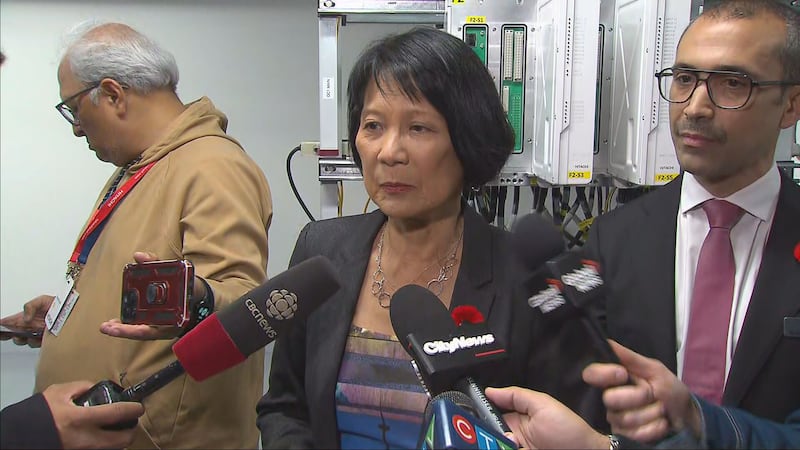
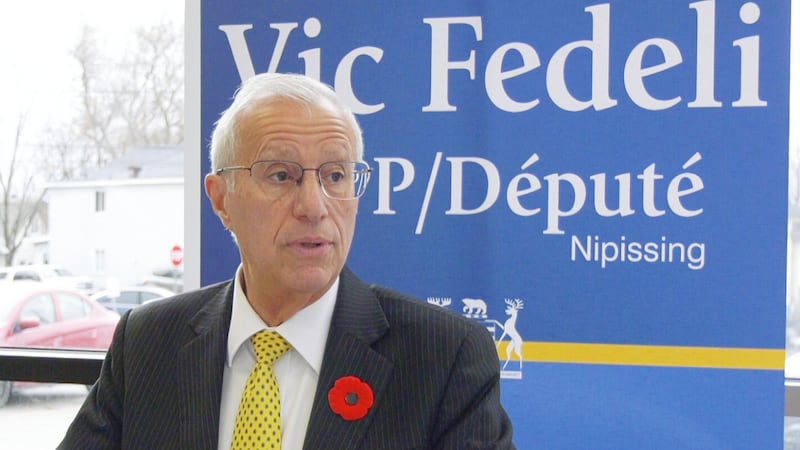
With the Canada-U.S. trade war playing a role in the rout of Republican candidates in the mid-term elections, Ontario’s Trade Minister says he’s heading to the United States in January in hopes of pushing for a new trade agreement. “I have three trips to the U.S. planned,” Vic Fedeli told reporters Friday. “What the premier said was, after they’re sworn in, ‘Let’s get down there so we know they can speak with authority.’ I’ll be in the States three times in January alone.” The now Democratic-controlled U.S. Congress will be sworn in in early January, prompting hopes that progress could be made on a new trade agreement. Tariffs as high as 50 per cent on some Canadian goods have proven unpopular in U.S. border states, as well as states that rely on trade with Canada. While Fedeli plans to head there in January, American Ambassador Pete Hoekstra predicted Friday that a new trade deal could be in place by Jan. 1, before the swearing-in ceremony. Senator-Elect Abdul El-Sayed — who won his race in the auto-manufacturing hub of Michigan -- called the trade war “insane” during a post-victory interview with CNN on Thursday. In Maine, a popular tourism destination for Canadians that relies on agriculture-sector imports, tariffs featured prominently during the campaign. The democrat victor criticized the Republican incumbent for not pushing back against Trump hard enough. Fedeli said Friday that the trade war is bad for both sides. “Both the House and the Senate have passed motions this past year decrying the tariffs as bad for Americans,” he said. “Now, when the rubber meets the road and some of those people are gone and others have come in, you need a majority.” While he hopes for an end to the trade war, Fedeli said that, since U.S. President Donald Trump still wields a veto, nothing is certain. “The president has already got his red veto cap sitting on his desk,” he said. “You need … a supermajority to overcome his veto. So, it’s going to be very complicated. We don’t want to get overly optimistic about anything.” The first priority, he added, is a new round of U.S. tariffs that come into effect Jan. 1. “We’ve got to fight hard to keep that from happening,” Fedeli said. “I think that our single focus right now is to keep those general tariffs from happening and then live to fight another day and continue to live to fight other days.” But Americans are realizing that tariffs mean higher costs for everything, he added, so momentum is building toward a deal. “It is sinking in that when you have tariffs on Canadian and American goods going both ways, prices go up,” Fedeli said. “For steel and aluminum, that means your refrigerator, your stove, your dishwasher, everything … The price of everything goes up. Tin cans — that means soup goes up. Aluminum cans — that means beer and pop prices go up. This is our message: we have an integrated economy. We cannot separate it.”