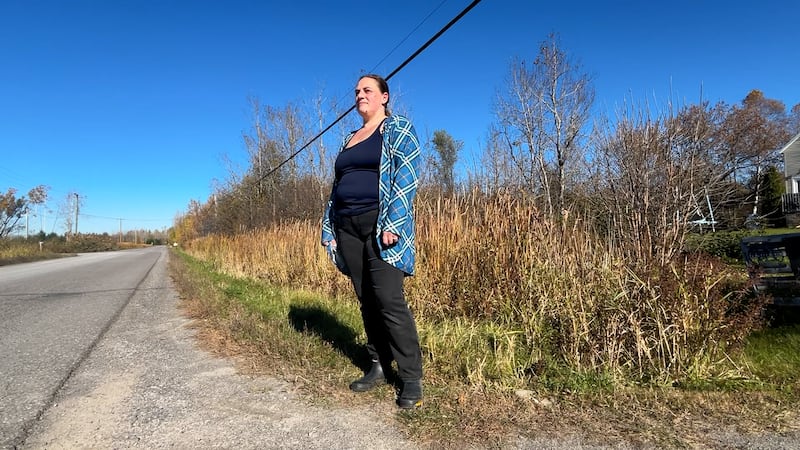
Private woodlot owner Andrew Clark says this year is one of the toughest he’s seen in the six decades he’s worked in the woods. For him, sales are ‘maybe 50 per cent’ of what they were last year. “It is the lack of markets which are the result of the tremendous uncertainty that the industry is in now because of the actions of the American government,” he said. He feels some of the federal government’s new supports – announced this week – could help. Prime Minister Mark Carney announced Wednesday a $500-million increase to the previously announced Softwood Lumber Development Program, which gives companies access to government-backed loans, totaling $1.2 billion. He also said Ottawa is working with railway companies to cut freight rates when transporting Canadian lumber across the country by 50 per cent. But Clark says the current situation – with the U.S. duties and tariffs amounting to 45 per cent – isn’t sustainable. “The countervailing duties are certainly, problem number one,” he said. “New Brunswick used to have, prior to 2017, New Brunswick had an exemption from those duties.” Mayor of the District of Carleton Victoria says so far, businesses and people in his area have been resilient. “They work through things and they’ve been through highs and lows before. But this, what’s happening in the United States right now, is really unfortunate in this industry,” Andrew Harvey said. Harvey believes a quota system could be the answer. That would allow a certain amount to enter the U.S., tariff and duty free. But he agrees, the current situation isn’t sustainable. “At the end of the day, you need certainty. Like, there has to be some negotiation towards us having an outcome that business people wake up in the morning and they know exactly what they have for a market,” he said. For more New Brunswick news, visit our dedicated provincial page.