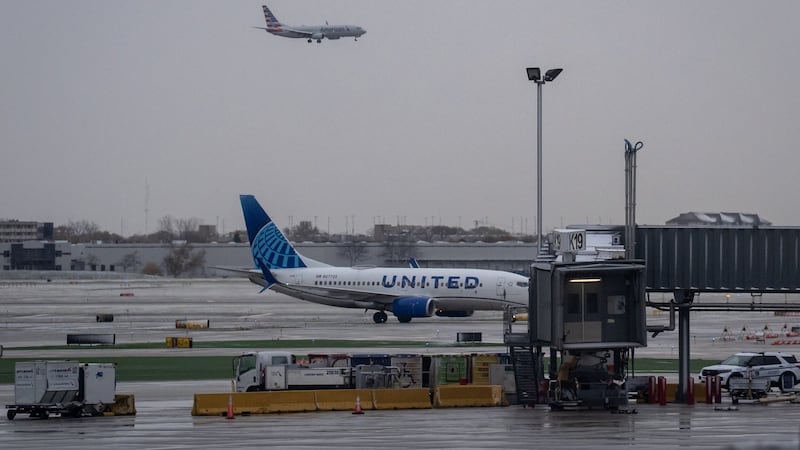
Union leaders say Ottawa’s new labour bill will have consequences far beyond federally regulated industries if it goes ahead. The federal Liberals say the legislation as a whole, tabled Monday, is meant to accelerate the timeline for major projects being reviewed and approved. The legislation is also picking up notice for proposed changes to Section 107 of the Canadian Labour Code, which allows the federal government to end work stoppages. “I believe if this passes it’s going to trickle down to every province in Canada because it’s going to give the governments the upper hand so that workers can’t strike,” says Melisa Marsman, president of the Nova Scotia Federation of Labour. “That will take away our collective rights to bargain in good faith.” The federal government’s legislation says the aim is to “strengthen collective bargaining by helping parties address issues earlier, reach negotiated agreements, and resolve disputes while fully protecting the right to strike.” Jobs Minister Patty Hajdu says the government is looking to create “guardrails” around Section 107 by establishing a benchmark for ending a strike or lockout if its in the “national interest” to do so. “The framework we have is working well to resolve agreements in a timely and orderly way,” says Hajdu. “But we also heard that existing tools in the Labour Code are often not helpful to resolve complex disputes, especially when the parties have had a history of high conflict bargaining and have existing very frayed relationships.” Bea Bruske, president of the Canadian Labour Congress, says the bill isn’t necessary. “Government has had the ability to end strikes and lockouts by tabling legislation in the House of Commons,” says Bruske. “They’ve always had that right, it’s what’s been used in the past over the last many decades. People have heard the arguments made in the House of Commons, they’ve seen how their MP votes. There’s absolutely no need for this legislation.” Section 107 was used most recently last year to end a work stoppage by Air Canada flight attendants. “(Section 107) was never designed to be used in the way the government has used it in the last two years,” says Bruske. “In the last two years alone it’s been used eight time to break off strikes and situations where workers have felt the need to actually walk a picket line.” Rachel Brickner, a professor in the politics department at Acadia University, says the legislation could serve as a disincentive for people who are looking to form a union. “The right to strike is the ultimate worker power,” says Brickner. “When workers don’t have that power because of legislation, they might think why bother going through this big process of unionization if ultimately the employer is going to be able to do what they want.” With files from CTV News’ Spencer Van Dyk