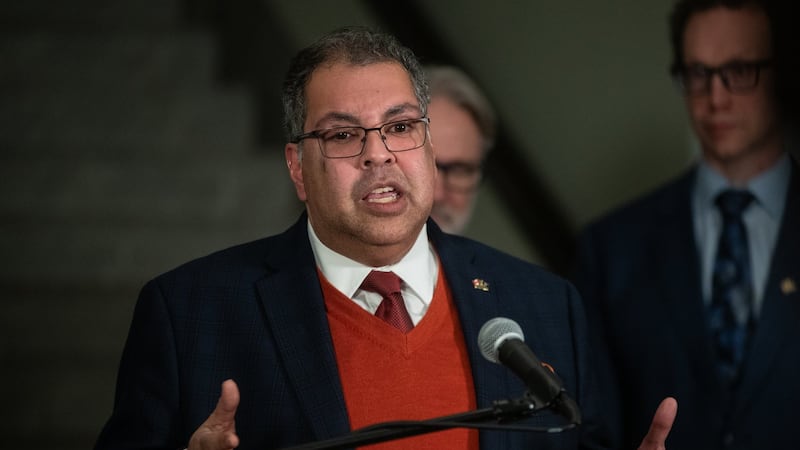
HALIFAX — New Brunswick is reporting 36 new cases of COVID-19 on Sunday, bringing the number of active cases in the province to 292, the largest number of active cases in the province since the pandemic began. “It's extremely disappointing to be here today,” said Premier Blaine Higgs on Sunday during a press conference. “Numbers are not where they need to be.” On Sunday, the province announced the cases, which chief medical officer of health Dr. Jennifer Russell says is nearly one-third of cases reported in the province during the past ten months. Additionally, the province announced the majority of 24 cases located in Zone 4 (Edmundston region) are linked to a single workplace. The cases have been identified in the Moncton region, Saint John region, Fredericton region, Edmundston region, and the Bathurst region. The five cases case in Zone 1 (Moncton) involve: The four cases in Zone 2 (Saint John) involve: The two cases in Zone 3 (Fredericton) involve: The 24 cases in Zone 4 (Edmundston) involve: The one case in Zone 6 (Bathurst) involves: New Brunswick Health says all cases are self-isolating and being investigated. As of Sunday, more than 2000 New Brunswickers are self-isolating. “We are responding to limit the severity of this outbreak, but to bring this under control we need every New Brunswicker to contribute,” said Dr. Russell. “If you have to go out to obtain food and other essentials, keep your outings brief and return home as soon as you can.” ZONE FOUR TO MOVE TO RED ALERT ZONE “We have seen what has happened in other jurisdictions when the increase in active cases is not dealt with quickly and decisively,” said Higgs. “We don’t want that to happen here, but if we are going to avoid it we must do our part.” Zone 4 will move to a red alert zone effective Monday. “The next step after red is total lockdown,” said Higgs, warning residents in Zone 4 of the severity of the situation in the region. SCHOOLS TO STAY OPEN DURING RED LEVEL The province says K-12 schools will remain open even at the Red level. This will be done with enhanced health and safety measures including: Education and Early Childhood Development Minister Dominic Cardy discussed what the new phase will mean for schools. 'I know these new cases add to the stress that families across NB are currently feeling,' said Cardy. “It's going to be a difficult few weeks coming up. Important not to let our guard down right now.” Cardy pleaded with New Brunswickers to follow COVID-19 protocol by social distancing, wearing a mask, washing their hands. “When students are at school, they are in a supervised environment with strict health and safety protocols in place,” said Cardy. “Their social needs can be met, while maintaining physical distancing, using masks, and being encouraged to maintain proper hygiene. That is why, with the support and recommendations of Public Health, we have made changes to our Return to School plan ensuring schools can stay open during the red phase.” SCHOOLS IMPACTED BY COVID-19 Cardy said COVID-19 cases have been confirmed at four schools on Saturday and Sunday in Zones 1 and 2. Anyone who has been in close contact with a case will be notified by Public Health for contact tracing. If residents do not hear directly from Public Health, they have not been identified as a close contact. CASE BREAKDOWN New Brunswick has had 947 cumulative cases of COVID-19; 642 cases are considered recovered, and there have been 12 deaths. There is currently one person in hospital due to COVID-19. As of Sunday, New Brunswick has conducted 172,708 tests. CASE LOCATIONS The number of cases are broken down by New Brunswick's seven health zones: COVID ALERT APP New Brunswick's chief doctor said on Monday that only nine per cent of the province has downloaded Canada's COVID-19 Alert app, and is encouraging more New Brunswickers to download the app. The app, which can be downloaded through the Apple App Store or Google Play, notifies users if they may have been exposed to someone who has tested positive for COVID-19. VEHICLE TRAFFIC INFORMATION New Brunswick's online dashboard includes information about vehicle traffic attempting to enter the province. On Saturday, 496 personal and 526 commercial vehicles attempted to cross the border into the province. Of the vehicles attempting to cross the border, 23 were refused entry, for a refusal rate of 2.3 per cent.