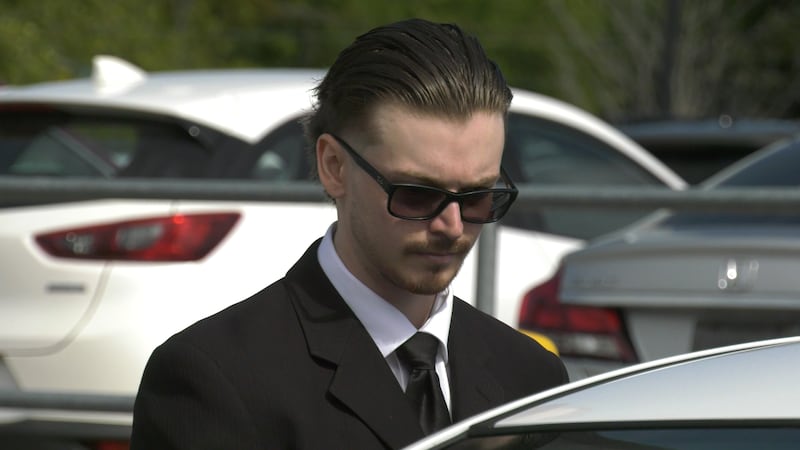
The man charged with killing Charlie Kirk shouldn’t get the death penalty because the shooter “hit the intended target” and no one else was endangered when the conservative activist was shot from a rooftop as he addressed a crowd of thousands at an event in Utah last year, his lawyers said. Defendant Tyler Robinson’s attorneys say the bullet traveled above the crowd and prosecutors have not proven that he knew others who attended Kirk’s event at Utah Valley University on Sept. 10 were in danger -- a potentially aggravating factor under state law that would make it a capital crime. “The only evidence presented supports that the bullet traveled above, not through, the crowd,” defence attorneys wrote in documents filed late Tuesday as the defence tries to block the case from proceeding to trial. Prosecutors have said numerous people were within a “zone of danger” around Kirk, where a stray or ricocheting bullet could have hurt anyone close to the victim The defence lawyers also disputed claims that Robinson targeted Kirk over his political views. Prosecutors allege Robinson told his roommate that he killed the activist because he “had enough of his hatred.” But the defence said that was not enough to prove what motivated Robinson, after searches of his apartment, computers and telephone failed to produce anything beyond that one statement. Prosecutors last month presented what they call “overwhelming” evidence against Robinson, including DNA tests that tie him to the suspected murder weapon and apparent confessions by the defendant. His attorneys questioned the reliability of the prosecution’s evidence, but they didn’t offer any alternative theories for Kirk’s assassination. The defence made no mention of DNA in Tuesday’s filing. Robinson is charged with aggravated murder and has not yet entered a plea. He turned himself in a day after Kirk was killed. His defence attorneys previously tried to get the death penalty taken off the table after prosecutors were found to be in contempt of court for talking about the case to the media. State District Judge Tony Graf rejected that request. In documents filed last month, prosecutors said the fact that Robinson loaded his rifle with four bullets showed that he knew he could miss Kirk, “thereby putting others in danger.” But defence attorneys said “it is just as likely that the shooter did not believe he would miss.” Robinson faces possible sentence enhancements if prosecutors can prove he targeted Kirk because of his politic. They contend that Kirk’s strong opposition to same-sex marriage and gender transitioning stood in contrast to Robinson, who was in a romantic relationship with a roommate, Lance Twiggs. Twiggs told investigators that he had been considering transitioning around the time that Kirk was killed, according to prosecutors. Twiggs also told investigators that Robinson sometimes talked about politics, including President Donald Trump. Yet Twiggs said he never heard Robinson talk about Kirk before the shooting. The defendant also did not talk much about gender issues or LGBTQ2S+ rights, Twiggs said. The AP emailed Twiggs’ attorney seeking comment. Closing arguments in the preliminary hearing are scheduled for Sept. 1. Graf will then decide if the case can go to trial and on what charges. Lawyers for Kirk’s family have asked Graf to make his decision by or on Sept. 1 so the case can proceed. Prosecutors have until Aug. 18 to respond to the latest defense arguments. The Associated Press left telephone and email messages with the Utah County Attorney’s Office seeking comment. Preliminary hearings typically don’t last so long. Legal experts said the slow pace reflects a cautious approach by Graf, the large volume of evidence and a desire by prosecutors to disprove conspiracy theories around the case. Matthew Brown, The Associated Press