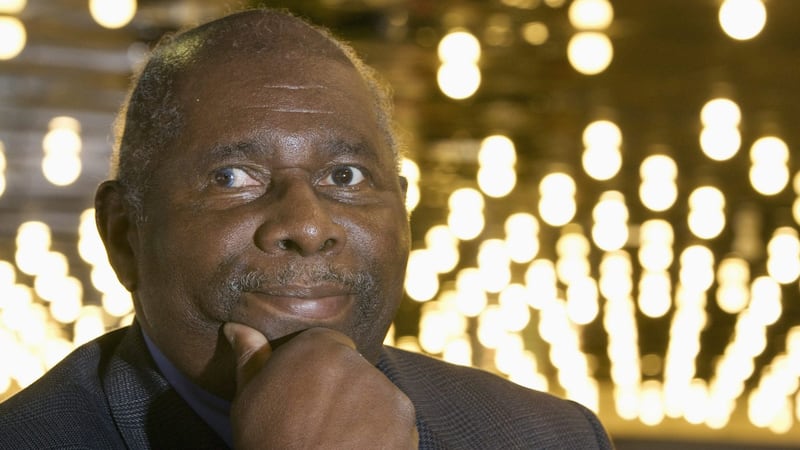
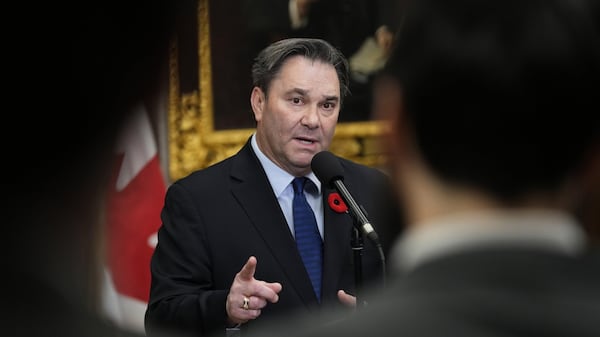
Pierre Cleroux, chief economist for Business Development Bank of Canada is encouraging local manufacturers to “pivot” from the automotive supply chain to the defence manufacturing supply chain. “Canada has committed themselves to more than double the amount of money they’re going to spend [on military manufacturing],” Cleroux said Thursday following a speech hosted by Invest Windsor-Essex. “We need manufacturers to be able to do that, and there’s a strong manufacturing base here in Windsor,” he added. In February 2026, Prime Minister Mark Carney announced plans to spend up to $80 billion over the next five years to bolster Canadian production for the military. “When the military are buying, the parts they are buying, [is] clothing, boots, they’re buying tents. So, it’s not only tanks and fighter jets,” Cleroux said. “If you can produce parts for the automotive sector, you can probably build parts for the military as well.” Cleroux said they plan on organizing conferences in June 2026 to walk local manufacturers through the process involved in moving into the military space. “We’re looking for companies who are already in that supply chain, but also companies who are not and those that can pivot,” he said. “Windsor is at the heart of this transformation that the government is trying to do.” In his economic outlook Thursday, Cleroux told Windsor-Essex business leaders he doesn’t predict a recession in 2026, based largely on strong consumer spending. He told the media he believes there will be a “solution” to the Iran War “imminently” which should bring down the price of gasoline. Looking further ahead to this summers’ CUSMA negotiations, Cleroux is confident the United States will ink a new deal. “I don’t think the U.S. can afford not having a free trade agreement with Canada,” Cleroux said. “We are too important. We buy more than $400 billion every year to the U.S.” “I believe there will be a deal. Is there going to be tariff? I think that’s the question,” Cleroux concluded. Cleroux cautioned, if the U.S. gives its required six-month warning about walking away from CUSMA, it will cause a recession in all three countries.