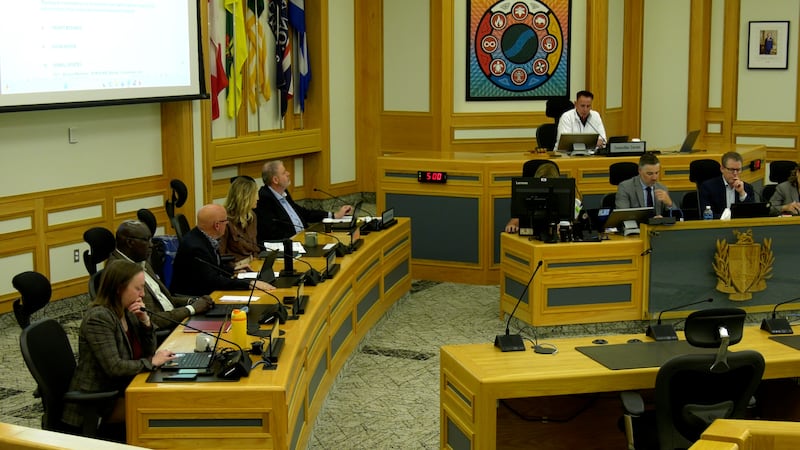
Lakeshore council is urging the province to strengthen proposed rules for large data centres. Council’s discussion on Tuesday evening focused on Ontario’s proposed data-centre approval framework, as the province seeks feedback on criteria related to economic benefits, data security and community impacts. Mayor Tracey Bailey said the municipality remains concerned about what authority local governments will ultimately have if the province moves forward with data centre projects. “There has to be an opportunity for us to look at our own landscape and say this might work, but here’s where it would work, you know, or maybe it’s not going to work at all and we want a moratorium. But I think location has to be first respected by upper level of government,” Bailey said. The issue was compared by some councillors to previous disputes involving greenhouses and battery-storage projects, with several expressing concern that provincial legislation could override municipal planning decisions. Ward 4 Coun. John Kerr questioned whether stronger environmental requirements should be mandatory, particularly when it comes to water consumption and the Great Lakes. “I’m a freshwater fan. Something about it keeps me alive. I love fresh water. I think we’re all dead without it. And I was not a fan of the turbines going in the Great Lakes. And I’m not a fan of us touching [them] because Bolivia is another country that they got into the fresh water and now the residents can’t have it. The data centres are getting it,” Kerr said. Deputy Mayor Kirk Walstedt warned residents may also need to make their voices heard as the province develops its policies. “I think it’s important that the public get the word out too, because in a lot of instances, that’s where the the pressure can be put on the government,” said Walstedt. “I’m just concerned they’re going to treat these as they’ve done greenhouses and they’re just going to say one’s going here, here and here. We don’t care what you say, how many studies you’ve done or anything else.” Council voted unanimously to amend its submission to the province to call for stronger digital-sovereignty protections, mandatory limits on water use, a requirement for closed-loop cooling systems, municipal oversight of projects and more public consultation. Last week, Essex County Council voted to spend up to $150,000 on a regional study on potential data centres, examining impacts on water, electricity, infrastructure, zoning and long-term economic benefits before any major proposals emerge.