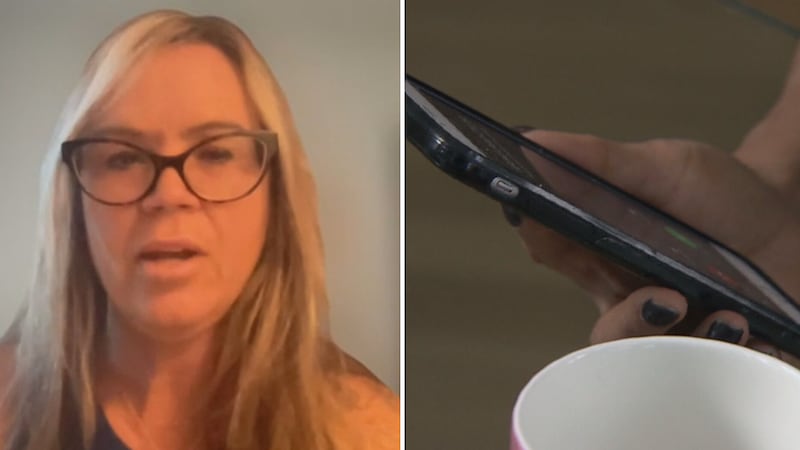
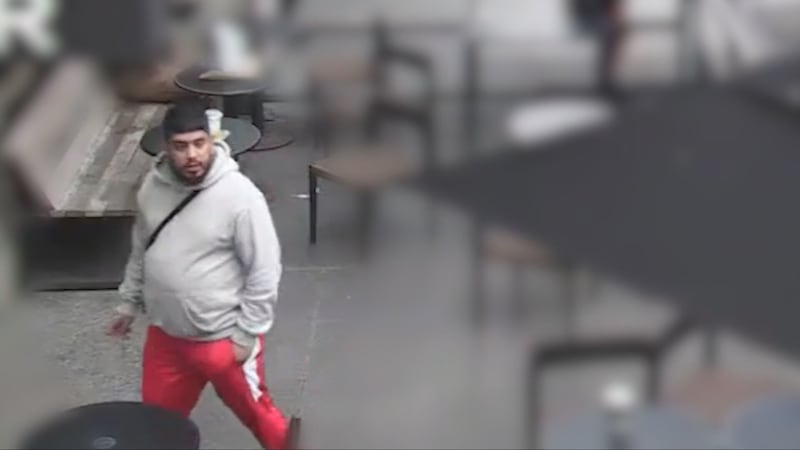
A LaSalle homeowner says she feels ‘violated’ after surveillance video shows a group of people running up to her garage door late Sunday night and repeatedly kicking it before taking off. Surveillance video captured in Shelley Davidson’s driveway shows the incident around 11 p.m. near Heritage Park — a neighbourhood she and her husband moved to 31 years ago. Davidson said she was reading in bed when the sound jolted her. “I heard something that sounded like gunshots, and my bed actually shook,” Davidson said. “It sounded like an earthquake.” When she checked her cameras, Davidson saw four people approach the driveway, kick the garage door, and run away with their shirts pulled over their heads. LaSalle police were called and a report was made. She said police searched the area, but the individuals were not found at the time. Davidson said her husband had to put bolts back into the garage door, which was installed just six months ago, because they were kicked loose. While damage to the garage was relatively minor, Davidson said the emotional impact has lasted. “I didn’t sleep. I was up the entire night,” she said. “It’s really unsettling because you don’t know if they’re going to come back. I feel violated. It’s not fair. We’re retired people. We don’t want all this anxiety to be happening at this point in our life. For the first time, we’re thinking about moving out of here.” The video, which Davidson posted to social media, sparked hundreds of reactions — including comments from people questioning whether young offenders are actually held accountable for their poor choices. “Even if they get caught, there will be no consequences ... and these punks know it,” said one commenter. Joanna Conrad, executive director of Youth Diversion, said the idea that youth simply “get away with it” is not accurate. Conrad said when young people are referred to Youth Diversion, one possible response is a “youth justice committee.” She described it as one of the most impactful ways to address a crime because it requires the young person to take responsibility and come face-to-face with the person they harmed. That process, Conrad said, also gives victims a chance to ask questions they may otherwise never have answered. “Oftentimes, the victim is wondering, who did this to me? Why did they do this to me? Are they going to do it again?” Conrad said. “They have a lot of uneasy feelings.” According to Conrad, the process allows victims to explain how the incident affected them emotionally, psychologically, and financially. They can also say what they believe should happen in order for the young person to make things right. That can include restitution. Conrad said Youth Diversion recently handled a similar case in LaSalle where she delivered a restitution cheque to a victim. “He said, ‘I didn’t think that this was going to happen. I wasn’t expecting this.’ So, the victim in that case felt much better about the whole situation,” said Conrad. When restitution is ordered, Conrad said the money is technically supposed to come from the young person. But when a young person does not have a job or access to money, she said parents may pay the restitution upfront, with the expectation the youth works off that debt at home. “I would hate for parents to simply pay a restitution and call it a day, and the child gets off entirely,” Conrad said. “Ideally, parents are holding their children accountable at home as well.” That could include community service or personal service for parents, grandparents or others, Conrad said. Conrad said many young people who commit property-related offences do not fully understand the impact their actions have on victims. “I’m going to say nine out of 10 times, they have no idea,” she said. “They don’t necessarily understand the impact of their actions on the individual.” She said those actions are often impulsive, spontaneous, or influenced by peer pressure, with youth sometimes viewing the behaviour as a joke or something to record and share. Conrad said there can also be value in allowing young people to feel shame or embarrassment over what they have done, as long as the message is focused on the action — not on defining them as bad people. “We’re just saying they made a bad choice. They have to learn from that,” said Conrad. For Davidson, the hope is that the video helps identify those responsible — and also encourage people to keep a more watchful eye on those who live around them. “I want us to be vigilant and I’m hoping that we can look out for one another in this neighbourhood.” Speaking with CTV News on Friday, five days after the incident, Davidson said she had received no update from police on whether the individuals in the video had been caught.