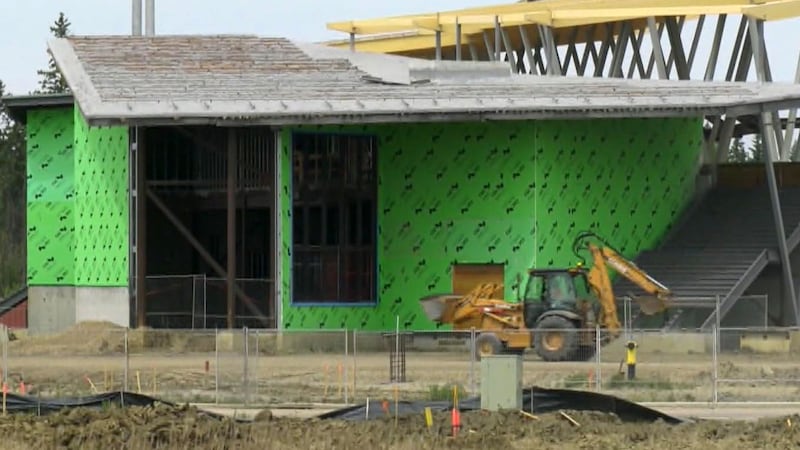
The Sooke School District is one of the fastest-growing in the province, with secondary schools filled to the brim and operating over capacity. On Wednesday, B.C. Premier David Eby announced funding for a new high school that will be built in North Langford. “Between 2016 and 2021 the population in Langford grew by almost 32 per cent, and that is an astonishing rate of growth,” said Eby. “We’re making sure that the kids of Langford are able to get into schools that are in their neighborhood and that is a priority for us.” The province is investing $220 million to build the 2,000-seat secondary school, which is set to open in 2030. Paul Block, the superintendent and CEO of the Sooke School District, says it has been challenging for the school district to keep up with such a high rate of growth. “We are bursting at the seams in our schools right now,” said Block. Belmont Secondary School in Langford was built for a capacity of 1,200 students, this year it has 1,850 students attending. Students are being sent out of the catchment to neighbouring Royal Bay Secondary School in Colwood. It has already undergone an $88-million expansion yet still it is home to eight portables and operating at a capacity of 135 per cent. As a band-aid until the new secondary school is built in North Langford, the district has pitched a unique idea to the province. “We asked for funding to build on a property that we have adjacent to Royal Bay Secondary for what will (in) future be Royal Bay Elementary School,” said Block. The idea is to build 20 fabricated classrooms on the land that would be used by students in the interim to relieve the pressure. The district is still waiting to hear from the province on funding for that request. For now, the district is focused on the new build in North Langford. “By the time the school opens around 2030 we’re going to have about 1,850 kids ready to move into that school so it will leave us about 150 seats to grow,” said Block. “At that stage of development in Langford, that should work for the next 10 to 15 years.” Shovels are expected to hit the ground sometime next year.