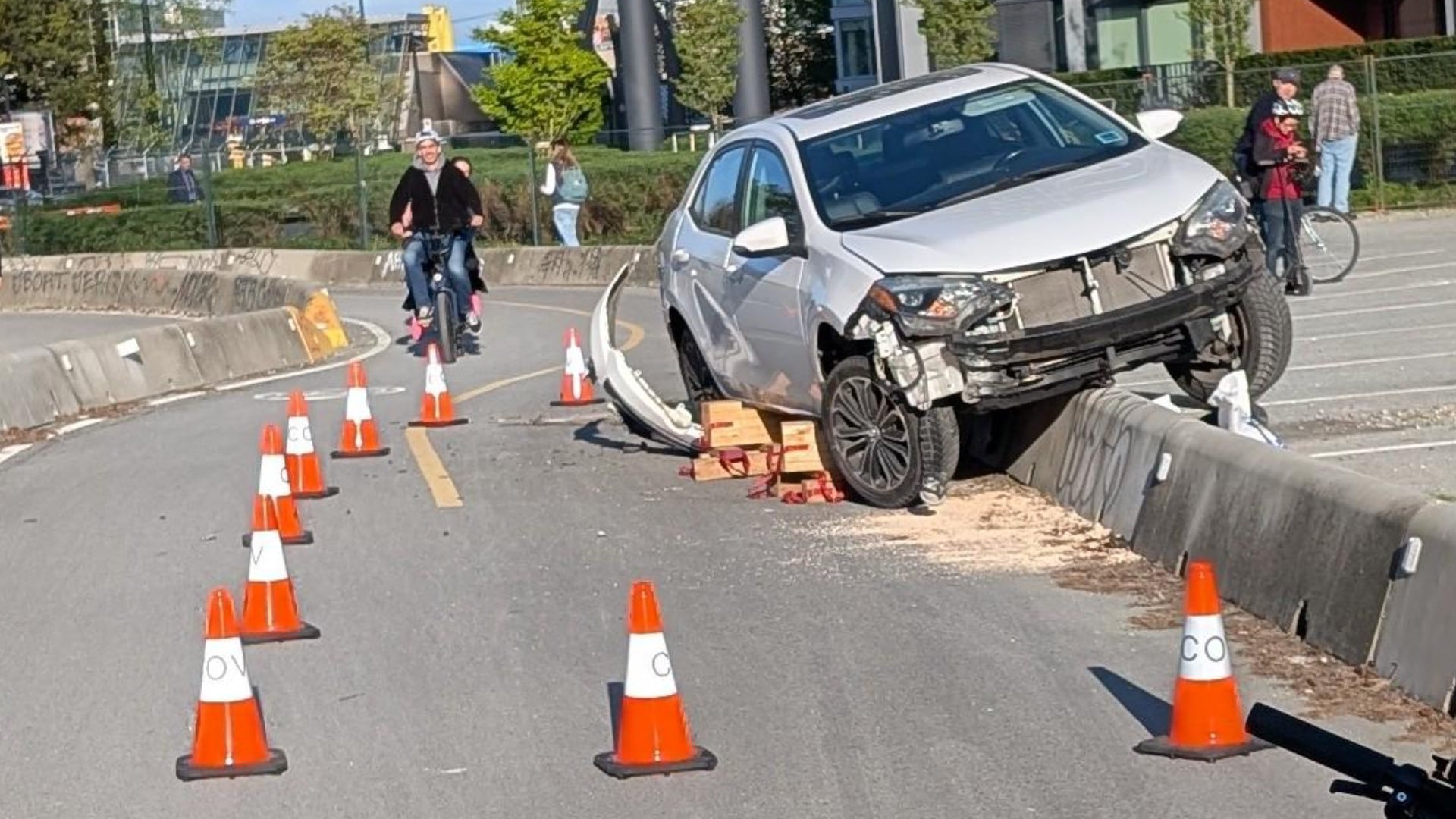
A vehicle crash in Vancouver’s Olympic Village is drawing renewed attention to role physical barriers can play in protecting cyclists and pedestrians. A photo shared on social media shows a heavily damaged white car straddling the median between a parking lot and a busy multi-use path south of Science World. Police confirmed the incident happened around 5:30 p.m. Thursday. “A vehicle lost control and ended up on the barriers as pictured,” VPD Const. Darren Wong told CTV News. “No injuries here and nothing criminal in nature so we did not attend.” B.C. Emergency Health Services also did not respond to the crash, according to a spokesperson. Witnesses posted on social media that the driver responsible was a youth who had been left unattended in the vehicle while their parent ran a quick errand. “I was riding past when this happened. The driver (a kid messing around) very nearly struck a cyclist if not for the barriers,” one Reddit user wrote. The latest State of Cycling in Metro Vancouver report from HUB Cycling and TransLink shows that routes physically separated from traffic are associated with lower injury rates, particularly in high‑conflict areas such as near parking lots and access points. Jeff Leigh, chair of HUB Cycling’s board, said that while all road users are expected to act responsibly, concrete barriers can prevent deaths and serious injury when they don’t. “Physical barriers as shown in this photo play a critical role in protecting vulnerable road users, including people walking and on bikes,” Leigh said in a statement to CTV News. He notes that the bike path involved is a temporary detour, but city policy requires such routes to provide the same level of protection as permanent cycling infrastructure. “We are grateful that the people cycling in the bike path along the seawall were not injured in this case,” said Leigh. “We are also grateful for that policy.”