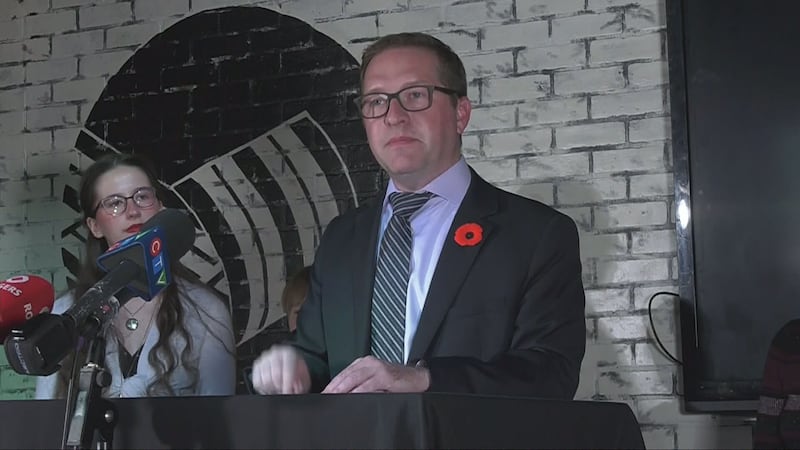
When a powerful 8.8 magnitude earthquake struck off Russia’s east coast, it sent a ripple of concern across the Pacific—and along the coast of British Columbia. The resulting tsunami advisory was in effect for nearly 13 hours and tested how prepared the province and its communities truly are for a coastal emergency. While the waves that reached B.C. were small, measuring up to 27 centimetres in Port Alberni and 21 centimetres in Tofino, experts say the event was a valuable reminder of what’s at stake. “This is, you know, an opportunity for a full dress rehearsal,” said B.C. Emergency Management Minister Kelly Greene. “Having this almost-significant tsunami is a really great time to think about your personal preparedness.” B.C. is overdue for a major earthquake Coastal geologist and associate professor at Simon Fraser University’s School of Environmental Science, Jessica Pilarczyk, explained that while this tsunami originated far away, B.C. is also vulnerable to much closer, and more dangerous, earthquake events. “We’re susceptible to both near-field and far-field tsunamis,” Pilarczyk said. “The big one everyone talks about is the Cascadia Subduction Zone. That’s a near-field source and we’d have less than 20 minutes to respond.” She warned that in the event of a major Cascadia quake, some areas could be severely impacted. “Communities like Port Alberni that are at the landward terminus of a major inlet, those inlets are rocky and hard surfaces, and so water has to funnel through them. And what happens as really fast-moving, high-energy water moves through them, those waves amplify,” she said. She says areas in Delta, Richmond and along the west coast of Vancouver Island are definitely a cause for concern too. Co-ordination still a concern While Greene praised the overall rollout of the province’s response, Pilarczyk raised concerns about gaps in co-ordination between municipalities. “It’s all really left up to individual municipalities,” Pilarczyk said. “Tofino did a great job, but tsunamis don’t know municipal borders. It’s really important that we have more of a co-ordinated effort.” Greene confirmed that while the province shared updates online, there was no intrusive emergency alert—the kind that reaches cell phones, TVs, and radios—because the situation never escalated to a full warning. “Had it been upgraded to a warning, we would have issued the intrusive alerts to make sure that people knew which actions to take,” she said. Time to prepare Both Greene and Pilarczyk emphasized the importance of personal readiness. “Being prepared is a team activity,” Greene said. “Prepared BC can walk you through what needs to be in your grab-and-go bag. Knowing which hazard is likely in your area is really important.” “If you feel shaking for a long duration, intense shaking, get to higher ground,” Pilarczyk added. “It may seem interesting to go look at what’s happening at the shore, but you’ve got to get out of harm’s way.” Lessons learned Ultimately, while B.C. was spared any damage this time, the event served as a reminder that the next one could be much worse. “We had a really large earthquake, and there was a tsunami that didn’t turn out to be too bad for us—thankfully,” Pilarczyk said. “But it doesn’t mean future far-field tsunamis will follow the same path. They could be much more destructive.” “This is a really good time for people at home to think about being prepared,” Greene said. “You just don’t know when the big one is coming.”