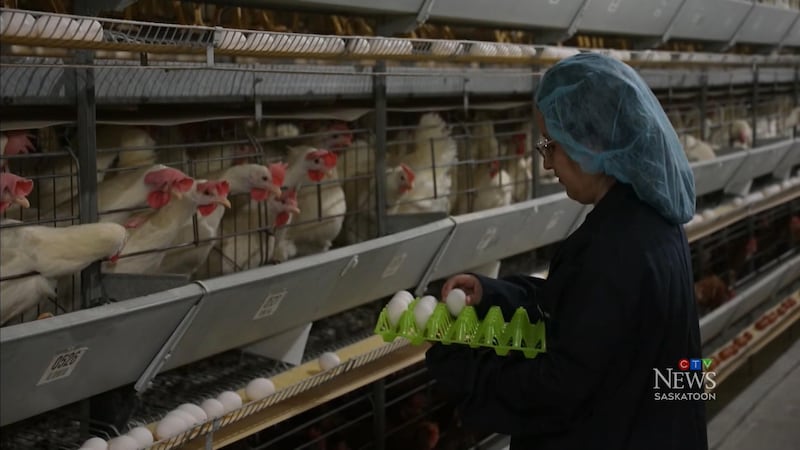
Concerns around the spread of avian influenza are growing in the province, as Canada’s Food Inspection Agency (CFIA) implements movement restrictions on poultry in northwest Saskatchewan. To prevent further spread of avian influenza, on Sunday the CFIA declared the RM of Loon Lake to be a primary control zone for the virus. This prohibits the movement of domestic birds, their products and by-products into and out of the area, except by permission. The news comes just days after federal investigators reported outbreaks in several non-commercial poultry operations and at a poultry show in Moose Jaw earlier this month. The CFIA says a case associated with the Nov. 7 poultry show in Moose Jaw is considered highly pathogenic, meaning it has the potential to spread very quickly. Loon Lake now joins a number of other regions in Saskatchewan currently under restrictions, including the RM of Preeceville and the RM of Bayne. Biosecurity protocols are also in effect in multiple zones across Alberta and B.C., according to federal Ministry of Agriculture data. There are a few exceptions to the movement restrictions, according the federal agency, including whether the virus detected is considered highly pathogenic or not, and in the case of small, non-commercial operations or pet birds, as long as they do not come into contact with other captive birds or commercial poultry operations. Restrictions remain in place until the inspectors determine the spread is under control. According to the CFIA, the incubation period ranges from two days to 14 days and the virus can be transmitted to other birds. Signs of the influenza include lethargy, loss of appetite, swollen eyes, respiratory signs, decrease in egg production, or death. An outbreak of avian influenza can be costly for producers, who must then trace and destroy all infected, or potentially infected, animals and products. -With files from Caitlin Brezinski