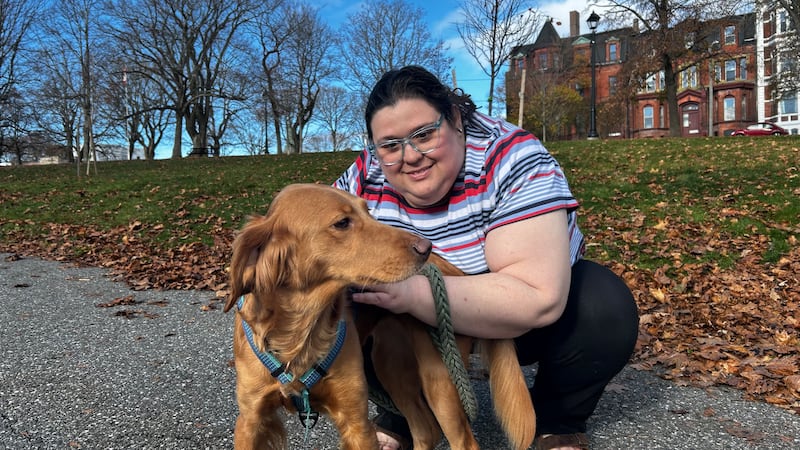
Gabrielle’s Breton’s four-year-old dog Lyndie is full of energy. The English setter-golden retriever mix loves people and other dogs, which makes her daily walks a favourite time of the day. Breton is warning other pet owners to be careful when taking their animals for a walk after her dog suffered from a drug overdose following a walk along Waterloo Street in Saint John. “It went really quick from we’ll take her to the vet, they got it, they’ll be able to help her,” says Breton. “It went from that to immediately oh my God, is she going to make it through this.” Breton says she first noticed something wasn’t right with Lyndie after her partner returned home from her nightly walk on Remembrance Day. Lyndie was shaky and upset but Breton assumed it was a result of a different health condition her dog deals with. After rushing her to the Port City Emergency Veterinary Hospital on the east side of town, the veterinarians quickly determined Lyndie suffered from a drug overdose. “They think that she got either drugs on her paws, or maybe she sniffed it off the ground when she was walking,” Breton says. “The receptionist at the very least said that this was like the fourth [dog drug overdose] this week.” After a night at the hospital where Lyndie’s fever peaked at more than 200 C (it should normally be under 100 C), she returned home the following day. Breton kept a close eye on Lyndie, but she has since returned to her normal energetic self. “They were worried she may have a tremor for life because they were worried about brain damage, because at one point her fever did spike really badly,” Breton says. “Thankfully we haven’t noticed anything yet.” Breton says the vet tested for cocaine and methamphetamine, but she never learned what exact drug caused her dog to overdose. Veterinarian Dr. Alison Messina, who is the lead vet at Uptown Animal Clinic in Saint John, says she wasn’t surprised to hear about pet overdoses given the area of town. As someone with two dogs who lives in the neighbourhood where the overdoses are happening, she says pet owners need to be very cautious when walking their animals. She says owners need to be extra vigilant this time of year when leaves cover much of the ground. She says changes in pupils, troubles walking and being very lethargic are clear signs to seek help. While she always recommends calling a vet, she says in some cases naloxone can be used for quick relief. “It really depends on the dog’s weight,” says Messina. “That will dictate if you can give the intranasal spray. If it’s a dog 55 pounds or bigger, the intranasal spray, the standard one the four milligrams, can be given like one dose. The liquid ampoules, the vials that you can draw up with a needle can be given at specific doses, but it depends on the size of the pet. “I would just recommend better safe than sorry, just seek treatment immediately.” Messina says putting a basket muzzle on your dogs can help ensure they don’t eat things off the street. She also recommends cleaning paws after returning from a walk and not letting your pets out alone unsupervised. Breton just moved off Waterloo Street over the weekend and says she couldn’t be happier given the street’s reputation. She said her best tip would be to stay away from the street entirely to avoid the risk of possible overdoses. She says the entire street has been consumed by drugs and she would have never lived there if she had a choice. While she doesn’t put any blame on the organizations who are trying to help the drug situation, she worries about who might be the next victim of an accidental overdose. “What if it was a baby, what if it was a kid?” Breton says. “Not that it matters any less that it was [my dog], but with a daycare coming there soon, I’m worried what happens to the kids. There is no way possible to ever sweep it thoroughly enough to keep it clean enough that a kid is not going to get hurt.” In a statement to CTV Atlantic, Avenue B Harm Reduction executive director Laura MacNeill says they are deeply saddened by the suspected overdoses involving dogs over the past week. She says they cannot verify all the reports of pet overdoses, nor can they confirm how any animals may have possibly been exposed. “Research and incidents documented elsewhere demonstrate that exposure risks are not always obvious,” says MacNeill. “Dogs can encounter substances through discarded materials, and there have even been documented cases of illness following ingestion of human waste containing drug residues. We want to emphasize that the circumstances surrounding the reported local incidents remain unknown.” MacNeill says the evolving toxic drug situation is now having impacts on more than just users, and she is hopeful for more collaboration from various levels of government and community partners to solve the underlying issues of substance use. For more New Brunswick news, visit our dedicated provincial page.