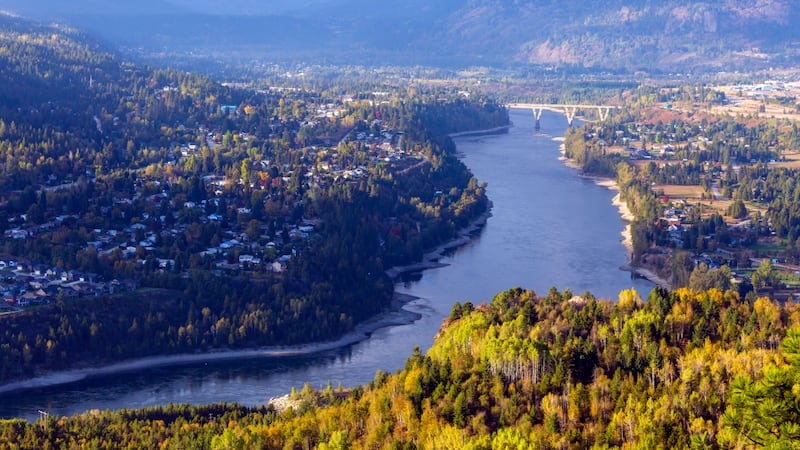
In the 110 years since weather records started being kept in Castlegar, B.C., no Aug. 26 had ever been hotter than the first one: 33.9 C on Aug. 26, 1916. That changed Wednesday. Environment and Climate Change Canada data shows the mercury rose to 34.1 C, breaking the record that had stood for more than a century. One other, much more recent, record was also broken Wednesday. Trail, B.C., saw a high of 36.1 C, surpassing the previous mark of 35.5 C set on Aug. 26, 2011. ECCC meteorologist Brian Proctor said the record highs were a result of a “very strong upper ridge of high pressure” centred over the Rockies, which pulled warm air northwards from eastern Washington and the Idaho panhandle. Although other parts of the B.C. Interior saw warm temperatures, nowhere else experienced record-breaking heat. Temperature records reported by ECCC are “derived from a selection of historical stations in each geographic area that were active during the period of record,” the agency said, in a statement. It also noted that the information reported may be “preliminary or unofficial.” Asked whether this means Wednesday’s records may not have been real, Proctor expressed confidence that they are. “Preliminary,” in this context, means that the data have not been reviewed by ECCC climatologists for quality assurance. That means, essentially, checking to ensure the equipment that measured the record high temperatures is functioning properly and that the data gathered “makes sense” with information recorded at surrounding weather stations, Proctor said. While things like wind gusts can be trickier, temperature records are “pretty easy” to verify, he said.