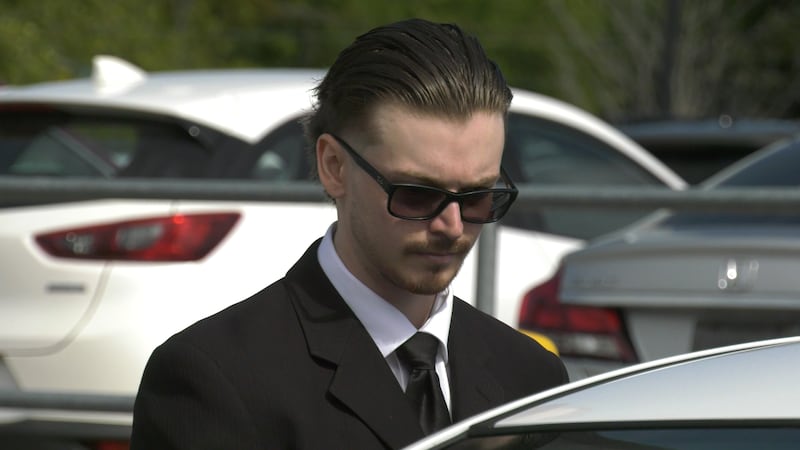
Warning: Graphic content A man who shared explicit photos of his then-girlfriend with an “online community” of other men has been ordered to pay $50,000 in damages, according to a decision from B.C.’s Civil Resolution Tribunal. The woman, whose name is protected by a publication ban, filed a claim with the tribunal alleging Aidan Kenneth Clare Hubbert distributed her intimate images without consent. “The parties are former romantic partners. The applicant says that during the parties’ relationship, she took several intimate photographs of herself and sent them to the respondent. She says the respondent shared these images,” tribunal member Alison Wake wrote in her decision, which was published online Monday. The decision does not describe the photos but Wake found they met they met the criteria set out in provincial legislation, which defines an intimate image as one in which someone is “nude or nearly nude, engaging in a sexual act, or with visible genital organs, anal region, or breasts.” Distributing intimate images Hubbert admitted to sharing the photos—without consent—in messages with other members of an online group but denied posting them to the “multiple public websites” on which they ultimately appeared, the decision said. Wake’s decision explained that, under provincial legislation, the non-consensual sharing of intimate images with other individuals meets the criteria for “distributing” them. “The harm to the applicant exists regardless of whether the respondent expected or intended the images to be shared widely,” Wake wrote. “I find the respondent’s conduct was repeated and deliberate, and that he knew or ought to have known that it was wrongful.” The woman submitted evidence to the tribunal that 12 photos were published online, that one of the posts racked up tens of thousands of views, and that the images have been republished repeatedly since Hubbert first shared them in 2023, according to the decision. “The applicant says she has been living in fear and paranoia about strangers recognizing her, and about the images resurfacing and affecting her reputation in her personal life, work, and relationships.” The woman also submitted evidence to the tribunal that she has been contacted about the images through her Instagram account—which is not pseudonymous—by “multiple strangers,” suggesting “her full name is somehow linked to the images.” She also told the tribunal “multiple people” she knows have already seen the images and recognized her. The ‘online community’ Hubbert told the tribunal he shared the photos at a time in his life when his mental health was poor and during which he was addicted to pornography. “He says that he was isolated, desperate for social connection, and ‘lost’ in his addiction and insecurity. He says he discovered an online community where users would share photographs of their girlfriends or wives,” the decision said. “The respondent admits that he shared increasingly explicit images of the applicant with other users over several months, and that the compliments he received about her appearance boosted his ego.” Hubbert said he did not know or suspect the photos would be shared publicly, and the tribunal noted he has expressed remorse and has made efforts to have the photos taken offline. He also did not object to paying damages but asked the tribunal to award a lower amount than the $50,000 the woman claimed. “He says that having to pay a large sum in damages over months or years would keep him ‘stuck’ and ‘unable to move past this situation.’ He says that having to pay a large damages award may also impact his ability to continue to attend therapy, which he feels is an important part of keeping himself ‘on track,’” the decision said. Damages awarded Nevertheless, Wake awarded the woman damages she sought as compensation for her pain and suffering. “I agree with the applicant’s submission that she also has to live with the consequences of the respondent’s actions for the rest of her life. I find the applicant is entitled to damages to compensate her for this harm, despite how such an award may impact the respondent’s future,” Wake wrote. Previously, the tribunal was only able to award a maximum of $5,000 in damages in intimate images cases. Earlier this year, the ceiling was raised to $75,000. Wake also rejected Hubbert’s request for a publication ban on his name. “I acknowledge that the sensitive subject-matter of this decision may be embarrassing and even detrimental to the respondent,” she wrote. “However, the Supreme Court of Canada has said the fact that court openness is embarrassing, distressing, or prejudicial to individuals will not generally mean that the open court principle should be set aside.” If you or someone you know is struggling with sexual assault or trauma, the following resources are available to support people in crisis: