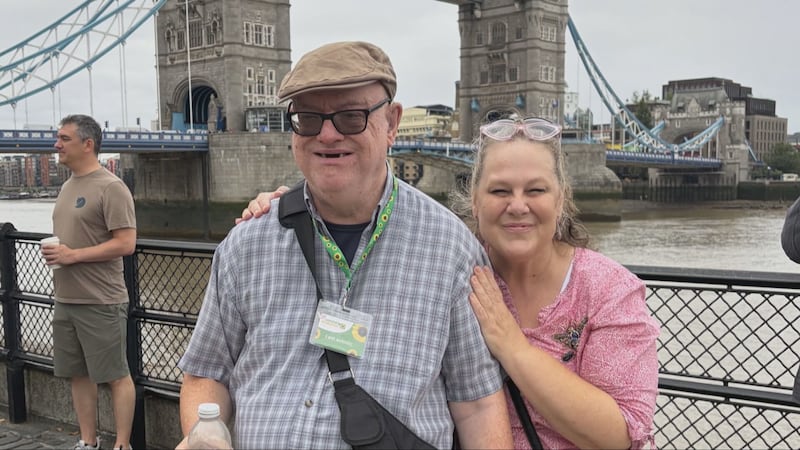
A man who burned his hand on oatmeal in an airport lounge has failed to claim $5,000 in damages from Air Canada at the B.C. Civil Resolution Tribunal. While waiting in the Maple Leaf Lounge in Vancouver International Airport before a flight to Las Vegas on May 11, 2023, the traveller attempted to ladle himself a bowl of oatmeal from a heated self-serve container, but it splashed onto his hand, according to the small claims decision issued Friday. The man claimed the oatmeal was “watery and extremely hot” and the spill “immediately caused intense pain.” He sought $2,201.01 for medical expenses and $2,797.79 for pain and suffering at the tribunal, and while Air Canada acknowledged the oatmeal burned his hand, it argued it was not responsible for the injuries. Tribunal member Alison Wake ultimately dismissed the applicant’s claim, finding that he did not prove Air Canada “created an unreasonable risk of harm” by allowing him to serve himself oatmeal. According to the decision, the man visited a medical centre in Las Vegas and was diagnosed with first-degree burns on the top of his hand and index finger, and second-degree burns on his thumb. He told the CRT the burns took more than a month to fully heal and “the healing process was extremely uncomfortable.” The man relied on the federal Carriage by Air Act and the Occupiers Liability Act to make his claim. In respect to the OLA, Air Canada conceded it owed a duty of care to the passenger as the renter of the Maple Leafe Lounge space. But to claim negligence the man would have to prove the oatmeal container created an “objectively unreasonable risk of harm,” the tribunal said. “The standard is reasonableness, not perfection. The OLA does not require Air Canada to remove every possibility of danger or ensure that users of the premises will be absolutely safe,” Wake wrote. The traveller argued Air Canada breached the OLA by letting guests serve themselves from the container, which he said was dangerous and only intended to by used by trained staff, citing the heater’s manual. “I find these general recommendations do not support a conclusion that specific training or supervision is required to serve food from the container. I say this because the manual does not contain any instructions for serving food from the container. Instead, it includes instructions on how to fill the container’s water well, place and remove the insert, use the controls to reheat chilled food and to hold hot food, and clean the container,” the decision reads. “While I accept that some training may be required for these tasks, (the applicant) was not required to do any of these things to serve himself oatmeal from the container.” Wake added that while the manual contains a warning not to touch hot food or heating surfaces while the equipment is operating, she found it to be a “common sense recommendation” and the man didn’t argue he was unaware the oatmeal would be hot. “As Air Canada notes, the container has a large red flame symbol on its front. Further, the duty to protect users of the premises from an unreasonable risk of harm does not require an occupier to warn competent adults of the common risks associated with everyday life,” Wake said. The applicant said he requested a first aid kit but was told there wasn’t one by an employee. He ran his hand under cold water and bought polysporin to apply. Air Canada submitted an email chain from its investigation into the incident, which indicates an employee said the lounge did have a first aid kit, but it did not contain burn ointment, as it was a standard WorkSafeBC Level 1 kit. “(The applicant) does not address this in his reply submissions. In any event, there is no evidence before me that having a first aid kit available, or one containing burn ointment, would have prevented or reduced Mr. Hannon’s injuries. So, I find this does not amount to an unreasonable risk of harm in the circumstances,” Wake wrote, in the decision. He also argued Air Canada was liable for his injuries under a regulation in the CAA known as the Montreal Convention, which covers passengers who are “in the course of any of the operations of embarking or disembarking.” The tribunal member found eating in the Maple Leaf Lounge didn’t fall under the convention, because the man wasn’t at the departure gate or acting on Air Canada’s direction, for example. “There is no suggestion that any part of the boarding process required Mr. Hannon to visit the Maple Leaf Lounge or to serve himself oatmeal. So, I find Mr. Hannon was not in the course of embarking when he was injured,” Wake wrote. Ultimately, the tribunal member found that Air Canada was not responsible for the burns and dismissed the claim.