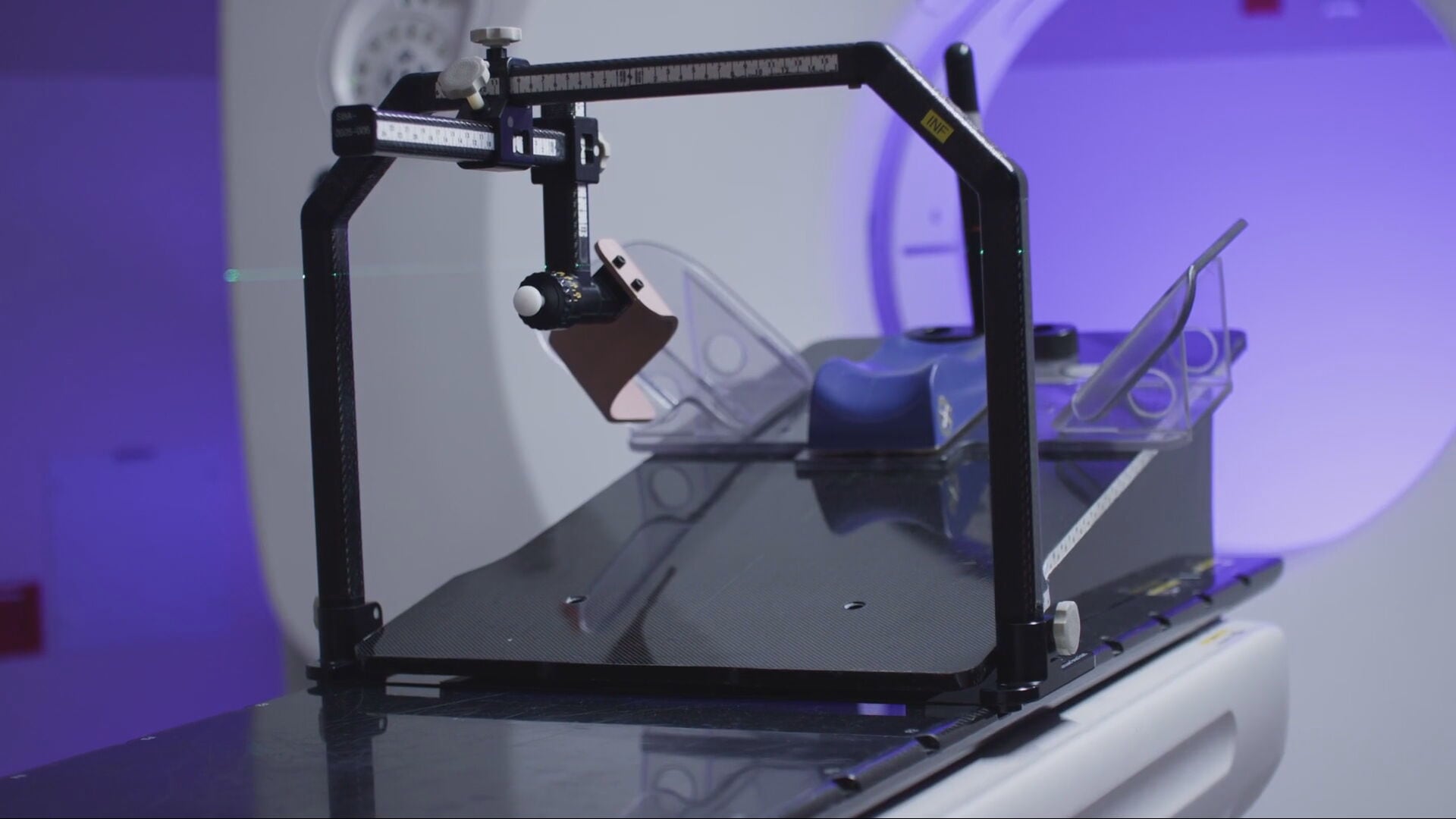
A B.C. invention is helping solve a long-standing problem in breast cancer radiotherapy, improving outcomes for patients across the province. A team at BC Cancer collaborated with UBC’s composites research network to develop a new device called “CARA,” which is designed to increase precision in patients with more breast tissue. “When a person is undergoing radiotherapy for breast cancer, the position of the body and the position of the breast are very important,” said Dr. Cheryl Duzenli, who is the principal investigator and former department head of medical physics at BC Cancer. “Some body types are more difficult to position with precision than others.” CARA, which stands for carbon fibre adjustable reusable accessory, is described as a curved breast cradle, that sits on a frame. Radiation therapists are able to position it in all directions, to create a custom fit for each patient. According to BC Cancer, about half of all patients will receive radiation therapy as part of their treatment, to either cure the cancer, relieve symptoms, or reduce the risk of recurrence. Breast cancer patients often receive between approximately 5-25 radiation treatments. Most people will receive treatment daily from Monday to Friday, with a break on the weekend. The team says the reproducibility of the position of the CARA was a key factor in the design, as it must be positioned in the exact same way for every treatment. The cancer agency describes radiotherapy as high-energy x-rays that destroy cells in the treatment area, or damage the DNA to stop its growth. In addition to cancer cells, normal cells can also be damaged as well. “Depending on the patient’s body shape and size, there can be increased radiation dose to lung, liver and heart,” radiation oncologist Dr. Elisa Chan said, in a video provided by BC Cancer. “Having effective breast support is going to be helpful in reducing side effects to normal tissues.” The engineering solution is the result of years of trial and error, and Duzenli says the key to their success has been the collaboration with the composites research team at UBC. One of the biggest obstacles faced by the team was creating a device that was light and transparent enough to not interfere with the radiation, which is delivered from a machine outside the body. “The challenge with any device that is used to position a patient in radiotherapy that’s in contact with the skin where the treatment is occurring, is that devices will often interfere with the treatment,” said Dr. Duzenli. She said the ultralight carbon fibre device was uniquely designed to be transparent to radiation, but still strong enough to support and position the patient. The team also had to ensure the material used did not cause additional side effects, particularly to the skin, and that it was cleanable to a clinical standard. “To be able to find that correct combination of materials we went through a lot of different iterations,” said lead engineer Truls Ytre-Eide. Once the team was satisfied with the design, clinical studies were completed with radiation therapists and patient partners, to ensure the device worked as intended. The team is now hopeful the research could be used to benefit all cancer patients. “I think it could be a new class of material that we could find other uses for in radiotherapy,” said Dr. Duzenli. CARA is now being used at all six of the regional BC cancer centres across the province.