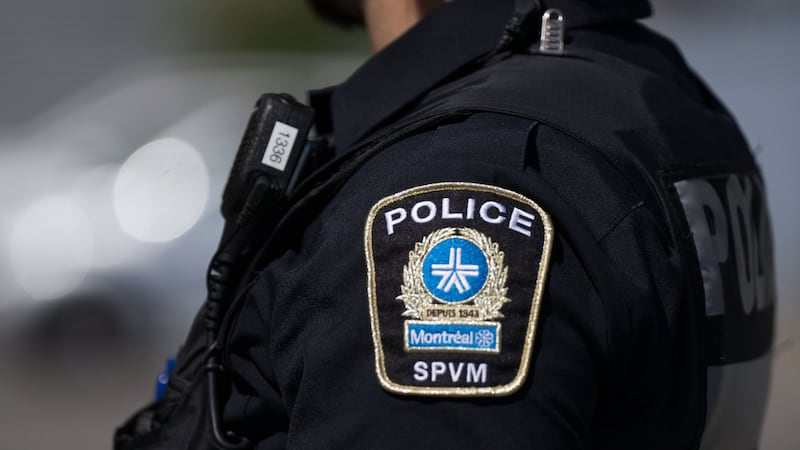
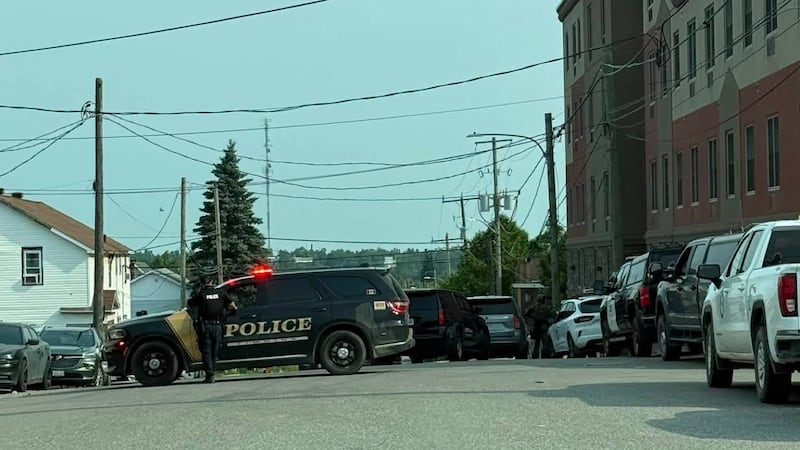
The Vancouver Police Department will be recommending a 2026 budget just shy of half a billion dollars. The board met Monday and approved a proposed operating budget for 2026 of $497,111,657, which represents an increase of $22,126,087 or 4.9 per cent over the adjusted 2025 budget. The adjusted budget includes $17 million in spending beyond what was initially approved by council. It comes amid Mayor Ken Sim’s “zero means zero” plan to freeze property taxes ahead of next year’s municipal election, a move expected to require around $120 million in cost-cutting measures. The Vancouver Park Board, for example, will be meeting Tuesday in light of a directive to cut $15 million in spending. At Monday’s VPB meeting, board member Lorraine Lowe raised the issue of messaging around the police budget boost in light of cuts elsewhere—asking if there is a way to more effectively communicate how much of the increase is due to increased costs outside the department’s control. “The optics are like, ‘Oh, the police get everything they want,’” she said. “So I’m just wanting to get ahead of that.” What the proposed budget includes The report outlines a number of “evolving demands” expected to impact the cost of policing next year, including the FIFA World Cup, extended liquor service hours, and a new patrol district on the Downtown Eastside. “Given the inherently reactive nature of policing, the VPD remains attentive to emerging challenges and the increasing complexity of community safety,” the report says. “While the department does not maintain a dedicated notional budget for evolving demands, it continues to collaborate closely with council and city finance to identify and address these needs as they arise.” More than half of the proposed budget increase—$12,725,105— is required to “maintain existing service levels,” according to the report. Salary increases and adjustments, as well as the levy paid to E-Comm to provide 911 service are among the included line items. The other $9,400,983 will go toward so-called “service prioritization budget items.” That includes items in a category labelled “budget right-sizing” which includes an increase of $1,650,000 for overtime related to “protests and demonstrations,” $1,629,085 for ammunition and firearms, and a $175,000 increase to the budget for the police board. The proposed 2026 budget will be presented to city council on Nov. 12. $17 million ‘budget adjustment’ The board will also consider a report outlining how the department exceeded its 2025 budget by $17 million, requiring council to make an adjustment accordingly. The bulk of that relates to overtime costs, including $5 million related to Task Force Barrage and $7,927,933 in additional overspending. “The VPD forecasted a year-end budget shortfall mainly driven by overtime expenses needed to staff various events to ensure enhanced security, vacancies and other leaves as well as costs related to the ongoing investigation into the mass casualty incident on April 26, 2025, at the Lapu Lapu Festival,” the report says. The money for these adjustments will be reallocated from a city contingency fund which is “built from annual property tax contributions.” The board noted a “comprehensive review” of sworn member overtime is underway but did not say when it will be complete. The department recently published data on overtime spending, which was produced after the CBC filed a Freedom of Information request. It showed an increase in overtime spending of nearly $13 million from 2022 to 2024. It also revealed 47 officers made over $100,000 each in overtime pay—with one staff sergeant being paid nearly $240,000 alone. ‘A lot of questions’ City council will be voting on the $17-million budget adjustment Wednesday. Annual adjustments like this come to council every year and are approved as a matter of course given neither the city nor the police department can run a deficit. Still, Green Party Coun. Pete Fry told CTV News he is considering voting against this one “on principle” because it is “so egregious.” The $5 million for Task Force Barrage, in particular, is something Fry doesn’t think quite makes sense as an overtime expenditure because it was an “operational plan and decision by the mayor and his council majority.” The amount of overtime more generally is also something that raises a “lot of questions” for the councillor that he plans to ask at the meeting. “We are stewards of the public purse,” Fry said. “I want to make sure we’re doing everything in a way that’s on the up and up and in a way that’s beyond reproach.” A double standard? Fry, along with his fellow opposition councillors, have been vocal critics of the mayor’s zero means zero plan, questioning what exactly will be cut in order to deliver a budget with no property tax increase. He noted staff originally said a property tax increase of five or six per cent would be needed to maintain the status quo on account of factors outside the city’s control including inflation, wage and salary increases for unionized workers and utility fee hikes. “These are all existent financial pressures that didn’t go away when the mayor arbitrarily decided we would have a zero per cent increase,” Fry said. “It is sort of a double standard that wasn’t addressed more proactively, that somehow the policing overages are immune from any of these cuts or pressures.”