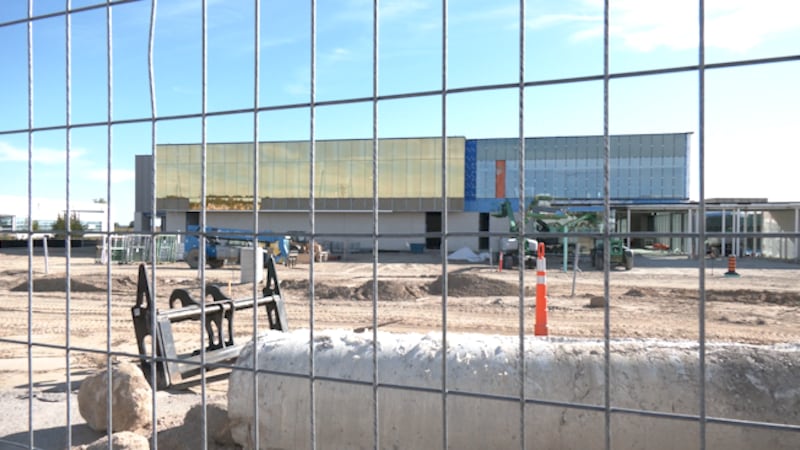
Conservative defence critic James Bezan says it’s “a travesty” that Canada’s long-promised Arctic naval refuelling facility remains in limbo, as the Department of National Defence struggles to address bacterial corrosion affecting the site’s jetty. The Nanisivik Naval Facility on Baffin Island was announced in 2007 by former prime minister Stephen Harper and was expected to be operating by 2015. More than a decade later, the $114-million facility sits unused, with no plans to service ships in 2026 or beyond. National Defence spokesperson Andrée-Anne Poulin says the military is still “working with consultants to understand the phenomena and develop options to mitigate the problem” of microbial corrosion. Engineers found evidence that corrosion was affecting the pier as early as 2008, attributing it to cold-water bacteria. Last year, the military said it was testing potential fixes, but today the issue remains unresolved. Meanwhile, development of the facility’s land infrastructure has been slow, initially attributed to the Arctic’s abbreviated construction season, and later to shutdowns during the COVID-19 pandemic. The latest challenge identified by National Defence is the shifting and buckling of the ground surface due to permafrost. “The facility experiences differential lateral movement where the ground under one part of the facility may move at a different rate than another part,” Poulin wrote in an email this week. “The Nanisivik Naval Facility site is located on a relatively large land mass that is subject to permafrost creep movements,” she added. “Because of the semi-fluid nature of the underlying soil, the site is subject to differential movements, both laterally and vertically in nature.” Parts of the facility have been built to minimize the effects of the ground movement, and National Defence says no structural damage has been reported during maintenance. Originally envisioned as an all-season marine port and jet-capable airstrip to help assert Canadian sovereignty in the Arctic, the project was scaled back after projected costs exceeded $258 million. The facility now consists of a site office, helicopter pad, wharf operator’s shelter, storage building and two unheated fuel tanks. Its operating window has been reduced from year-round to roughly four weeks in late summer, when diesel fuel can be delivered by barge and stored for at least 48 hours before samples are flown to Ottawa for testing. Once approved, the fuel can be used to resupply Royal Canadian Navy vessels transiting the region for about a month, before cold temperatures cause the diesel to thicken in unheated tanks and supply lines, forcing the facility to shut down for the season. National Defence says it has not invested new funds in the project over the past year, having spent $107.6 million of its $114.6-million budget. Earlier this month, the federal government allocated $32 billion towards an array of defence projects in the Far North, primarily aimed at air bases and military support hubs in Yellowknife, Iqaluit, Inuvik, N.W.T., and Goose Bay, N.L. Prime Minister Mark Carney, in a statement on March 12, said the multibillion-dollar outlay signalled a new era of Canadian defence “after decades of limited and piecemeal investments in the North.” But Bezan says that funding would be better spent on infrastructure like the Nanisivik facility and new equipment for military members, and not what he characterized as “more bureaucracy and illusions.” “It’s a travesty what’s happened to the Nanisvik naval station due to Liberal incompetence, and it speaks to how unserious the Liberals are when it comes to protecting our Arctic sovereignty,” the defence critic wrote in an emailed statement. “The Liberals are making big flashy announcements that send massive amounts of taxpayer dollars to bureaucracy and corporate contractors, but it does not end up where it is needed.” A policy paper published in December by the North American Arctic Defence and Security Network argues the Nanisivik project serves as a “cautionary tale” about Arctic ambitions colliding with the harsh realities of the Far North. Despite years of delays and scaled-back plans that have raised questions about the project’s long-term viability, National Defence maintains it is committed to the Nanisivik project, and that opening day is just over the horizon. “We are still finalizing the work plan for the site, and we will have more information to share in due course,” Poulin said. “It is important to note that delays to the site’s operationalization have not impacted the operational capability of the Royal Canadian Navy to operate in the Arctic.”