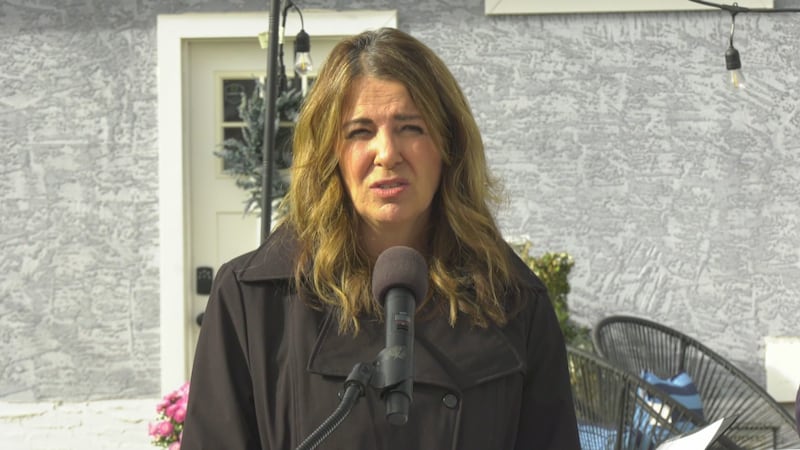
Scarborough is emerging as a key battleground in Toronto’s mayoral race, with Olivia Chow and Brad Bradford stepping up their campaign activity as election day nears. Since early September, Bradford has made six campaign appearances or announcements in Scarborough, while Chow has made six of her own, according to an analysis of their campaign activity in recent weeks by CTV news. Some of the Scarborough issues garnering heightened attention include transit, housing, youth safety and road congestion. However, several experts and community leaders say that the region’s importance extends far beyond its potential influence at the ballot box, pointing to longstanding gaps in public transit, health care and economic development. “Scarborough has often been an afterthought in City of Toronto politics, especially since amalgamation,” said Larry Whatmore, president of the Scarborough Community Renewal Organization. Transit remains a defining issue One area of focus that has emerged between both candidates is Scarborough transit and its lack of advancement in recent years. Chow has highlighted her opening of the Scarborough busway, which aims to improve reliability for local bus commuters following the closure of the Scarborough RT. During her time as mayor, she has also promoted the city’s transit fare freeze. If re-elected, she promises to once again freeze TTC fares for a fourth year in 2027. Bradford, meanwhile, has pledged to remove “redundant” red bus lanes on several Scarborough roads, returning the space to general traffic or installing HOV lanes in their place. That proposal marks a shift from his 2020 work on the TTC board, when he introduced a motion to “accelerate the rollout” of RapidTO priority bus lanes, including in Scarborough. Bradford has also campaigned on making the Eglinton East LRT his first transit priority if elected. Stephen Farber, a University of Toronto professor and director of the Mobility Network, said decades of limited rapid-transit investment and delays to major projects have left residents in Scarborough “frustrated.” He explains that the debate over road space has also created a divide between residents who want faster transit and those seeking relief from congestion. “It’s kind of being set up — and being used by the politicians as — a zero-sum game,” Farber said. “Either transit improves at the expense of cars getting worse or vice versa.” In contrast to Bradford’s stance, he argued the city should maintain and expand bus-priority lanes while continuing to build major rapid-transit infrastructure. “The traffic is going to be here forever,” he said. “The real question is: Are there going to be alternatives for folks to use other modes of transportation?” Farber said transit access is also an equity issue, particularly for young people, newcomers and residents who cannot afford to drive. For example, he says his University of Toronto Scarborough students have an average transit commute of about an hour. Access to healthcare Health care is another concern, according to Notisha Massaquoi, an assistant professor in the University of Toronto Scarborough’s Department of Health and Society who researches health equity and racial health disparities. Massaquoi noted that Scarborough lacks sufficient health services and physicians for its population, leaving some residents travelling downtown for specialized care. She said the consequences are particularly concerning for Black and other racialized communities, which experience disparities in health outcomes. Candidates running for mayor should be pressed on how much they would invest in health-care and hospital infrastructure, affordable housing and opportunities for young people, she said. “If you’re supposedly the leader for this whole city, you can’t continue to leave out a significant portion of the population,” Massaquoi said. Scarborough has a population of about 630,000 residents according to the City of Toronto. Of that number, 76.6 per cent identify as a visible minority. “When we look at Scarborough and chronic illness such as heart disease, hypertension, diabetes, HIV… the rates are much higher in Scarborough, but the resources to address them don’t exist. You have to travel all the way downtown to get a lot of those types of specialized services," Massaquoi added. The latest Nanos Research survey conducted from Sept. 30 to Oct. 4 showed that Chow was ahead among decided voters in Scarborough with the support of 51.8 per cent of respondents compared to 43.5 per cent for Bradford. The survey, however, showed that 32 per cent of Scarborough voters were still undecided. “I’m looking at Scarborough as a place to watch. It seems that Chow has the advantage but there is still a significant portion of voters in that part of the city that are up for grabs,“ Nanos Polling Chief Data Scientist Nik Nanos told CP24 at the time. Scarborough on the agenda For their part, both candidates have highlighted their records and proposals affecting the region. As mayor, Chow has overseen the opening of the Scarborough busway and has set aside $377 million to help build the Eglinton East LRT, though the project remains unfunded at the provincial and federal level. Bradford who represents Beaches-East York, has pointed to his work advancing transit-priority lanes, advocating for the Eglinton East LRT, and other citywide infrastructure measures. In recent weeks, Chow has been repeatedly seen in the city’s east end announcing a youth safety funding initiative in Malvern, an affordability event with Scarborough families and a housing announcement at 26 Gilder Drive. Elsewhere on the campaign trail, Bradford has promoted his Scarborough East Rapid Transit proposal, met with Chinese community members and campaigned door-to-door in the region. Both also attended the Oct. 7 mayoral debate at the University of Toronto Scarborough campus. In a statement to CTV News, a spokesperson for Chow’s campaign highlighted that Chow had made other appearances across Etobicoke, North York and the downtown core, adding that voters across the city have an important choice to make. “Voters can either move forward with 10,000 affordable homes, a universal school lunch program, and free TTC after the first ten rides per week or go backwards to the Rob Ford days of cuts,” said Zeus Eden. Massaquoi welcomed the attention but said residents need to see tangible results after the election. “We’ve listened, we’ve watched those politicians listen. What we haven’t seen is response,” she said. Looking ahead, she suggested that the next mayor establish an advisory committee focused on Scarborough’s needs to help maintain pressure on city hall. For Whatmore, the test is whether the campaign commitments lead to actually meaningful, long-lasting change. “We’ve heard this before: less talk, more action,” he said. “There’s lots of great announcements and there’s no follow-through... prove it to me that this is more than just talk; that there really is going to be follow-through.”